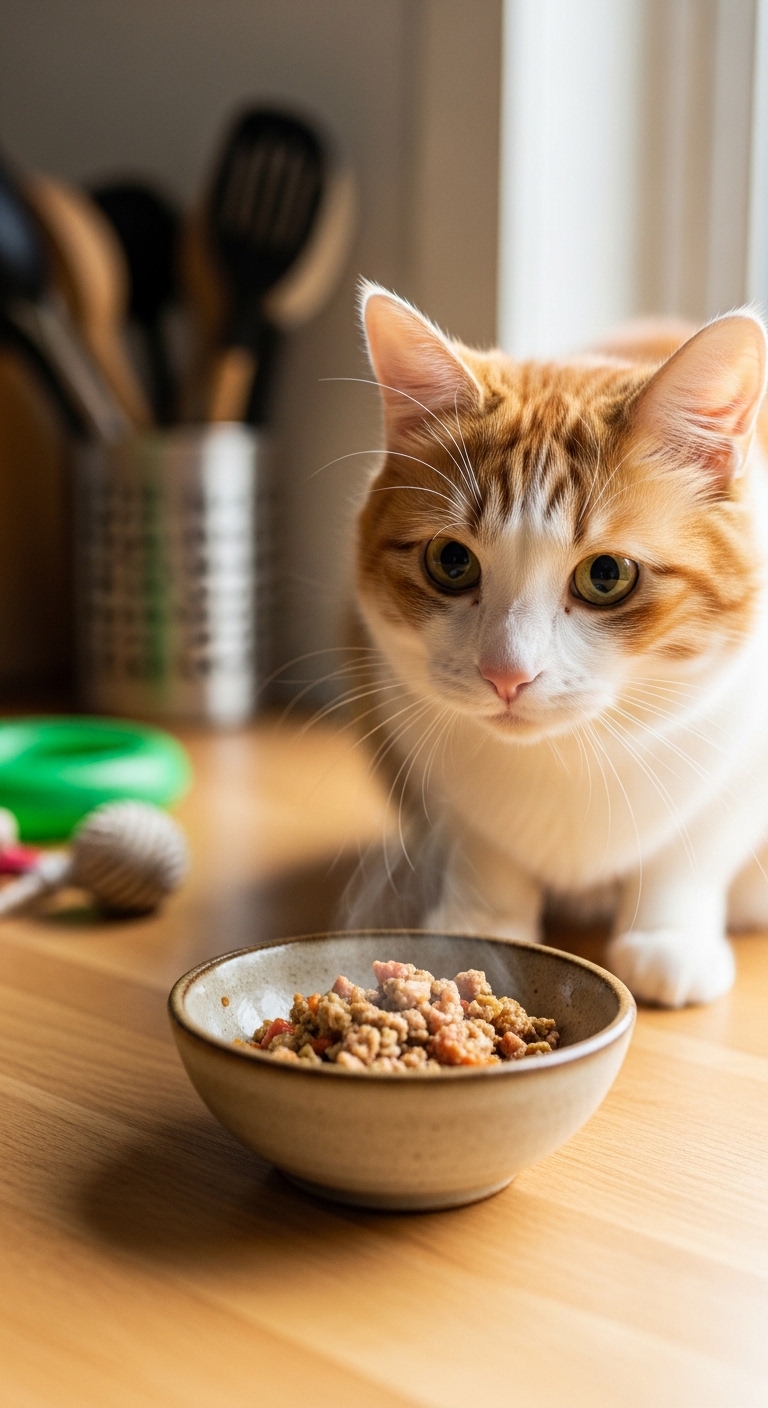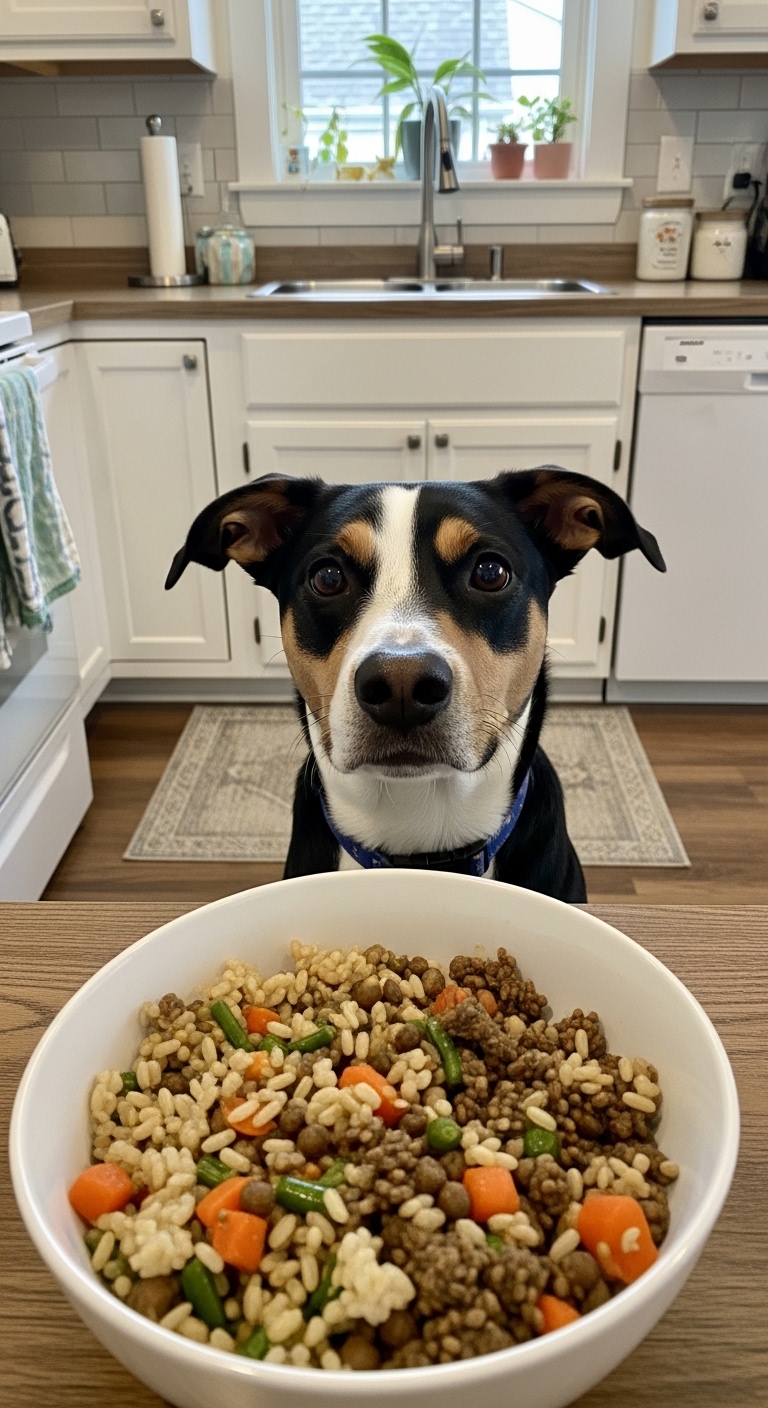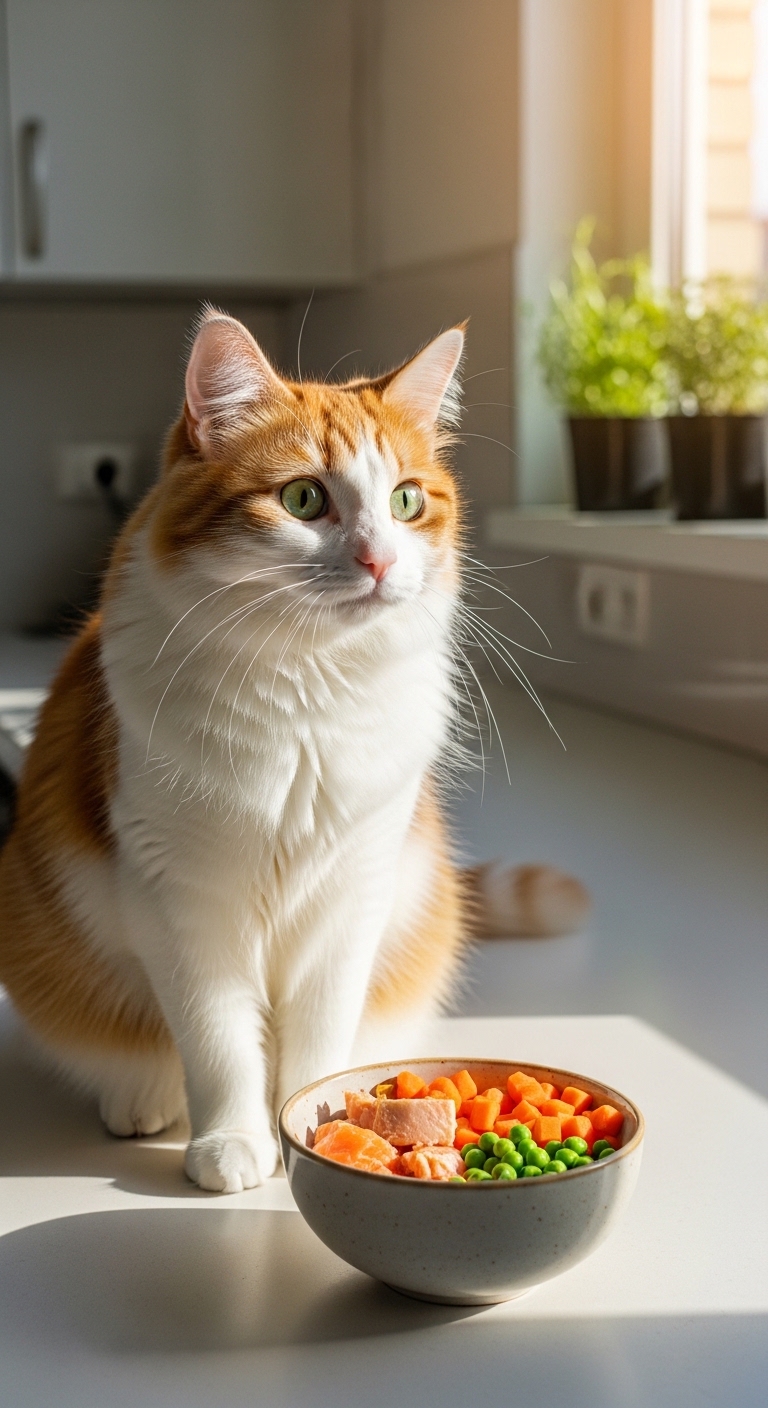
Homemade dog food isn’t just for pet owners who want to spoil their dogs: it’s a way to control exactly what goes into your pup’s bowl. With recalls and questionable ingredients in commercial dog foods, making meals at home gives you peace of mind. It also lets you cater to your dog’s specific needs, whether they have allergies, a sensitive stomach, or need extra nutrition during growth or senior years.
I still remember the first time I switched my rescue dog to homemade food. His coat became shinier within weeks, and his energy levels evened out. It wasn’t just about the food: it was about giving him a fresh start.
Key Things to Understand
- Protein: Should always be the first ingredient in homemade dog food, whether it’s chicken, beef, turkey, or fish
- Organ meats: Must be included (like liver or kidney) for essential vitamins that muscle meat alone can’t provide
- Carbohydrates: Should be limited and easy to digest, like sweet potatoes or brown rice
- Calcium: Is crucial, so add eggshell powder or a supplement unless feeding whole prey or raw meaty bones
- Healthy fats: From sources like fish oil or coconut oil keep your dog’s skin and coat in top condition
- Toxic ingredients: Avoid onions, garlic, grapes, raisins, and xylitol, as these are harmful to dogs
What to Look For
When planning meals, think about your dog’s life stage. Puppies need more fat and protein for growth, while senior dogs benefit from joint-supporting ingredients like glucosamine-rich foods. Watch their weight: if they’re gaining too quickly, adjust portion sizes or reduce fatty ingredients. Pay attention to their energy levels after meals. If they seem sluggish or overly hyper, the recipe may need tweaking. Stool quality is another clue: firm, well-formed poop means the diet is working, while loose stools suggest it’s time to rebalance the ingredients.
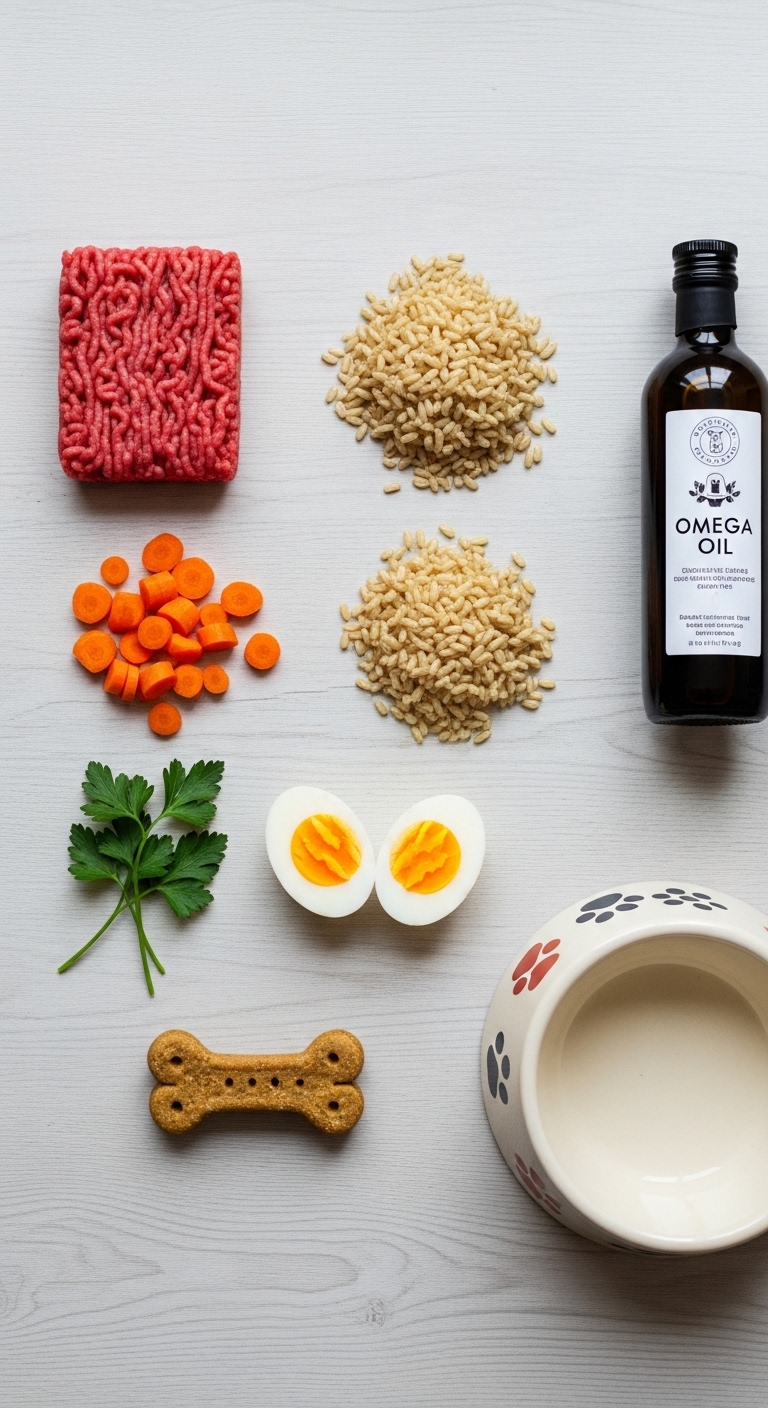
A common mistake is assuming any meat and veggie mix will work. Without proper calcium and fat balance, dogs can develop serious deficiencies over time. Another oversight is forgetting to rotate protein sources, which can lead to sensitivities if they eat the same thing every day.
Daily Care Habits
Prepping meals in bulk saves time during the week. Cook proteins and grains in large batches, then portion and freeze them in meal-sized containers. Label everything clearly with dates: homemade dog food typically lasts about three days in the fridge or three months in the freezer.
Choosing the Right Product
If you’re not comfortable handling raw meat, look for high-quality commercial raw food mixes that you just add water to. These blends are formulated by nutritionists to meet AAFCO standards, so they’re a safer bet than untested recipes. For cooked meals, opt for organic or pasture-raised meats whenever possible to minimize exposure to antibiotics and hormones.
Safety and Comfort
Never feed your dog cooked bones: they can splinter and cause internal damage. Always use raw, meaty bones if including them in the diet, and supervise your dog while they eat. If your dog has a history of pancreatitis, avoid high-fat recipes and stick to lean proteins like skinless chicken breast or turkey.
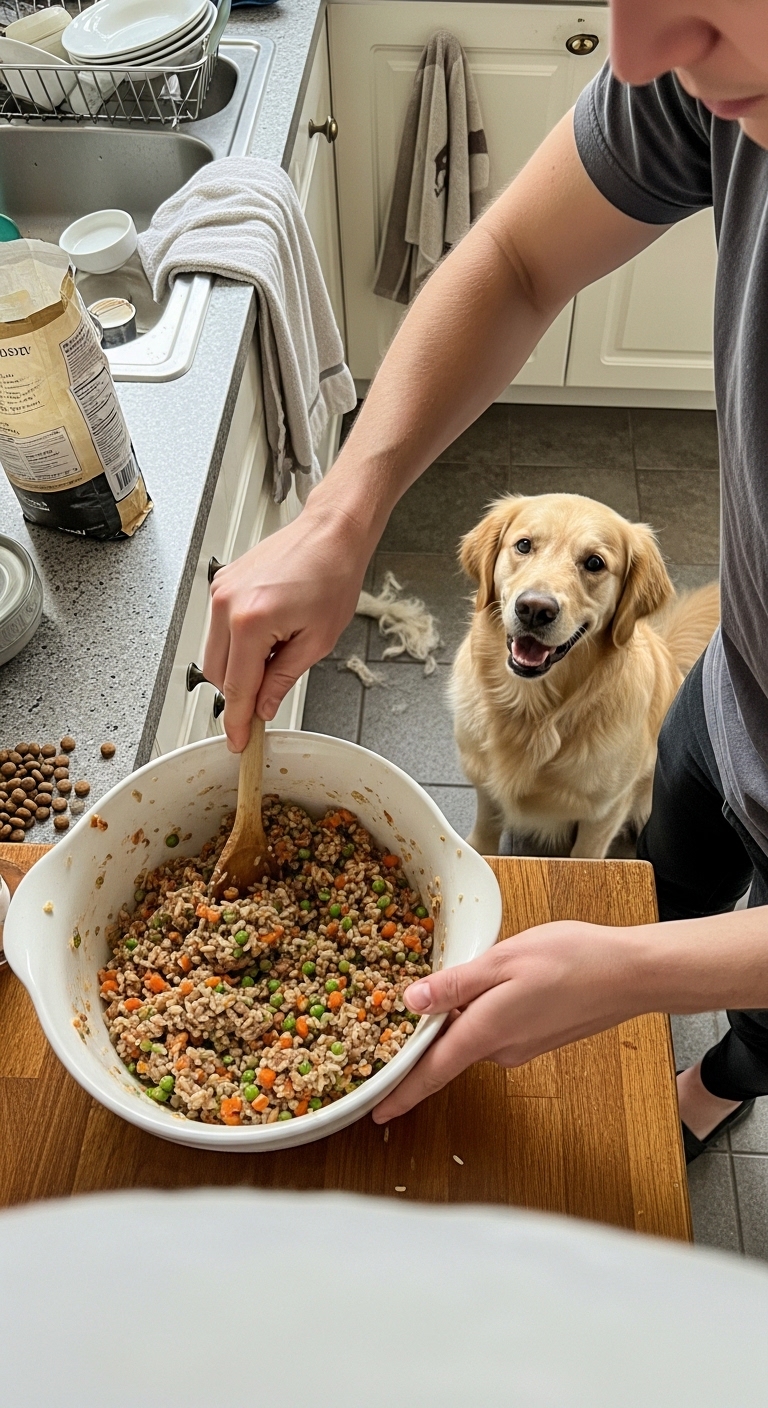
Making the switch to homemade dog food is a commitment, but the rewards are worth it. You’re investing in your dog’s long-term health and happiness.
Frequently Asked Questions
- → What are the benefits of homemade dog food?
Homemade dog food allows you to control ingredients, avoid preservatives, and cater to your dog’s specific dietary needs. It can improve digestion, coat health, and energy levels when balanced correctly.
- → Can I use raw meat in homemade dog food?
Yes, but ensure it’s fresh and handled safely. Raw diets require careful planning to meet nutritional needs and may not suit all dogs, especially those with health conditions.
- → How long does homemade dog food last?
Store in an airtight container in the fridge for up to 3 days or freeze portions for up to 3 months. Thaw in the fridge before serving.
- → What ingredients should I avoid?
Avoid onions, garlic, grapes, raisins, chocolate, xylitol, and excessive salt or spices. Always research safe ingredients for dogs.
- → Do I need to add supplements?
Consult your vet, but common supplements include calcium, omega-3s, and multivitamins to ensure a balanced diet. Avoid over-supplementing.
- → Is homemade food better than kibble?
It depends on your dog’s needs. Homemade food offers freshness and customization, while kibble provides convenience and balanced nutrition. A mix of both can work well.