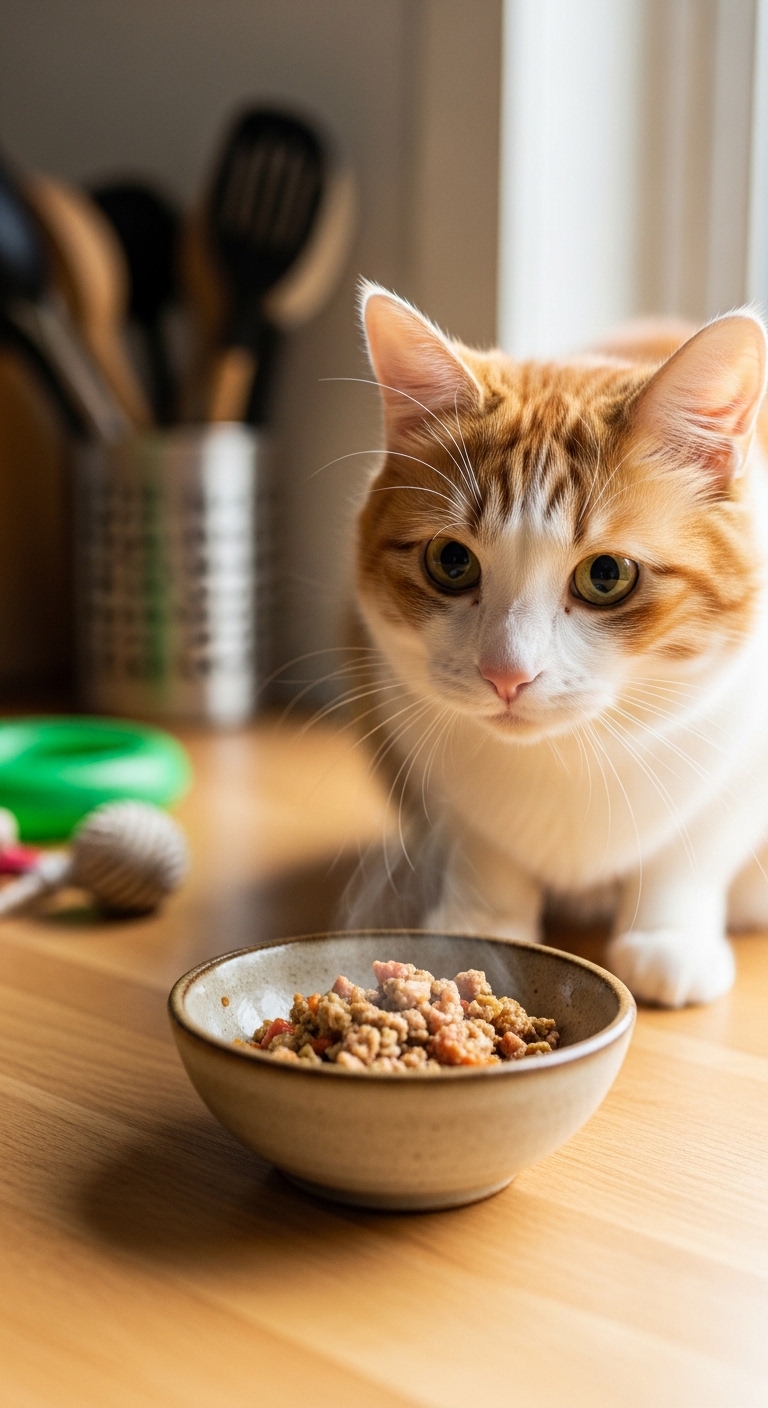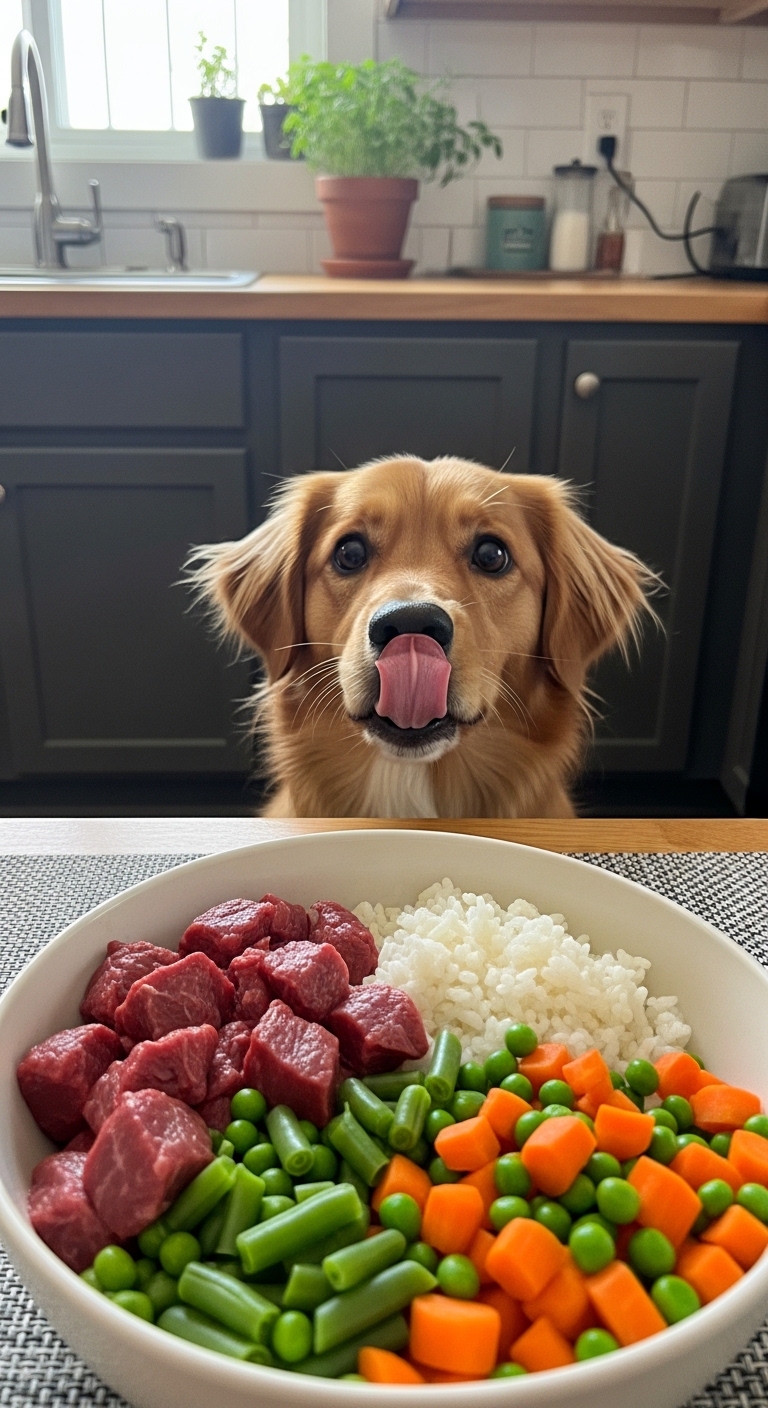
Homemade dog food isn’t just for picky eaters or dogs with allergies: it’s a way to take control of what goes into your pet’s bowl. With rising concerns about recalls and questionable ingredients in commercial pet foods, more owners are turning to simple, whole-food meals to ensure their dogs get fresh, nutritious food. Cooking for your dog can also be a rewarding way to bond and tailor portions to their specific needs, whether they require more protein, fewer carbs, or support for joint health.
I still remember the first time I made a batch of simple chicken and rice for my rescue pup. It was the first time he finished his bowl without leaving a single grain behind. That moment made me realize how much difference fresh, wholesome food can make in a dog’s energy and coat.
Key Things to Understand
- Vet consultation: Always consult your vet before switching your dog to homemade food, especially if they have health conditions or special dietary needs.
- Protein base: Use lean proteins like chicken, turkey, or beef as the base of most recipes.
- Vegetables: Include vegetables like carrots, spinach, or pumpkin for fiber and vitamins.
- Toxic ingredients: Avoid ingredients toxic to dogs such as onions, garlic, grapes, and xylitol.
- Healthy fats: Add a healthy fat source like olive oil or flaxseed to support skin and coat health.
- Portion control: Portion meals based on your dog’s weight, age, and activity level to prevent overfeeding.
What to Look For
Watch for signs that your dog isn’t tolerating a new recipe well, like upset stomach, itching, or changes in energy. If you notice these, it’s best to pause and reassess the ingredients. Pay attention to your dog’s coat and energy levels over time: shiny fur and steady energy often mean the food is working well. When choosing ingredients, prioritize freshness and avoid anything processed or seasoned, as even small amounts of salt or spices can upset your dog’s stomach.
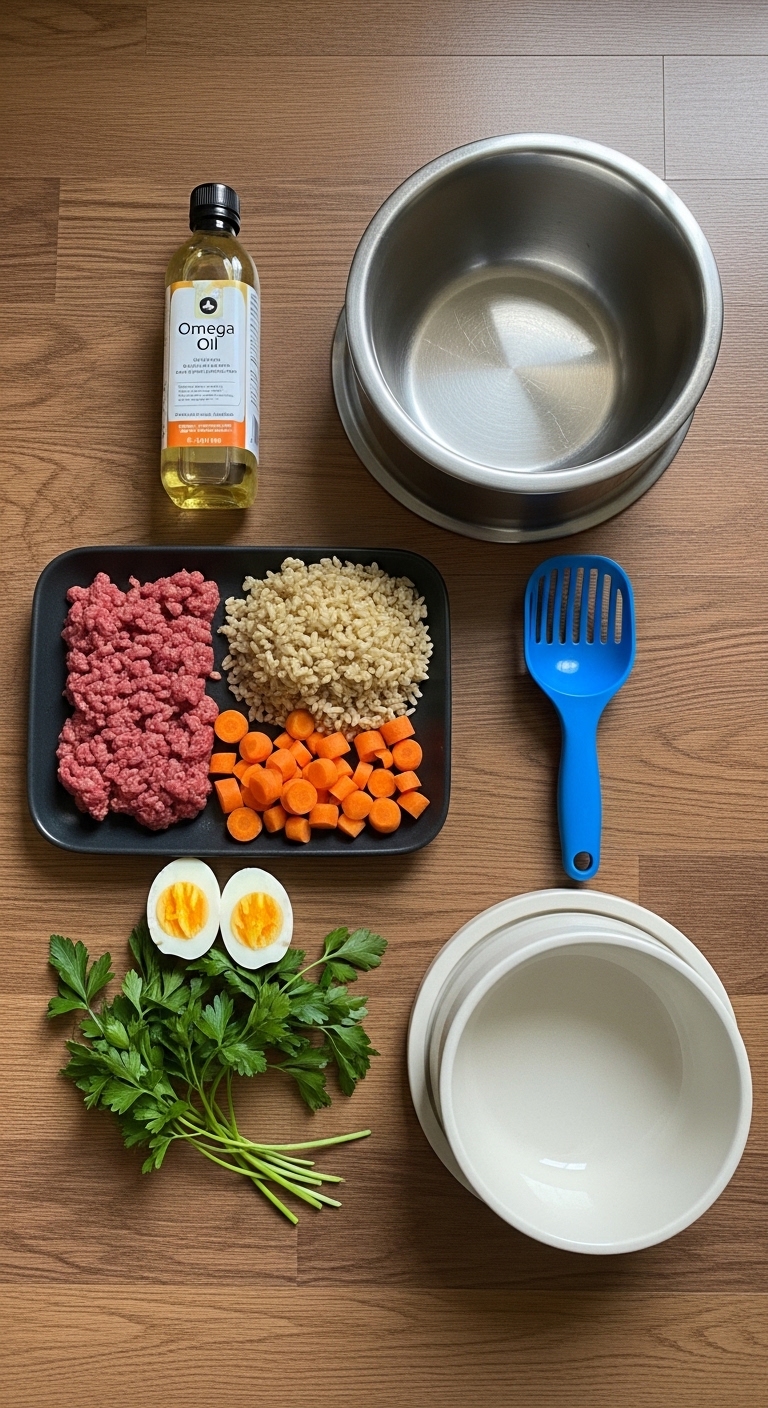
Many owners assume that because a food is “natural,” it’s automatically safe for dogs. But even healthy ingredients like garlic or certain herbs can be toxic in large amounts. I once made a batch of sweet potato and turkey stew for my neighbor’s dog without realizing onions were hidden in the spice blend. Thankfully, it was caught early, but it was a good lesson in double-checking every ingredient.
Common Ingredient Mistakes
Some ingredients may seem harmless but can pose risks. For example, garlic and onions (even in powdered form) are toxic to dogs, and certain herbs or spices can cause digestive issues. Always verify each component of a recipe, including pre-mixed seasonings or broths, to ensure they contain no hidden dangers.
Transitioning to Homemade Food
Switching your dog to homemade meals should be a gradual process. Start by mixing a small amount of the new food with their current diet, increasing the homemade portion over 7-10 days. This slow transition helps their digestive system adapt and reduces the risk of stomach upset or refusal to eat.
Long-Term Benefits
Over time, a well-planned homemade diet can lead to improvements in your dog’s skin, coat, digestion, and energy levels. Many owners report fewer allergies, better weight management, and even reduced vet visits for dietary-related issues. However, consistency and balance are key to achieving these benefits safely.
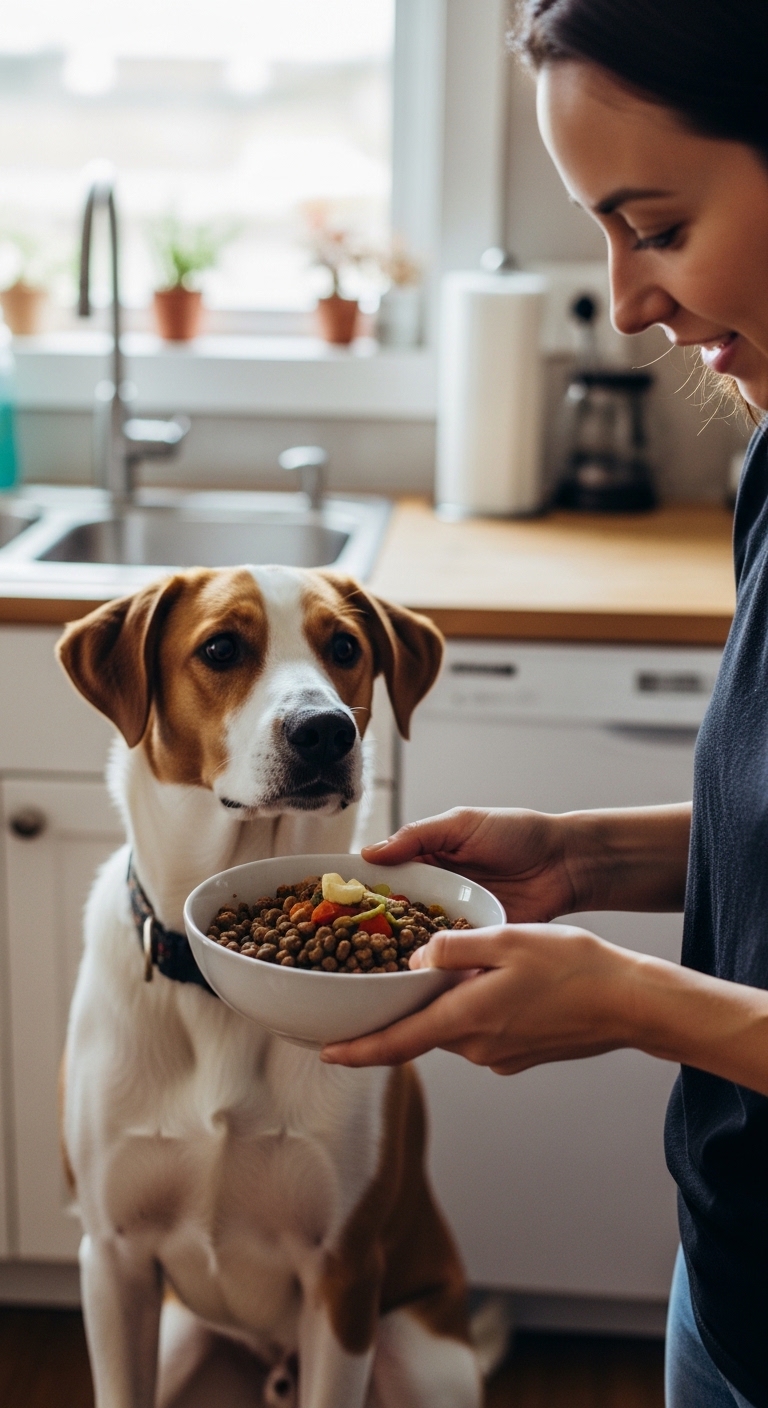
Cooking for your dog doesn’t have to be complicated. Even a basic meal of ground beef, cooked veggies, and a scoop of plain yogurt can make a noticeable difference in their energy and overall health. The key is to keep it simple, watch your dog’s reaction, and adjust as needed.
Frequently Asked Questions
- → What are the benefits of homemade dog food?
Homemade dog food allows you to avoid artificial additives, preservatives, and fillers found in commercial foods. It gives you control over ingredients, ensuring your dog gets fresh, high-quality proteins, vegetables, and grains tailored to their needs. Many pet owners report improved digestion, shinier coats, and increased energy in their dogs after switching to homemade meals.
- → Can I use human food for my dog?
Yes, but not all human foods are safe for dogs. Safe options include lean meats (chicken, turkey), cooked eggs, plain rice, and certain vegetables like carrots and green beans. Avoid onions, garlic, grapes, chocolate, and xylitol, as these are toxic. Always research or consult your vet before introducing new foods.
- → How do I balance nutrients in homemade dog food?
Balancing nutrients requires a mix of protein (30-50%), vegetables (20-30%), and carbohydrates (20-30%). Add supplements like calcium (eggshell powder or bone meal) and omega-3s (fish oil) if needed. A vet or pet nutritionist can help tailor recipes to your dog’s age, breed, and health status.
- → Is homemade dog food cheaper than store-bought?
Costs vary based on ingredient choices. Buying in bulk or using seasonal produce can reduce expenses. While initial costs may seem higher, homemade food often leads to fewer vet bills due to improved health. Compare ingredient prices to commercial options to see long-term savings.
- → How long does homemade dog food last?
Fresh homemade meals last 3-5 days in the fridge or up to 3 months in the freezer. Store in airtight containers to preserve freshness. Thaw frozen meals in the fridge overnight before serving. Always discard any leftovers that smell off or show mold.
- → Can puppies eat homemade dog food?
Yes, but their meals require more protein, calcium, and calories for growth. Puppy recipes should include finely ground ingredients and avoid excessive fat. Consult your vet to ensure the diet meets AAFCO standards for puppies, as deficiencies can lead to health issues.