Why do dogs eat grass? It’s one of those behaviors that puzzles many pet owners, especially when their dog seems perfectly healthy otherwise. You might wonder if it’s normal or if it signals something deeper. The truth is, grass eating is actually quite common among dogs, and in most cases, it’s nothing to worry about. Still, understanding why they do it can help you keep an eye on their well-being and even adjust their diet or routine if needed.
I’ve noticed that dogs often eat grass right after a meal, almost like they’re trying to settle their stomach. It’s not always a sign of illness: sometimes it’s just their way of dealing with minor tummy discomfort.
Key Things to Understand
- Grass eating is common: usually not harmful in healthy dogs.
- It can be a way for dogs to induce vomiting: if they feel nauseous.
- Some dogs simply enjoy the taste or texture: of grass.
- If your dog is eating grass frequently or showing other symptoms: it’s worth checking with your vet.
- Dogs on a balanced diet: are less likely to eat grass out of nutritional deficiency.
What to Look For
Pay attention to how often your dog eats grass and in what context. If it’s occasional and your dog seems otherwise fine, it’s likely just a quirky habit. However, if they’re eating grass and then vomiting repeatedly, it could signal an upset stomach or something more serious. Also, watch for signs of lethargy, diarrhea, or loss of appetite alongside the grass eating: these could indicate an underlying health issue that needs attention.
Another thing to notice is whether your dog is eating grass in a specific area. If they’re consistently targeting certain patches, it might be because those spots have softer or tastier grass. Some dogs also eat grass when they’re bored or anxious, so if your pup is eating grass more than usual, it might be time to assess their mental stimulation or daily routine.

I’ve seen dogs eat grass after a long car ride, almost like motion sickness is triggering their stomach to settle. It’s not always a sign of something wrong, but it’s worth paying attention to. Also, if your dog is eating grass and then acting perfectly fine, there’s probably no need to worry: just keep an eye on their overall behavior.
Daily care habits
If your dog is eating grass regularly, try adding more fiber to their diet. Foods like pumpkin or green beans can help satisfy that urge without them needing to graze outside. You might also consider feeding smaller, more frequent meals to reduce any stomach upset that could be driving the behavior.
Choosing the right product
If you’re worried about your dog eating grass due to boredom, interactive toys or puzzle feeders can keep them occupied. Look for options that dispense treats slowly to mimic natural foraging behavior. This can redirect their energy away from grass eating and toward something more engaging.
Safety and comfort
Always check the areas where your dog likes to eat grass. Avoid letting them graze in places treated with chemicals, as these can be harmful. If you’re unsure about the safety of a particular spot, consider walking them in a different area or creating a small patch of untreated grass in your yard for them to nibble on safely.
Common mistakes to avoid
Don’t punish your dog for eating grass, as this can create anxiety and make the behavior worse. Instead, try to understand the root cause: whether it’s boredom, dietary needs, or something else. Also, avoid assuming it’s always harmless: if the behavior changes suddenly or they show other symptoms, it’s better to get it checked out.
Cleaning and hygiene
If your dog is eating grass and then vomiting, clean up the mess promptly to avoid lingering odors that might encourage them to repeat the behavior. Regularly washing their paws after outdoor time can also help remove any residue from treated grass that might be lingering.
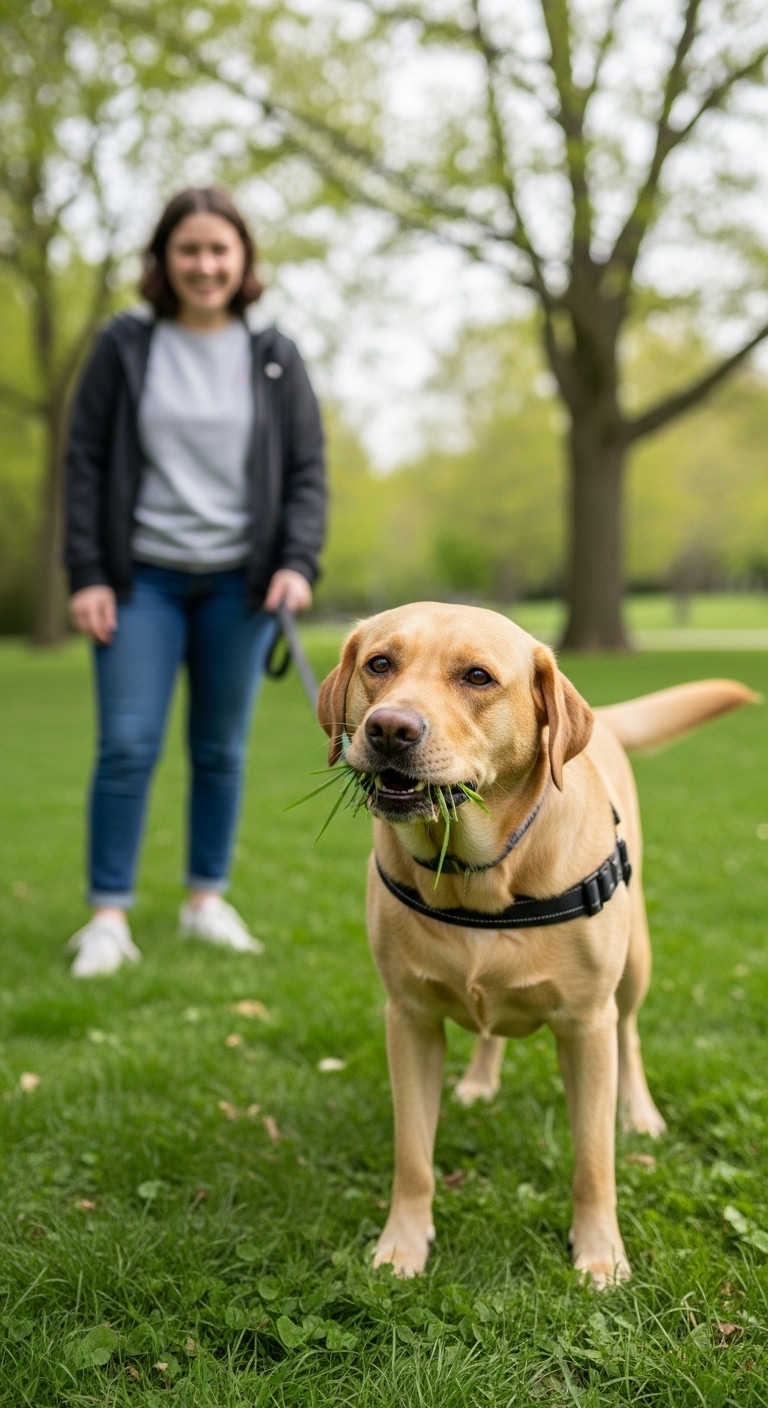
Understanding why dogs eat grass helps you respond better to their needs. Stay observant and proactive to ensure their health and happiness.
Frequently Asked Questions
- → Is it normal for dogs to eat grass?
Yes, it’s generally normal for dogs to eat grass occasionally. Many dogs do it without any issues, as it can be part of their natural behavior or a way to soothe an upset stomach.
- → Why does my dog vomit after eating grass?
Dogs may vomit after eating grass because the grass irritates their stomach lining or triggers their gag reflex. This can help them expel indigestible items or excess stomach contents.
- → Can eating grass harm my dog?
Eating grass in small amounts is usually harmless, but there are risks if the grass is treated with pesticides or herbicides. Always ensure your dog eats grass from safe, untreated areas.
- → What should I do if my dog eats grass frequently?
If your dog eats grass excessively, monitor for signs of distress like vomiting, diarrhea, or lethargy. Consult a vet if the behavior persists or is accompanied by other symptoms.
- → Does eating grass mean my dog has a nutritional deficiency?
While possible, grass-eating isn’t always a sign of a deficiency. If you suspect your dog lacks nutrients, consult a vet to assess their diet and overall health.
- → How can I stop my dog from eating grass?
Redirect their attention with toys or training, ensure they have a balanced diet, and provide plenty of exercise. If the behavior is compulsive, a vet can help identify underlying causes.