
Can dogs eat spinach? It’s a question many pet owners ask when looking for healthy treats or meal additions. Spinach is packed with nutrients like iron, calcium, and vitamins, which can benefit dogs in small amounts. But before you toss a handful into your pup’s bowl, there are a few things to consider like how much is safe and whether your dog’s health plays a role in whether they should eat it at all.
I once added a small piece of cooked spinach to my dog’s dinner as a treat, only to notice he seemed a bit sluggish afterward. A quick vet check confirmed he was fine, but it made me realize even healthy foods can affect dogs differently depending on their size and breed.
Key Things to Understand
- Oxalate content: Spinach contains oxalates which can cause kidney issues in dogs if eaten in large amounts over time
- Digestion: Raw spinach is harder for dogs to digest and may cause stomach upset
- Preparation: Cooked spinach is easier on their system but should still be given in moderation
- Health risks: Small breeds and dogs with kidney problems should avoid spinach entirely
- Quality: Fresh spinach is always better than canned, which often contains added salt or preservatives
What to Look For
When deciding whether to give your dog spinach, pay attention to their size and overall health. Smaller dogs have less tolerance for oxalates, so even a few leaves could be too much. Watch how your dog reacts after their first taste: some may love it, while others might turn their nose up. If you notice any changes in energy, appetite, or bathroom habits after introducing spinach, it’s worth reconsidering. Also, check the spinach itself for freshness; wilted or spoiled greens can cause more harm than good.

I’ve seen dogs happily gobble up spinach like it’s a treat, while others barely sniff it. It’s all about knowing your dog’s preferences and health history. If you’re unsure, start with a tiny piece and see how they handle it.
Daily care habits
If you decide spinach is a good occasional snack for your dog, think about how to work it into their routine. A few chopped leaves mixed into their regular food can be an easy way to add nutrients without fuss. Just make sure it’s cooked and cooled first to soften the texture. Some dogs prefer it blended into a puree and drizzled over their kibble. Keep portions small: think a teaspoon for a small dog and a tablespoon for a larger breed.
Safety and comfort
Always wash spinach thoroughly before serving to remove pesticides or dirt that could upset your dog’s stomach. Avoid using spinach that’s been cooked with oils, butter, or seasonings, as these can cause digestive issues. If your dog has never eaten spinach before, start with a very small amount and wait 24 hours to check for any negative reactions. Signs of trouble include vomiting, diarrhea, or lethargy.
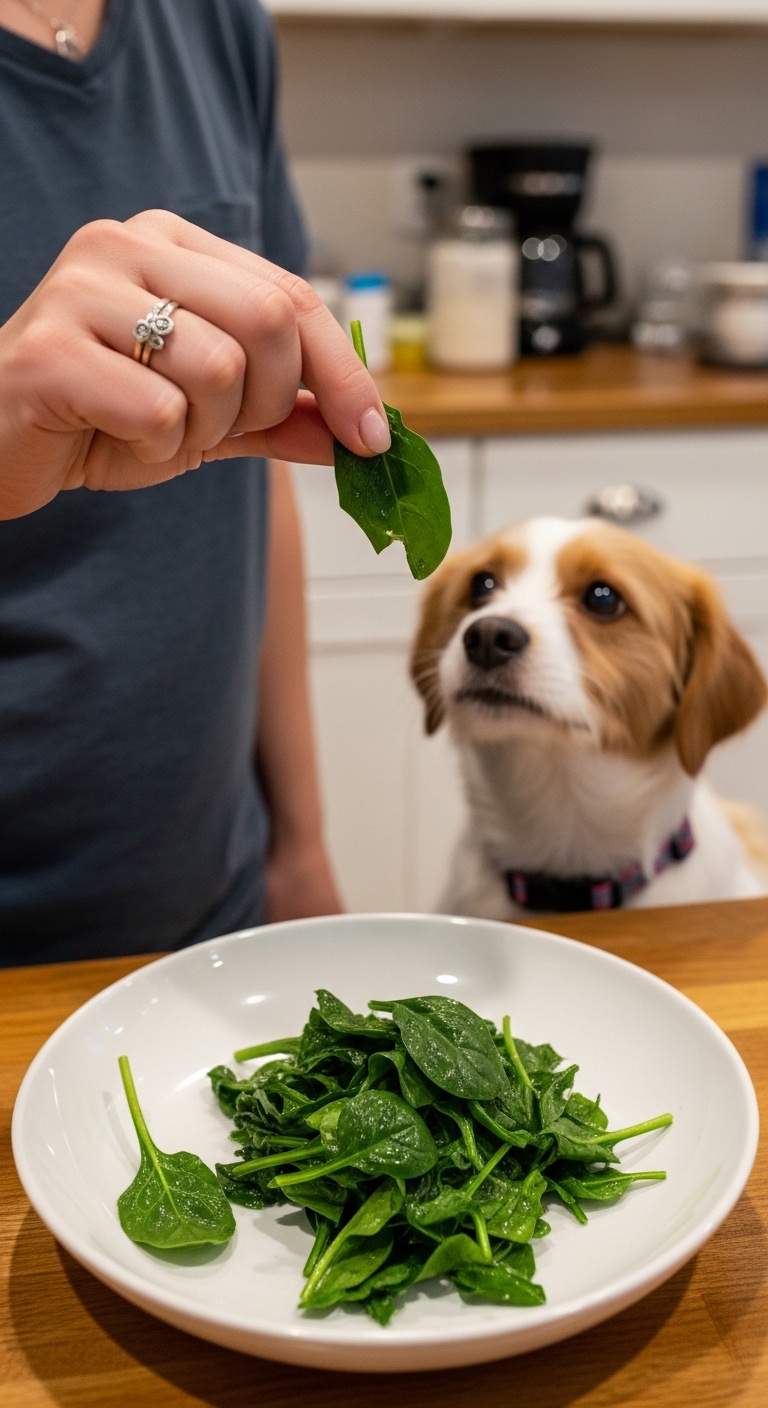
Spinach can be a healthy addition to your dog’s diet if given in moderation and prepared properly. Always prioritize your dog’s health and consult your vet if unsure.
Frequently Asked Questions
- → Can dogs eat spinach raw?
Yes, dogs can eat raw spinach in small amounts. It’s best to wash it thoroughly to remove pesticides or dirt. Chop it finely to prevent choking and aid digestion. Some dogs may prefer it blended into their regular food.
- → How much spinach can a dog eat?
Portion size depends on your dog’s weight. For small dogs, 1-2 leaves per week is sufficient. Medium to large dogs can have a handful (about 1-2 cups) occasionally. Overfeeding may lead to oxalate buildup, causing kidney stones in susceptible dogs.
- → Is cooked spinach better for dogs?
Cooked spinach is easier to digest for some dogs, especially those with sensitive stomachs. Steaming or boiling without salt or seasoning is ideal. Avoid using oils, butter, or garlic, as these can be harmful. Always let it cool before serving.
- → What are the benefits of spinach for dogs?
Spinach provides fiber for digestive health, vitamins A, C, and K for immunity, and iron for energy. Its antioxidants help reduce inflammation. It’s also low-calorie, making it a great treat for weight management. Always balance it with their regular diet.
- → Are there risks of feeding spinach to dogs?
Spinach contains oxalates, which can contribute to kidney stones in prone dogs. Large quantities may cause stomach upset or diarrhea. Dogs with kidney issues should avoid spinach. Introduce it slowly and watch for allergic reactions or digestive changes.
- → Can puppies eat spinach?
Puppies can eat spinach in tiny amounts, but their primary diet should be puppy-specific food. Spinach lacks essential nutrients puppies need for growth. Consult your vet before introducing new foods to puppies, especially those with breed-specific health risks.