Service dogs change lives by providing support, safety, and independence to people with disabilities. Whether it’s guiding someone with visual impairment, alerting to seizures, or offering emotional comfort, these dogs become more than pets: they become lifelines. Training a dog to become a service animal isn’t just about teaching commands: it’s about building a reliable partnership rooted in trust, consistency, and mutual understanding. For pet owners considering this path, knowing where to start and what to expect can make the process smoother and more rewarding.
I still remember the first time my friend’s golden retriever, Max, learned to open doors for his owner who uses a wheelchair. It wasn’t just a trick: it was a moment of independence that transformed their daily routine. Seeing that connection made me realize how much more dogs can do when we invest time in training with purpose.
Key Things to Understand
- A service dog must be temperamentally calm, focused, and comfortable in public settings: Training takes consistency, patience, and often professional guidance
- Not all dogs are suited for service work: Breed, energy level, and health matter
- Legal protections under the ADA apply only to dogs trained for specific disabilities: Public access rights depend on the dog’s reliability and the handler’s needs
- Regular health checks and vet visits are essential: To maintain certification
What to Look For
Watch how your dog reacts to unfamiliar sounds, crowds, and environments. A good candidate stays calm even when distractions appear, showing curiosity without fear or aggression. Notice their focus during training sessions: do they stay engaged or get easily frustrated? A dog that persists in trying to solve tasks, even when challenged, often has the right mindset for service work. Pay attention to their physical health too: a dog with chronic pain or joint issues may struggle with the demands of long hours on duty. Also observe how your dog interacts with people. Do they naturally approach others with gentleness, or do they tend to be overly excitable or aloof? Service dogs need to be socially neutral, able to ignore distractions while remaining attentive to their handler’s needs. If your dog already shows signs of being attuned to your emotions, like sensing when you’re stressed or offering comfort without being asked, that’s a strong indicator of their potential.
Many people assume any well-trained dog can become a service animal, but temperament is just as important as skills. I’ve seen dogs with perfect obedience fail in public because they couldn’t handle the noise or crowds. It’s not about how smart your dog is: it’s about how steady and adaptable they are in real-world situations. Also, don’t overlook the handler’s role: your consistency in training directly impacts your dog’s success.
Training Foundations
Start with basic obedience commands like sit, stay, come, and heel. These aren’t just tricks: they’re the building blocks for more advanced tasks. Use positive reinforcement, like treats or praise, to reward calm and focused behavior. Keep training sessions short, around 10 to 15 minutes, to prevent frustration for both you and your dog. If your dog struggles with a command, break it down into smaller steps and build up slowly.
Socialization Matters
Expose your dog to different environments early on: busy streets, stores, parks, and public transport. The goal isn’t just familiarity: it’s teaching your dog to remain calm and attentive despite distractions. Start with low-stress settings and gradually increase difficulty. If your dog shows signs of stress, like excessive panting or avoidance, take a step back and go slower. Socialization isn’t a race: it’s about building confidence over time.
Task-Specific Training
Identify the specific tasks your dog needs to perform based on your disability. For example, a dog for someone with diabetes might learn to detect blood sugar changes, while a guide dog needs to navigate obstacles safely. Break each task into small, manageable steps. Use real-life scenarios to practice, like simulating a low blood sugar event or walking through a crowded area. Repetition and real-world application are key to making these skills reliable.
Public Access Training
Once your dog masters basic obedience and tasks, it’s time to practice in public. Start with quiet, low-traffic areas and gradually move to busier spaces. Keep your dog on a leash or harness at all times, even if they’re well-trained. Stay aware of your surroundings and be prepared to advocate for your dog’s access if needed. Remember, the goal is to show that your dog can behave appropriately in any setting.
Health and Maintenance
Regular vet checkups are non-negotiable. Service dogs work long hours, so their physical health directly impacts their performance. Keep their weight in check, monitor for signs of fatigue, and address any health issues promptly. Grooming is also part of the job: clean ears, trimmed nails, and a well-maintained coat ensure your dog is comfortable and professional in public.
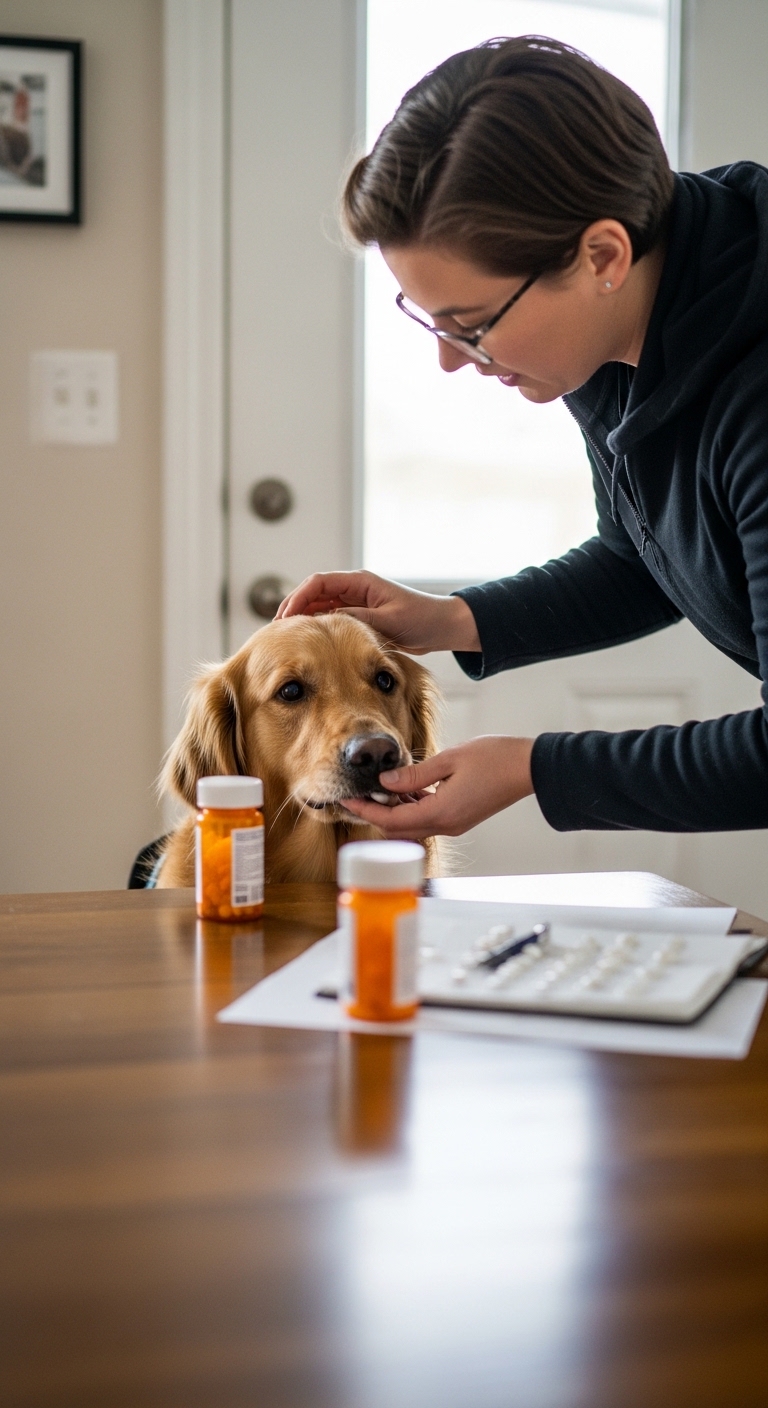
A well-trained service dog transforms lives through trust and dedication.
Frequently Asked Questions
- → What breeds are best suited for service work?
Breeds like Labrador Retrievers, Golden Retrievers, and German Shepherds are popular choices due to their intelligence, trainability, and temperament. However, any breed can excel with proper training and socialization.
- → How long does it take to train a service dog?
Training duration varies depending on the dog's breed, age, and the complexity of tasks. Basic obedience can take a few months, while advanced task training may require 6 months to 2 years of consistent effort.
- → Can I train my dog myself or should I hire a professional?
While self-training is possible, hiring a professional trainer or enrolling in a service dog program ensures structured guidance and increases the likelihood of success. Professionals can tailor training to your dog's specific needs.
- → What tasks can a service dog be trained to perform?
Service dogs can be trained for a variety of tasks, including mobility assistance, medical alert (e.g., detecting seizures or low blood sugar), psychiatric support, and guiding visually impaired individuals. The tasks depend on the handler's needs.
- → How do I socialize my dog for service work?
Start socializing your dog early by exposing them to different environments, people, and animals. Gradually introduce them to public spaces like stores, parks, and public transport. Use positive reinforcement to build confidence and reduce anxiety.
- → What equipment do I need for service dog training?
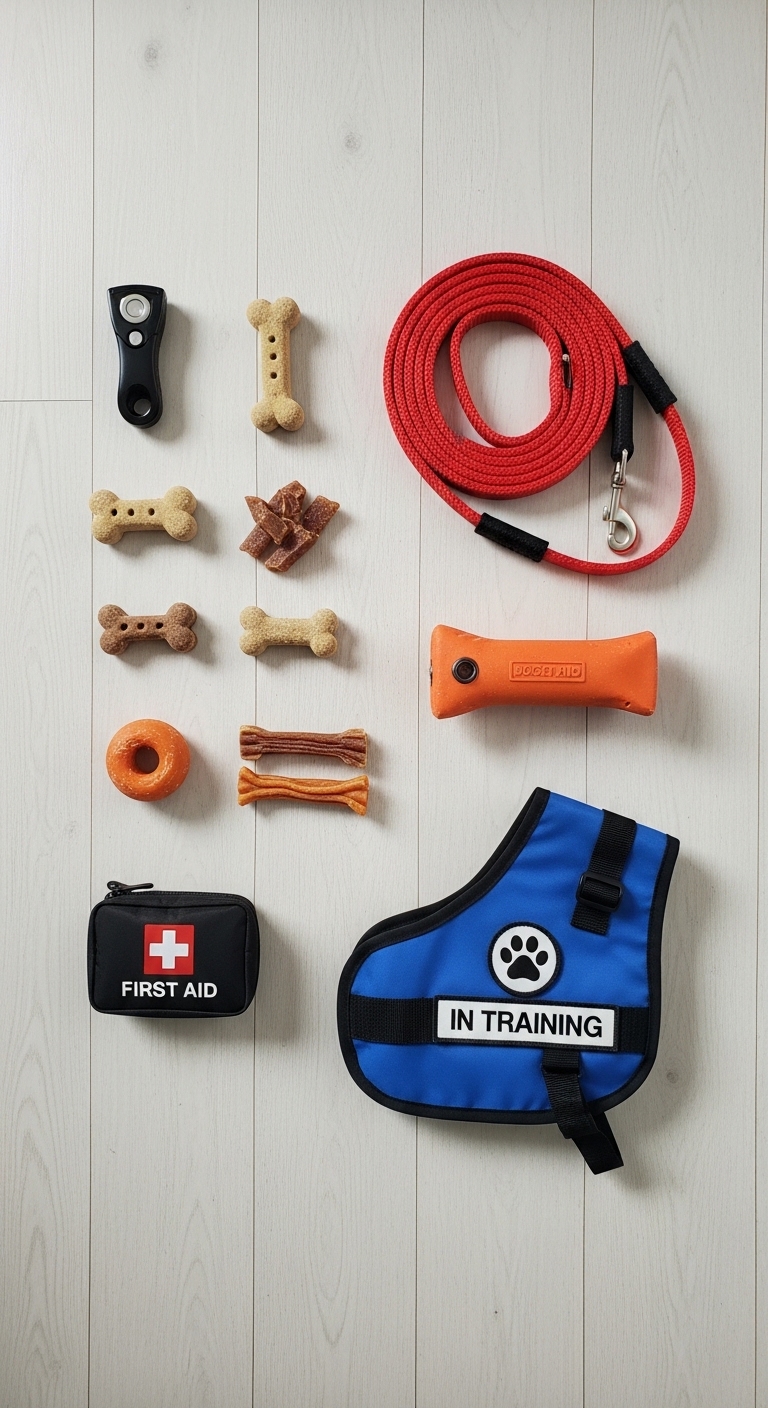
Essential equipment includes a sturdy leash, harness, treats for positive reinforcement, clicker (optional), and training aids like scent samples for medical alert dogs. A training vest or ID can also help signal your dog's working status in public.