Do dogs see color? It’s a question many pet owners wonder about, especially when choosing toys, training tools, or even decorating their homes. Unlike humans, dogs don’t see the world in the same vibrant spectrum, but that doesn’t mean they live in a black-and-white movie. Understanding their vision helps you pick the right products, create a safer environment, and even strengthen your bond by choosing colors that stand out to them.
I once bought a bright red ball for my dog, only to realize he ignored it completely: turns out he couldn’t see it against the green grass. That’s when I learned how differently dogs perceive the world.
Key Things to Understand
- Dogs see a limited color range compared to humans: mostly blues, yellows, and grays
- They struggle to distinguish between red and green: which can look similar to them
- Brightness and contrast matter more than color: when dogs identify objects
- Their vision is better in low light than ours: thanks to more rod cells in their eyes
- Movement catches their attention more: than static colors or shapes
What to Look For
Pay attention to how your dog reacts to different colored toys or objects. If they seem disinterested in a bright red ball but go crazy for a blue one, it might be because the red blends into the background or looks dull to them. Watch their reactions in various lighting conditions too: dogs see better in dim light, so a toy that’s invisible in daylight might suddenly become exciting at dusk. Notice if they rely more on scent or sound when objects aren’t visually clear to them. This can help you choose training tools or playthings that truly engage them.
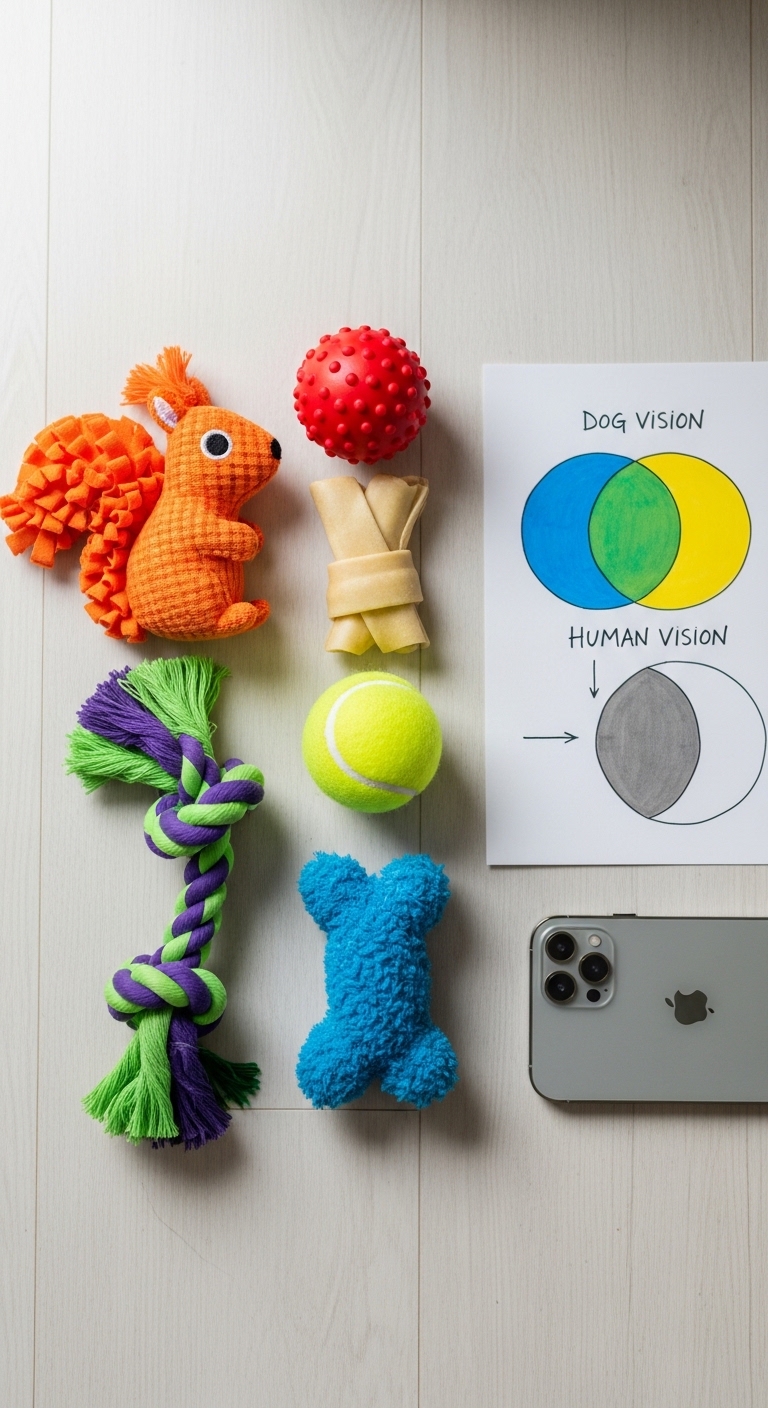
I’ve seen dogs get frustrated when their owners assume they see the same colors we do. A toy that’s invisible to them isn’t just ignored: it can make playtime less fun. Always test new items in different settings to see what truly captures their interest.
How dog vision differs from human vision
Dogs have fewer color receptors, which limits their color range. Their eyes are built to detect movement, making them great hunters. They rely more on scent and sound when colors aren’t clear.
Why toy colors matter for dogs
Bright blues and yellows are easiest for dogs to see. Avoid red and green toys if your dog seems uninterested. Contrast against backgrounds helps dogs identify objects faster.
Training tips based on dog vision
Use high-contrast colors for training tools to make them stand out. Avoid relying solely on color cues: combine them with sounds or scents. Test new training aids in different lighting to see what works best.
Signs your dog might be struggling with vision
Squinting or tilting their head when looking at objects. Avoiding certain toys or areas of the house. Bumping into furniture or hesitating on stairs.
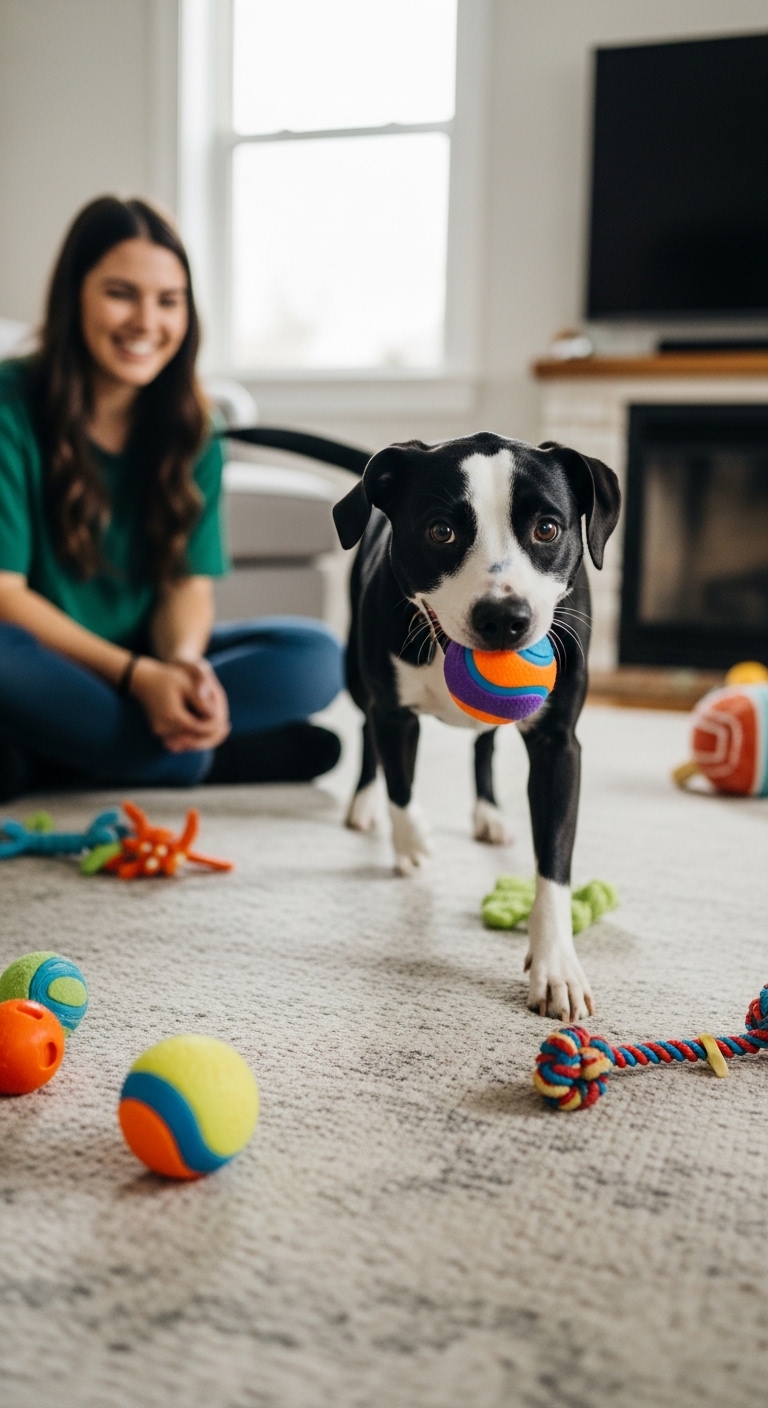
Understanding your dog’s vision can transform how you interact with them.
Frequently Asked Questions
- → Can dogs see all colors like humans?
No, dogs see a more limited color spectrum than humans. They primarily perceive blues, yellows, and shades of gray, but cannot distinguish reds and greens the way we do.
- → What colors do dogs see best?
Dogs see blues and yellows most vividly. These colors appear bright and distinct to them, while reds and greens look similar to shades of gray or brown.
- → Does my dog's limited color vision affect training?
It can. Dogs rely more on brightness contrast and motion than color. Using high-contrast toys (like blue against yellow) can make training more effective.
- → Why do dogs see fewer colors than humans?
Dogs have fewer color-detecting cone cells in their eyes. Humans have three types of cones (trichromatic vision), while dogs only have two (dichromatic vision).
- → How does my dog's vision affect their daily life?
Dogs prioritize motion detection and low-light vision over color. This explains why they're great at tracking moving objects but may struggle with stationary red toys on green grass.
- → Can I improve my dog's color perception?
While you can't change your dog's natural vision, you can choose toys and accessories in colors they see best (blue and yellow) to enhance their experience.