First-time dog owners often feel a mix of excitement and overwhelm when bringing home a new furry friend. The learning curve is real, but the rewards are even bigger. Getting the basics right early on makes all the difference in raising a happy, healthy dog. Whether it’s choosing the right food, setting up a safe space, or understanding body language, small decisions add up to big results over time.
I still remember my first week with my rescue pup: those first few nights were rough, but setting up a cozy crate and sticking to a predictable schedule made everything smoother. Small efforts early on prevent bigger headaches later.
Key Things to Understand
- Routine matters: First-time owners often underestimate how much routine matters for a dog’s sense of security. Dogs thrive on predictability, so feeding, walks, and sleep schedules should happen at roughly the same times each day.
- Food choices: Choosing the wrong food can lead to allergies, digestive issues, or long-term health problems. Always check the ingredients and match the food to your dog’s age, size, and activity level.
- Safe home setup: A safe home setup means more than just puppy-proofing. Electrical cords, toxic plants, and small objects should be out of reach, but also think about escape routes and secure fencing if you have outdoor space.
- Socialization is essential: Socialization isn’t optional: it’s essential. Exposing your dog to different people, animals, and environments early helps prevent fear or aggression later in life.
- Training starts immediately: Training starts the moment you bring your dog home. Consistency with commands and boundaries teaches them what’s expected without confusion.
- Regular vet visits: Vet visits aren’t just for emergencies. Regular check-ups catch health issues before they become serious and keep vaccinations up to date.
What to Look For
Pay attention to how your dog reacts to new situations. A relaxed dog will sniff and explore, while a stressed one might hide, shake, or avoid eye contact. These reactions tell you whether your dog is adjusting well or needs more time.
Watch for signs of discomfort in their new environment. If they’re constantly scratching, licking their paws, or avoiding certain areas, it could mean allergies, anxiety, or even an undetected injury.
Notice how they eat and drink. A sudden loss of appetite or excessive thirst might signal health problems, while gulping water too fast could point to stress or heat exposure.
Check their stool regularly. Changes in color, consistency, or frequency often indicate dietary issues, infections, or parasites that need attention.
Observe their energy levels. A dog that’s unusually lethargic or hyperactive might be reacting to changes in their routine, diet, or even subtle pain.
It’s easy to assume your dog is fine if they’re eating and playing, but some health issues don’t show obvious signs right away. I once missed early signs of dental pain in my dog because I thought his chewing was just normal puppy behavior: turns out he needed a tooth extraction. Regular vet visits catch things like this before they become serious.
Daily Care Habits
Morning starts with a quick potty break and fresh water. Even if your dog sleeps through the night, they’ll need to go outside first thing. A consistent morning routine sets the tone for the whole day.
Evening routines matter just as much. A final walk before bed helps them burn off energy, and a quiet space for sleep prevents nighttime restlessness.
Grooming isn’t just about looks. Brushing removes loose fur, checks for fleas or skin issues, and strengthens your bond. Even short-haired breeds benefit from regular grooming sessions.
Teeth brushing should be part of the routine too. Dental disease is common but preventable with just a few minutes of care each day. Start slow with dog-friendly toothpaste and reward them for cooperation.
Choosing the Right Product
Not all dog beds are created equal. Look for ones with removable, washable covers and enough support for your dog’s joints, especially if they’re older or a larger breed.
Food bowls should be the right height for your dog’s size. Elevated bowls can reduce neck strain, while flat ones work better for small or flat-faced breeds.
Collars and harnesses need to fit snugly but not too tight. You should be able to fit two fingers between the strap and your dog’s skin. A loose collar can slip off, while a tight one causes discomfort.
Toys should match your dog’s chewing style. Destructive chewers need tough rubber toys, while gentle chewers do fine with plush or rope options.
Safety and Comfort
Keep human foods like chocolate, grapes, and onions far away from your dog. Even small amounts can be toxic and require emergency vet visits.
Secure trash cans and cabinets with latches. Dogs are notorious for getting into things they shouldn’t, from spoiled food to cleaning supplies.
Watch for overheating, especially in summer. Signs include excessive panting, drooling, or lethargy. Always provide shade and fresh water when they’re outside.
Car rides can be stressful for some dogs. Use a secure crate or harness to keep them safe and prevent distractions while driving.
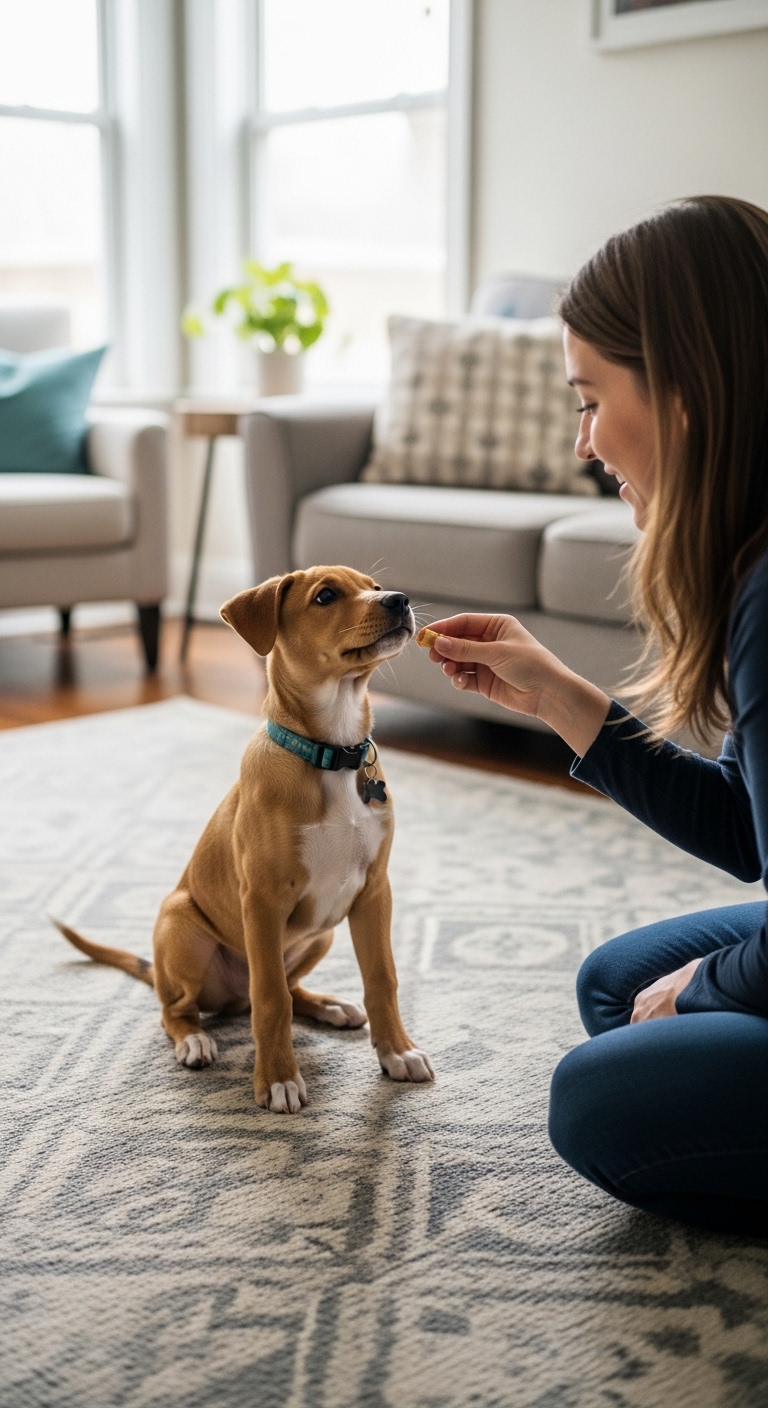
The first few months with a new dog are a whirlwind, but they fly by faster than you think. The time you invest in routines, training, and health checks pays off in a dog that’s confident, happy, and well-adjusted.
Frequently Asked Questions
- → What supplies do I need before bringing a dog home?
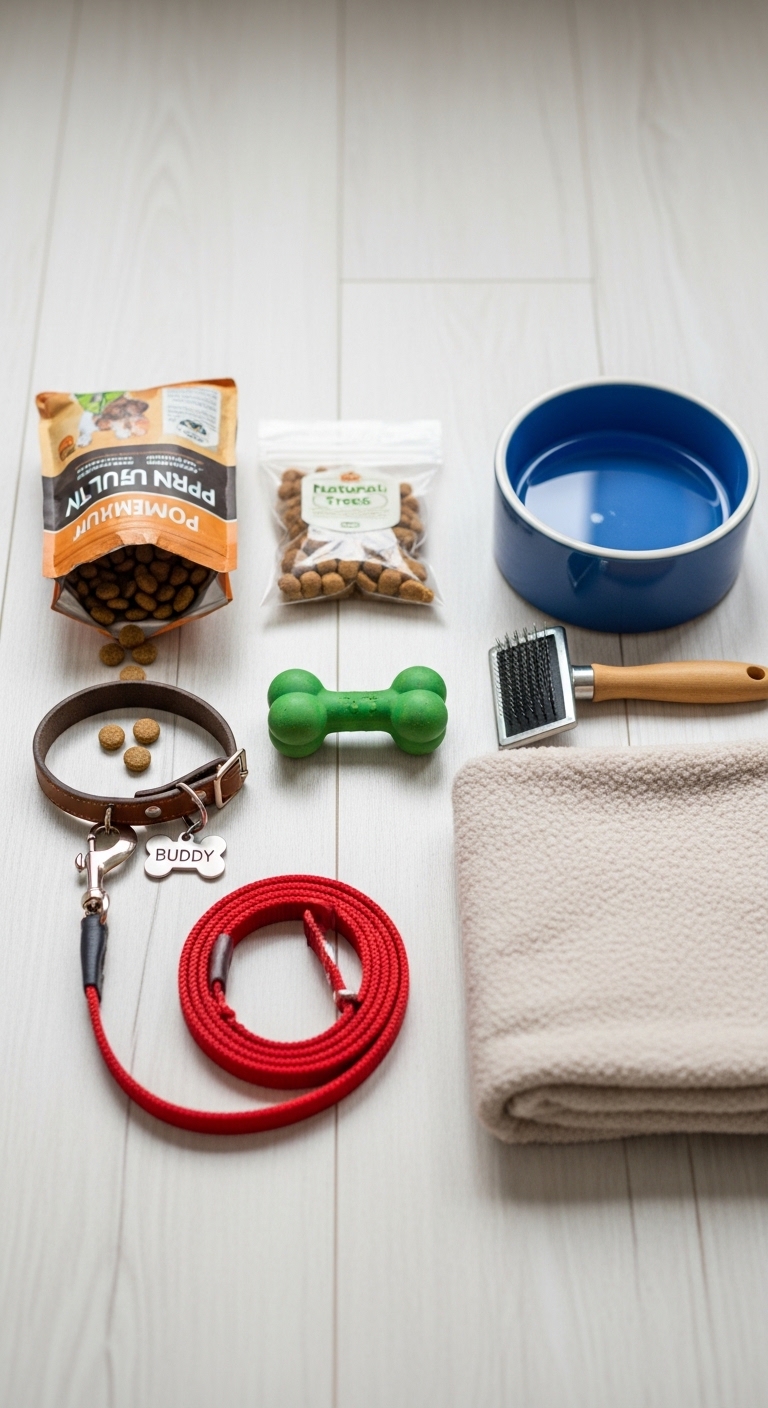
Essential supplies include a sturdy leash, food and water bowls, high-quality dog food, a comfortable bed, toys for mental stimulation, grooming tools, and a crate for safe confinement. Don’t forget poop bags, a collar with ID tags, and cleaning supplies for accidents.
- → How do I choose the right dog food for my new pet?
Select food based on your dog’s age, size, and breed. Look for high-quality ingredients with real meat as the first component. Consult your vet for personalized recommendations, especially if your dog has allergies or dietary restrictions.
- → What’s the best way to house-train a puppy?
Establish a consistent routine for bathroom breaks, especially after meals and naps. Take your puppy outside frequently and reward them with praise or treats when they go in the right spot. Use a designated potty area to reinforce the habit.
- → How much exercise does a new dog need daily?
Exercise needs vary by breed and age. Generally, dogs require 30 minutes to 2 hours of activity per day, including walks, playtime, and mental stimulation. Puppies and high-energy breeds need more frequent, shorter sessions.
- → What are common mistakes first-time dog owners make?
Common mistakes include skipping vet visits, not setting boundaries early, overfeeding, ignoring training, and leaving dogs alone for too long. Avoid punishment-based training and prioritize positive reinforcement to build trust.
- → How can I help my dog adjust to a new home?
Keep the environment calm and quiet at first. Introduce your dog to one room at a time to prevent overwhelm. Use familiar items like their bed or blanket to create a sense of security. Spend quality time bonding through gentle play and cuddles.