
Can dogs have whipped cream? It’s a question many pet owners ask when they’re sharing a sweet treat with their furry friend or considering giving them a lick of their dessert. While it might seem harmless, whipped cream isn’t always safe for dogs. Some can tolerate small amounts, but others may experience digestive upset or more serious health issues. Understanding the risks and alternatives can help you make better choices for your dog’s diet and well-being.
I’ve seen dogs get sick after eating whipped cream, especially if it’s loaded with sugar or artificial sweeteners. One time, a friend’s dog got into a bowl of whipped cream and ended up with a stomachache for hours. It’s a good reminder that even harmless human foods can cause problems for pets.
Key Things to Understand
- Lactose intolerance: is common in dogs, and whipped cream is high in dairy, which can lead to stomach upset
- Xylitol risk: many store-bought whipped creams contain xylitol, an artificial sweetener that’s toxic to dogs
- Limited tolerance: small amounts of plain whipped cream might not harm some dogs, but it’s not a healthy treat
- Health concerns: whipped cream can contribute to obesity and dental issues if given too often
- Sensitive dogs: dogs with pancreatitis or sensitive stomachs should avoid whipped cream entirely
What to Look For
Watch how your dog reacts after eating whipped cream. Some dogs may show no signs of trouble, while others could develop diarrhea, vomiting, or excessive gas within a few hours. If your dog seems lethargic or loses interest in food after eating whipped cream, it’s a sign they didn’t tolerate it well. Pay attention to the ingredients list on whipped cream containers, especially if you’re buying a canned or pre-made version. Avoid products with xylitol, high sugar content, or artificial flavors, as these can be dangerous. If you’re unsure, stick to dog-safe alternatives like plain yogurt or whipped pumpkin puree, which are easier on their stomachs.

A common mistake is assuming all whipped creams are the same. Some brands use ingredients that are fine for humans but dangerous for dogs. Another issue is overfeeding: just because a dog can eat whipped cream doesn’t mean they should have it regularly. I once met a dog owner who gave their pup whipped cream every day, thinking it was a harmless treat. Over time, the dog gained weight and developed digestive problems. It’s a reminder that even small indulgences can add up.
Alternatives to whipped cream
If you want to give your dog a creamy treat, plain yogurt is a much safer option. Look for unsweetened, plain yogurt with no added flavors or sugars. Greek yogurt is a good choice because it’s lower in lactose. Another option is whipped pumpkin puree, which is gentle on the stomach and packed with fiber. You can also blend cottage cheese with a little water for a light, protein-rich snack.
How to introduce new treats safely
Start with a tiny amount of any new treat and watch for reactions over the next 24 hours. If your dog seems fine, you can gradually increase the portion, but keep it small. Avoid giving treats right before or after meals to prevent overfeeding. If your dog has a history of stomach issues, consult your vet before introducing dairy-based treats.
Why portion control matters
Even if your dog tolerates whipped cream well, too much can lead to obesity or pancreatitis. A good rule is to keep treats under 10% of your dog’s daily calorie intake. For a small dog, that’s just a teaspoon or two. Larger dogs can handle slightly more, but moderation is key. Think of it like giving a child candy: it’s fine in small doses, but too much can cause problems.
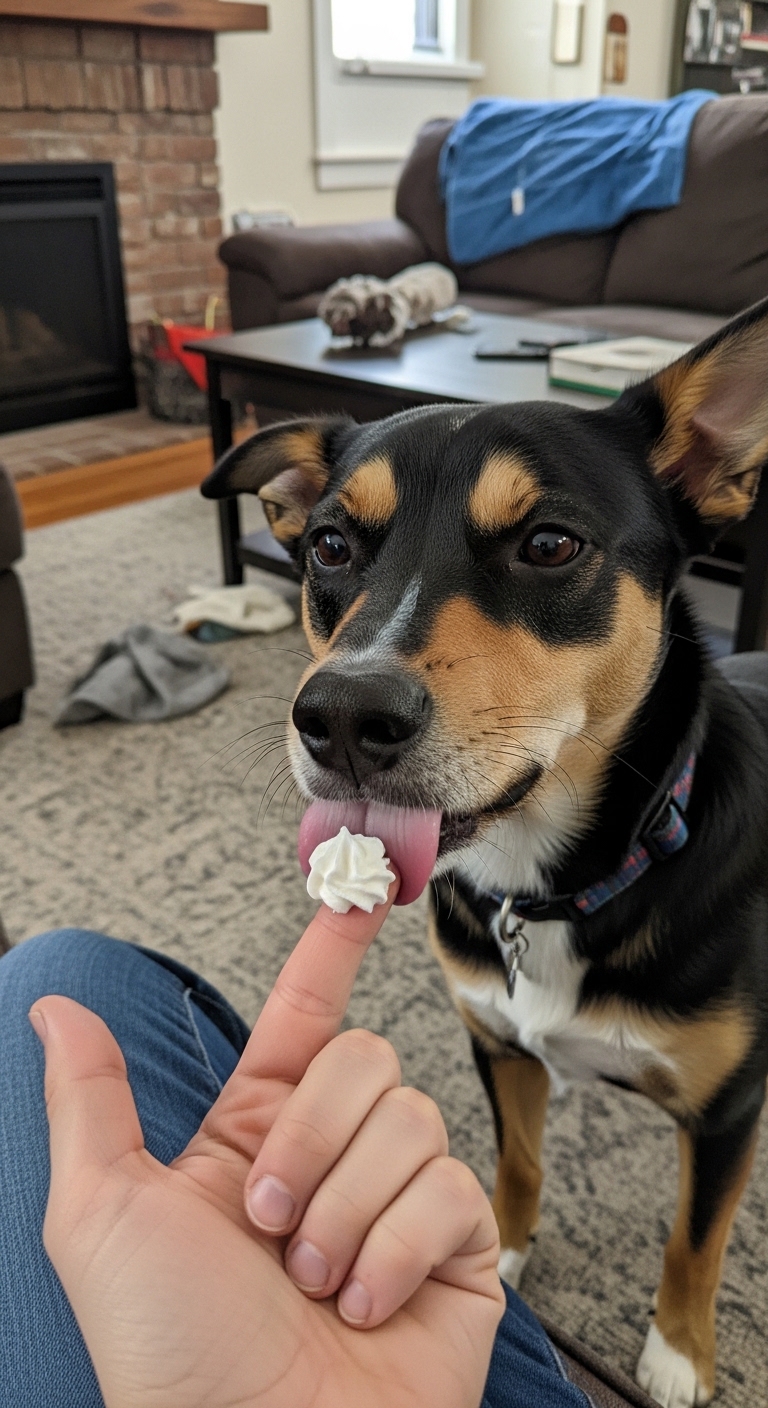
Understanding what’s safe for your dog helps keep them healthy and happy.
Frequently Asked Questions
- → Is whipped cream toxic to dogs?
Plain whipped cream in small amounts is not toxic, but it can cause digestive issues due to lactose and high fat content. Avoid products with xylitol or artificial sweeteners, as these are highly dangerous.
- → Can lactose intolerant dogs have whipped cream?
Most dogs with lactose intolerance will experience stomach upset, gas, or diarrhea from whipped cream. It's best to avoid dairy-based treats for these pets and opt for lactose-free alternatives.
- → What happens if my dog eats too much whipped cream?
Overconsumption can lead to vomiting, diarrhea, or even pancreatitis due to the high fat content. Symptoms may include lethargy, loss of appetite, or abdominal pain—contact your vet if these occur.
- → Are there safe whipped cream alternatives for dogs?
Yes! Consider dog-specific whipped cream, plain unsweetened yogurt, or pumpkin puree as healthier options. Always check with your vet before introducing new treats.
- → How much whipped cream can I give my dog?
If your dog tolerates dairy, a small teaspoon-sized portion occasionally is unlikely to cause harm. However, moderation is key—whipped cream should not be a regular treat.
- → Can puppies have whipped cream?
Puppies have sensitive digestive systems, and dairy can cause stomach issues. It's safer to avoid whipped cream and choose puppy-approved treats instead.