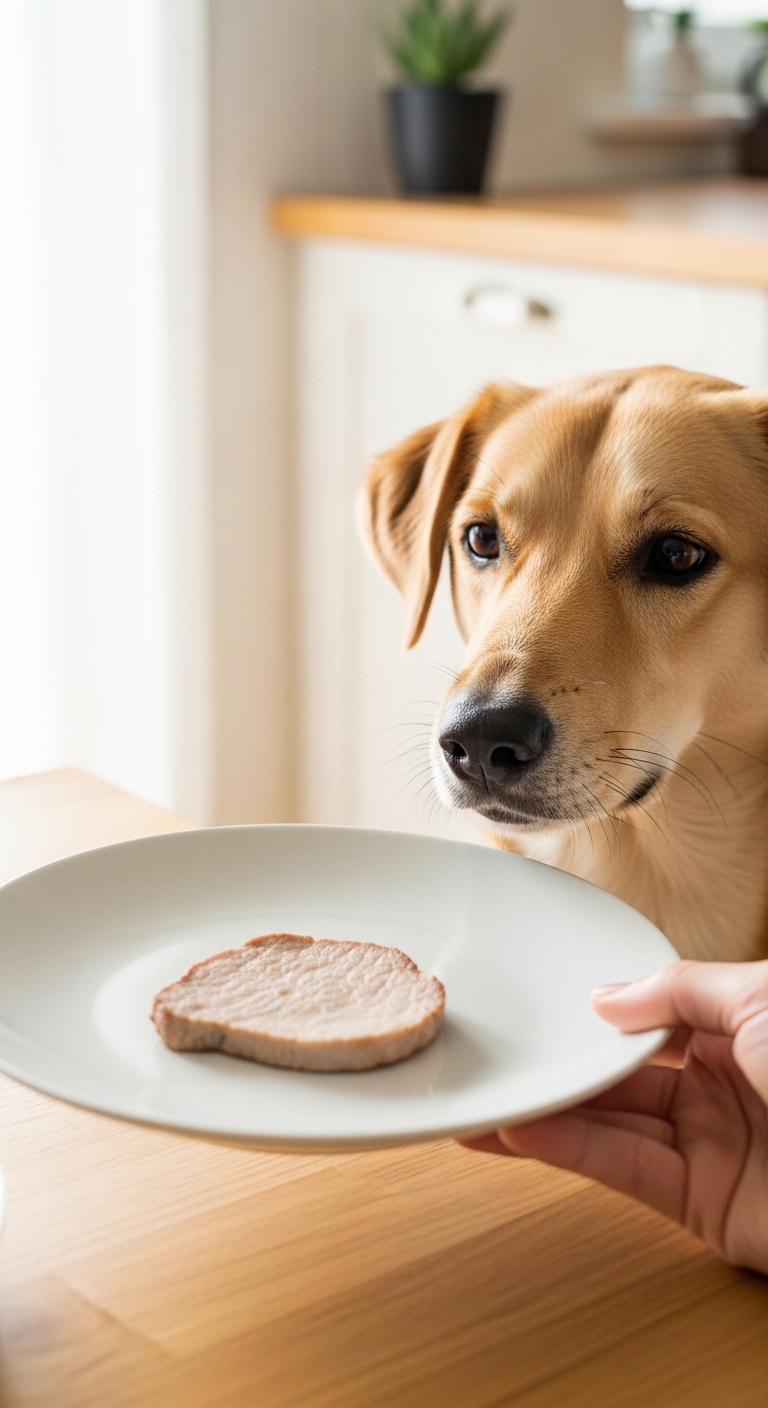
Can dogs eat bread? It’s a question that pops up more often than you’d think, especially when you’re sharing a sandwich or tearing off a piece of toast. Bread seems harmless: soft, easy to chew, and a staple in many households. But the truth isn’t as simple as it looks. For pet owners, knowing what’s safe (and what’s not) can prevent unnecessary vet visits and keep your dog happy and healthy.
I remember the first time my neighbor’s dog stole a whole slice of garlic bread off the counter. The aftermath wasn’t pretty: stomach upset, lethargy, and a very guilty-looking pup. That moment taught me that even “harmless” foods can cause real problems.
Key Things to Understand
- Plain white or wheat bread in small amounts: generally safe for most dogs
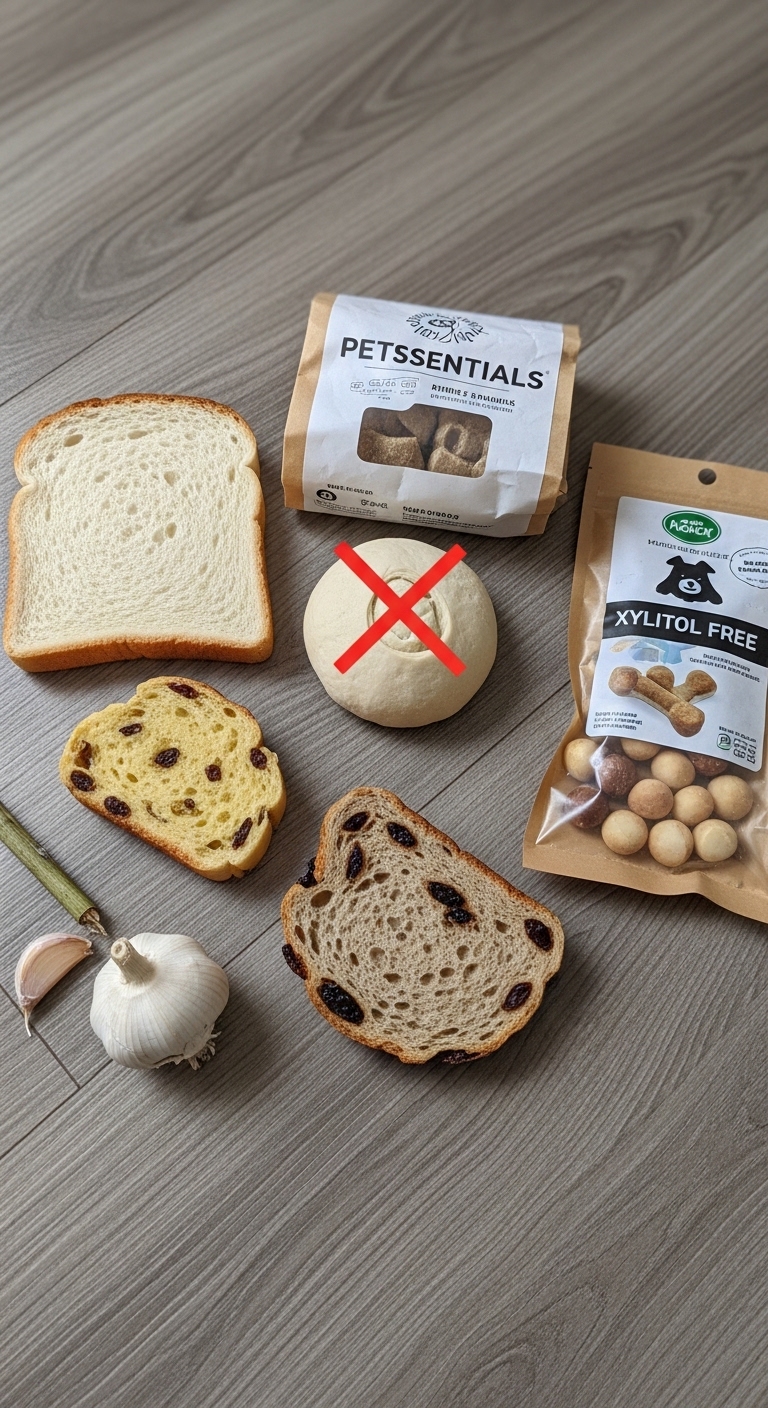
- Bread with added ingredients like raisins, garlic, onions, or xylitol: toxic and should never be given
- Feeding bread regularly: can contribute to weight gain and poor nutrition since it lacks essential nutrients dogs need
- Some dogs may have mild digestive upset: even from plain bread due to gluten sensitivity or wheat allergies
- Bread dough with yeast: can expand in the stomach, causing dangerous bloating or alcohol poisoning
What to Look For
Watch for signs that your dog tolerates bread well, like normal energy levels and regular digestion. If your dog seems lethargic, gassy, or has loose stools after eating bread, it might not agree with them. Pay attention to the ingredients list on any bread you share: even small amounts of harmful additives can cause serious issues. If your dog has a sensitive stomach or known food allergies, it’s best to avoid bread altogether and stick to dog-specific treats.
Many pet owners don’t realize that even plain bread can cause problems if given too often. I once saw a dog develop pancreatitis after eating buttered bread every day as a treat. It’s a reminder that moderation is key, and treats should never replace a balanced diet.
Daily Care Habits
If you like to share snacks with your dog, bread can be a quick option in a pinch. Just keep portions tiny: think a small bite-sized piece rather than a whole slice. Avoid feeding bread as a regular treat, though, since it doesn’t provide the nutrients your dog needs. Instead, use it sparingly for training rewards or when you’re in a hurry and don’t have dog treats on hand.
Choosing the Right Product
When it comes to bread, plain is always the safest choice. Avoid anything with seeds, nuts, or dried fruits, as these can pose choking hazards or contain toxins. Whole grain breads are slightly better than white bread because they have a bit more fiber, but neither is necessary for your dog’s diet. If you’re unsure, stick to plain white or wheat bread with no added ingredients.
Safety and Comfort
Never give your dog bread that’s moldy or stale, as mold can produce toxins that are dangerous even in small amounts. Also, avoid bread with toppings like butter, jam, or cheese, which can add unnecessary fat and sugar. If your dog has dietary restrictions or health conditions like diabetes, it’s best to skip bread entirely and opt for vet-approved treats instead.
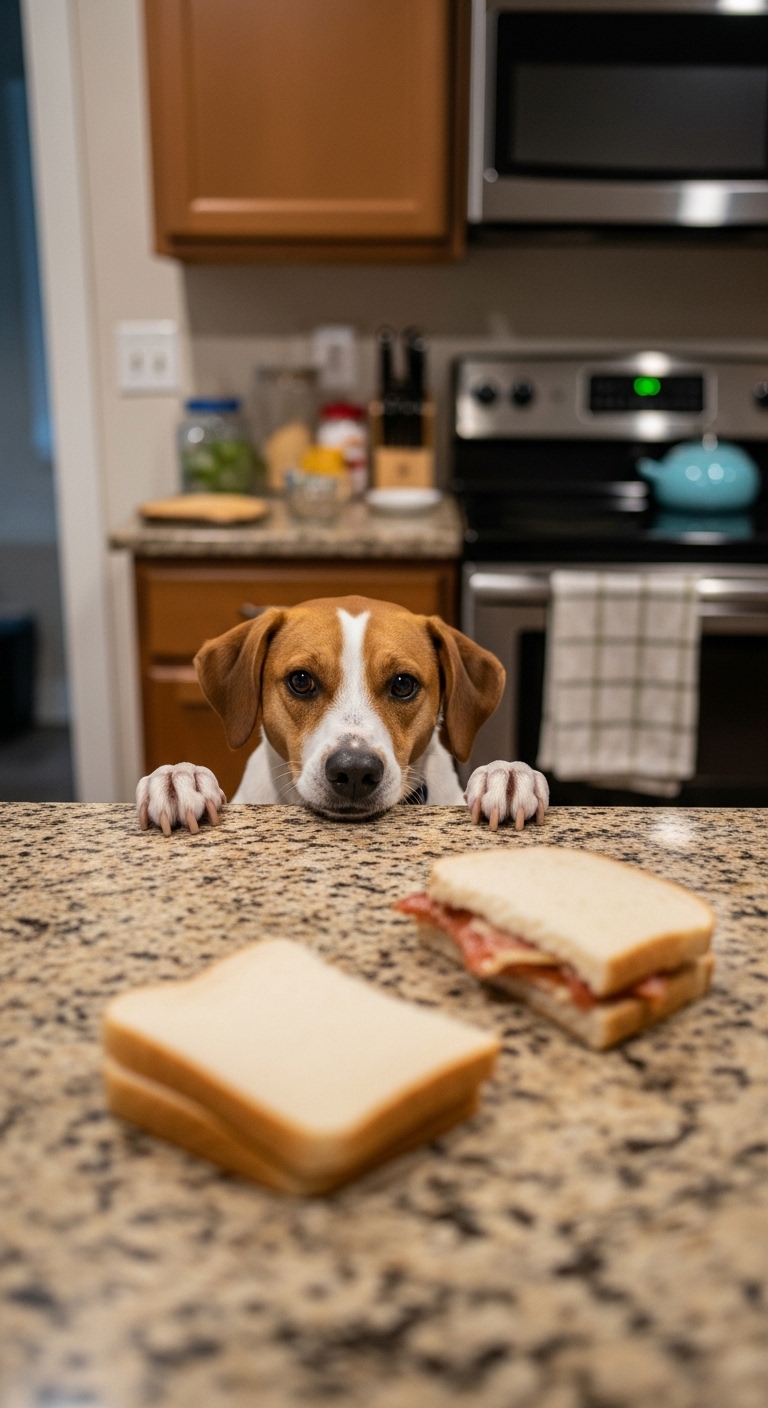
Sharing food with your dog can be a bonding experience, but their health should always come first. When in doubt, choose treats made just for them.
Frequently Asked Questions
- → Can dogs eat plain white bread?
Yes, dogs can eat plain white bread in small amounts, but it provides no nutritional benefits. Avoid feeding large quantities as it can lead to weight gain or digestive upset.
- → Is whole wheat bread better for dogs?
Whole wheat bread contains more fiber than white bread, which may aid digestion. However, it should still be given in moderation as a treat rather than a dietary staple.
- → What bread ingredients are toxic to dogs?
Bread containing raisins, grapes, garlic, onions, xylitol, or excessive salt can be toxic to dogs. Always check ingredient labels before sharing bread with your pet.
- → How much bread can I give my dog?
Bread should only be an occasional treat, making up no more than 10% of your dog's daily caloric intake. A small piece the size of your thumb is sufficient for most dogs.
- → Can bread cause allergies in dogs?
While rare, some dogs may develop allergies to wheat or gluten. Symptoms can include itching, skin irritation, or digestive issues. Consult your vet if you suspect an allergy.
- → What are healthier alternatives to bread for dogs?
Better treat options include small pieces of cooked lean meat, carrots, apples (without seeds), or commercial dog treats designed for canine nutrition. Always introduce new foods gradually.