
Why do dogs howl is one of those behaviors that can feel confusing at first. It’s not just noise: it’s a form of communication that dogs inherited from their wild ancestors. You might hear it when sirens pass by, when they’re left alone, or even during playtime. Understanding why it happens can help you respond in a way that keeps your dog calm and happy.
I’ve noticed that dogs often howl more when they hear high-pitched sounds like music or emergency sirens. It’s not just random: it’s their way of joining in or trying to figure out what’s going on.
Key Things to Understand
- Communication: Dogs howl to communicate with other dogs or with you, especially if they feel isolated or anxious
- Breed tendencies: Some breeds are naturally more vocal, like Huskies or Beagles, because they were bred to alert humans or work in groups
- Sound reactions: Howling can also be a reaction to certain sounds, like sirens, music, or even other dogs barking in the distance
- Health signals: If your dog suddenly starts howling more than usual, it could signal pain, discomfort, or a medical issue that needs attention
- Nighttime howling: Howling at night might mean your dog is bored, lonely, or seeking interaction
What to Look For
Pay attention to the timing and triggers of your dog’s howling. If it happens mostly when you leave the house, your dog might be struggling with separation anxiety. Notice whether the howling stops after a few minutes or continues for longer periods. Some dogs howl in response to specific sounds, like a fire truck siren or a musical instrument, while others do it randomly. If your dog’s howling is paired with pacing, whining, or destructive behavior, it’s a sign they’re stressed rather than just vocalizing. Also, watch for physical cues like limping or reluctance to move, which could mean pain is the cause.
I once had a neighbor whose dog howled every time a motorcycle passed by. At first, it seemed like a strange habit, but after a while, it became clear the dog was just reacting to the high-pitched engine noise. Once they moved the dog’s bed to a quieter room, the howling stopped almost completely.
Common Mistakes to Avoid
Don’t punish your dog for howling, as this can increase their anxiety and make the behavior worse. Avoid assuming all howling is due to separation anxiety: sometimes it’s just excitement or a response to outside sounds. Don’t ignore sudden changes in howling patterns, as this could be a sign of pain or illness.
Howling and Breed Tendencies
Some breeds are more prone to howling because of their history. For example, Huskies were bred to work in teams and often howl to communicate over long distances. Beagles, originally hunting dogs, use vocalizations to alert their owners. If you have one of these breeds, expect more howling than you might see in a quieter breed like a Bulldog. That said, any dog can develop howling habits, so it’s not just about breed: it’s also about personality and environment.
When Howling Signals a Problem
While howling is usually harmless, there are times when it’s a red flag. If your dog howls excessively when you’re not home and shows other signs like chewing furniture or accidents, separation anxiety could be the cause. Dogs in pain may also howl when touched or when moving, so watch for stiffness or reluctance to play. Sudden, unexplained howling in an older dog can sometimes point to cognitive decline or arthritis. When in doubt, a quick vet visit can give you peace of mind.
Calming a Howling Dog
If your dog howls at sounds like sirens, try playing soft music or white noise to mask the triggers. A cozy den-like space with their favorite blanket can also reduce anxiety. For dogs who howl when left alone, puzzle toys or a treat-dispensing camera can keep them occupied. Avoid giving attention when they’re howling, as this can reinforce the behavior. Instead, reward quiet moments with praise or a small treat. Over time, your dog will learn that silence gets positive results.
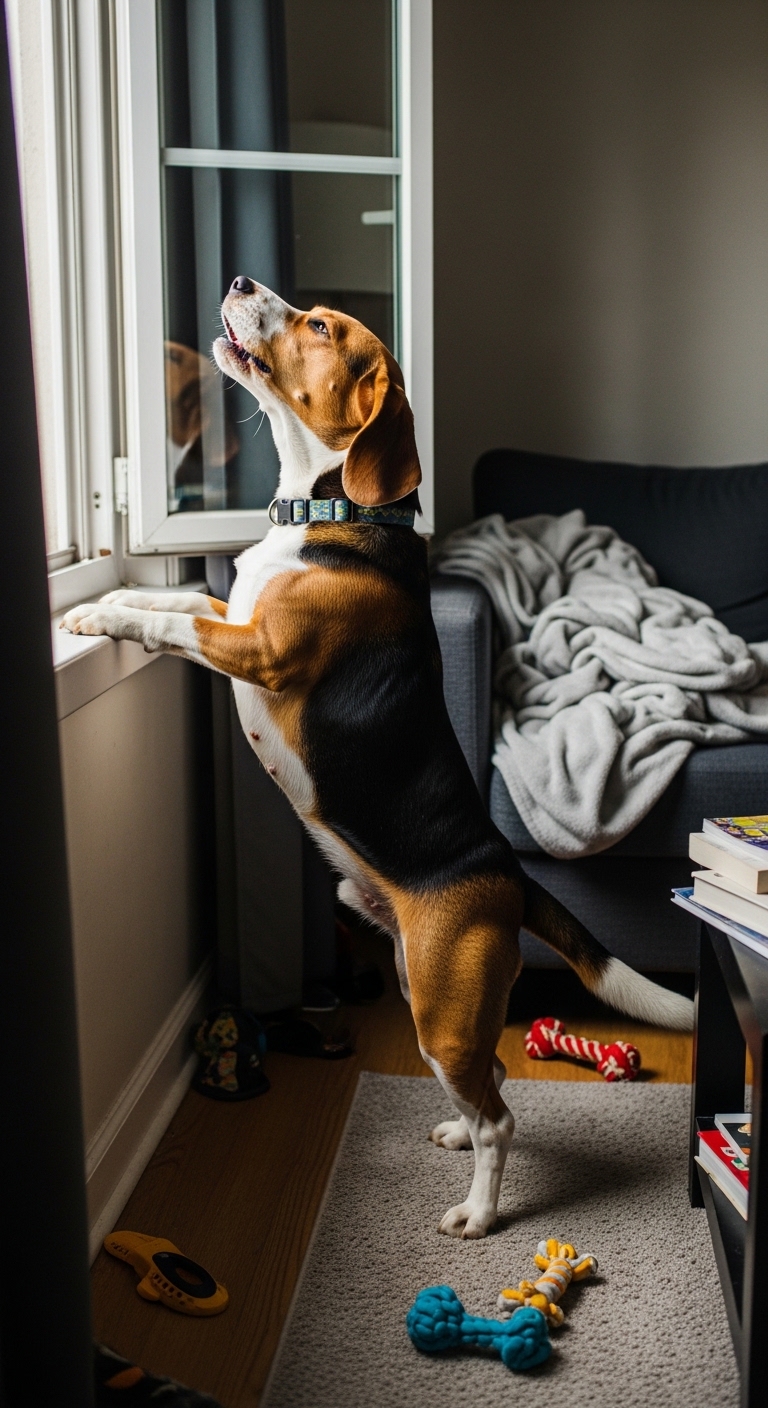
Understanding your dog’s howling helps you respond in a way that keeps them happy and healthy.
Frequently Asked Questions
- → Why does my dog howl when I leave the house?
This is often a sign of separation anxiety. Dogs may howl to express distress or call for you to return. Gradual desensitization training and creating a safe space can help ease their anxiety.
- → Is it normal for dogs to howl at sirens?
Yes, many dogs howl in response to high-pitched sounds like sirens because it triggers their natural vocal instincts. This behavior is usually harmless but can be managed with training.
- → Can howling indicate pain in dogs?
Yes, excessive or sudden howling may signal pain or discomfort. If your dog’s howling is unusual or accompanied by other symptoms like limping, consult a vet promptly.
- → How can I stop my dog from howling at other dogs?
Desensitization and counterconditioning can help. Reward calm behavior and gradually expose your dog to triggers while keeping them relaxed. Avoid punishing, as it may increase anxiety.
- → Do certain breeds howl more than others?
Yes, breeds like Huskies, Beagles, and Dachshunds are more prone to howling due to their vocal nature. Understanding breed traits can help tailor your approach to managing howling.
- → Should I be concerned if my dog howls at night?
Nighttime howling could indicate loneliness, discomfort, or underlying health issues. Ensure your dog has a comfortable environment and consider a vet check if the behavior persists.