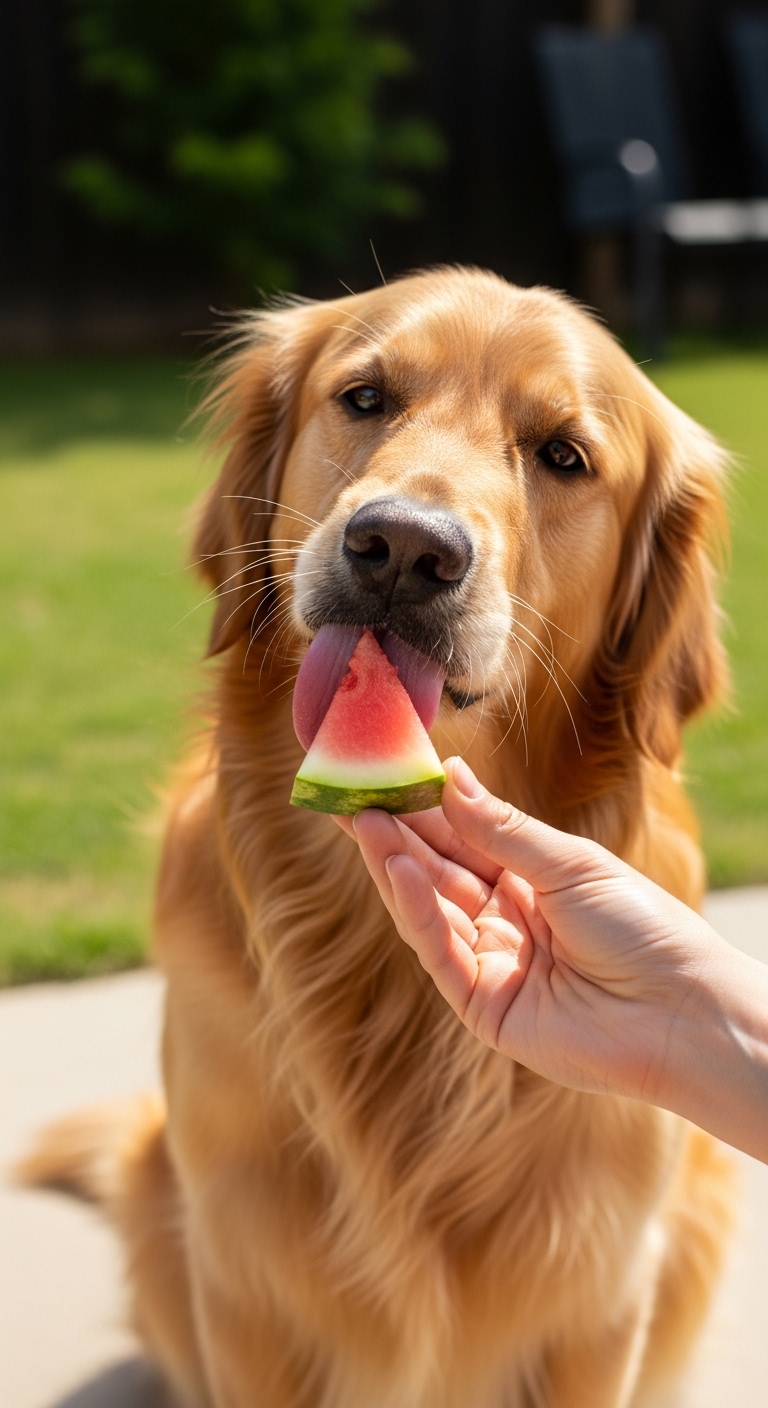
Can dogs eat watermelon? It’s a question many pet owners ask, especially during summer when the fruit is in season. Watermelon is juicy, refreshing, and packed with nutrients, but is it safe for our furry friends? The answer isn’t as simple as yes or no: it depends on how you serve it and what parts you include. For pet owners who want to treat their dogs without risking their health, understanding the right way to share this fruit is key.
I remember the first time I gave my golden retriever a small piece of watermelon: his tail wagged nonstop, and he licked his bowl clean. But after a few bites, he started to burp, and I realized I’d given him too much at once. That’s when I learned the importance of moderation and proper preparation.
Key Things to Understand
- Moderation is key: Watermelon is safe for dogs in moderation but should never replace their regular diet.
- Dangerous parts: The rind and seeds are dangerous and can cause choking or intestinal blockages.
- Safe portion: The flesh is the only part that’s safe to eat, and it should be seedless and cut into small pieces.
- Digestive risks: Too much watermelon can lead to stomach upset due to its natural sugars and water content.
What to Look For
When choosing watermelon for your dog, look for ripe fruit that’s firm and heavy for its size. The flesh should be bright red or pink, depending on the variety, and free of bruising or mold. Avoid any watermelon that smells overly sour or fermented, as this could indicate spoilage. If you’re buying pre-cut pieces, check that they’re fresh and haven’t been sitting out for too long.
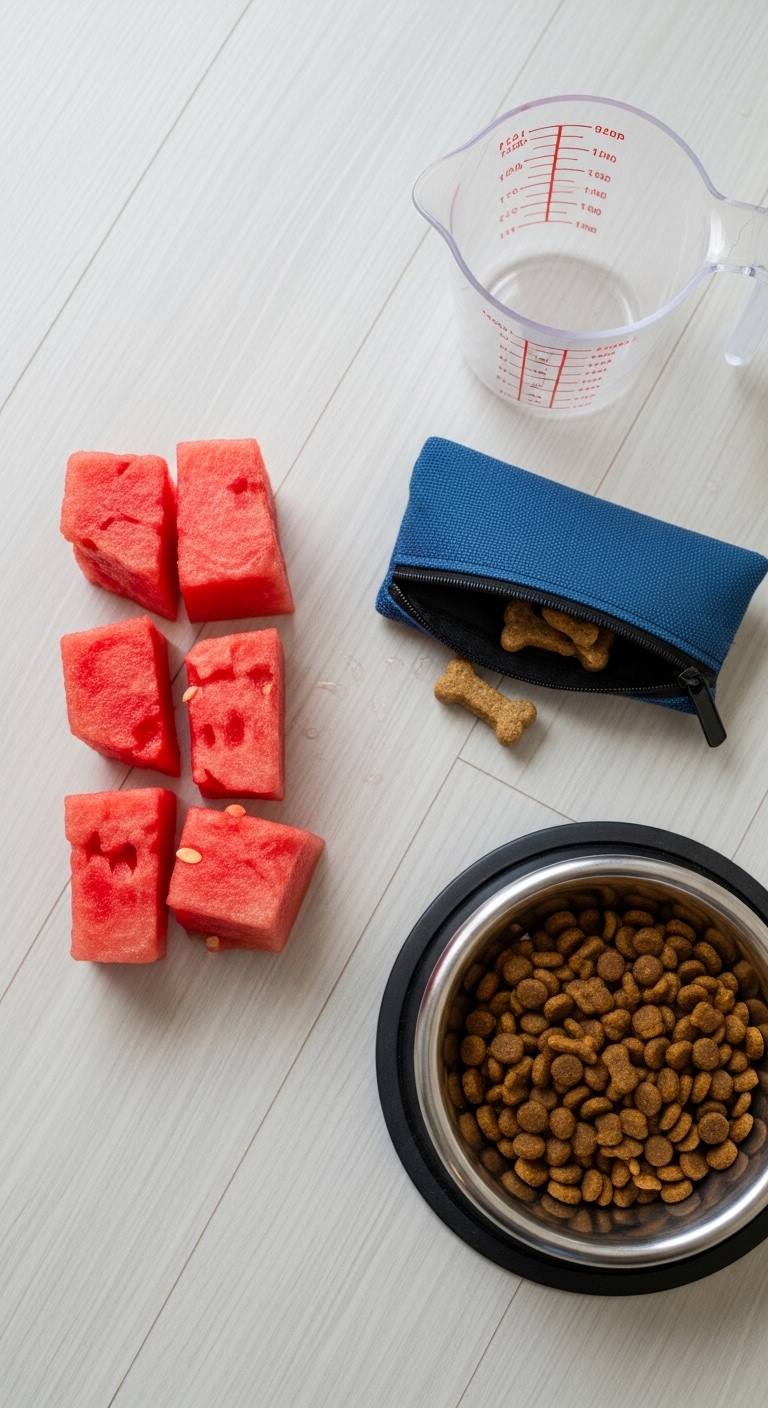
For serving, cut the watermelon into small, bite-sized cubes or thin slices. This makes it easier for your dog to chew and swallow, reducing the risk of choking. If your dog is small or a fast eater, consider mashing the flesh slightly to make it safer. Always remove any seeds, even if they seem small, as they can pose a choking hazard or cause digestive issues.
I once gave watermelon to my neighbor’s dog, who had never tried it before. Within minutes, the dog started scratching excessively and developed hives. It turned out the dog was allergic to a compound in the fruit. This taught me that even healthy treats can cause issues if a dog’s sensitivities aren’t known.
Serving Ideas for Watermelon
Mix small watermelon cubes into your dog’s regular food for a refreshing twist. Freeze watermelon chunks for a cool, crunchy snack on hot days. Blend seedless watermelon with plain yogurt for a simple homemade popsicle. Combine watermelon with other dog-safe fruits like blueberries for variety.
Signs of Trouble
If your dog eats watermelon rind or seeds, watch for vomiting, diarrhea, or lethargy. Choking hazards include large chunks or whole seeds that can get stuck in the throat. Excessive consumption can lead to bloating or an upset stomach due to the high water content.

Watermelon can be a fun, hydrating treat for dogs when served correctly. Always prioritize safety and moderation to keep your pet happy and healthy.
Frequently Asked Questions
- → Can dogs eat watermelon seeds?
No, dogs should not eat watermelon seeds. They can cause intestinal blockages or digestive issues. Always remove seeds before serving watermelon to your pet.
- → Is watermelon rind safe for dogs?
No, watermelon rind is tough and difficult to digest. It can cause choking hazards or gastrointestinal blockages. Always peel and remove the rind before offering watermelon to your dog.
- → How much watermelon can a dog eat?
Watermelon should be served in moderation. A good rule is to limit treats, including watermelon, to no more than 10% of your dog's daily caloric intake. Start with small pieces to gauge your dog's tolerance.
- → Are there any risks to feeding watermelon to dogs?
While watermelon is generally safe, overfeeding can lead to stomach upset due to its natural sugar content. Additionally, always avoid watermelon with added sugars or artificial sweeteners, which can be toxic to dogs.
- → Can puppies eat watermelon?
Yes, puppies can eat watermelon in small amounts, but it should be introduced gradually. Ensure the watermelon is seedless and peeled to avoid choking hazards. Consult your vet before introducing new foods to puppies.
- → What are the benefits of watermelon for dogs?
Watermelon is low in calories and high in hydration, making it a great summer treat. It contains vitamins A, B6, and C, as well as potassium, which support your dog's immune system and overall health.