
Can dogs have watermelon? It’s a question many pet owners ask, especially during hot summer months when this juicy fruit seems like a perfect treat. Watermelon is hydrating, low in calories, and packed with vitamins, making it tempting to share with your furry friend. But before you hand over a slice, there are a few things to consider to keep your dog safe and healthy.
I remember the first time I gave my golden retriever a piece of watermelon. He gobbled it up so fast I worried he’d choke, but watching him lick his lips afterward made it clear he loved it. That’s when I realized how important it is to know the best way to share this treat.
Key Things to Understand
- Nutritional benefits: Watermelon is safe for dogs in moderation because it’s mostly water and contains vitamins A, B6, and C
- Dangerous parts: The rind and seeds should never be given to dogs as they can cause choking or intestinal blockages
- Preparation: Remove all seeds before offering watermelon to your dog to prevent digestive issues
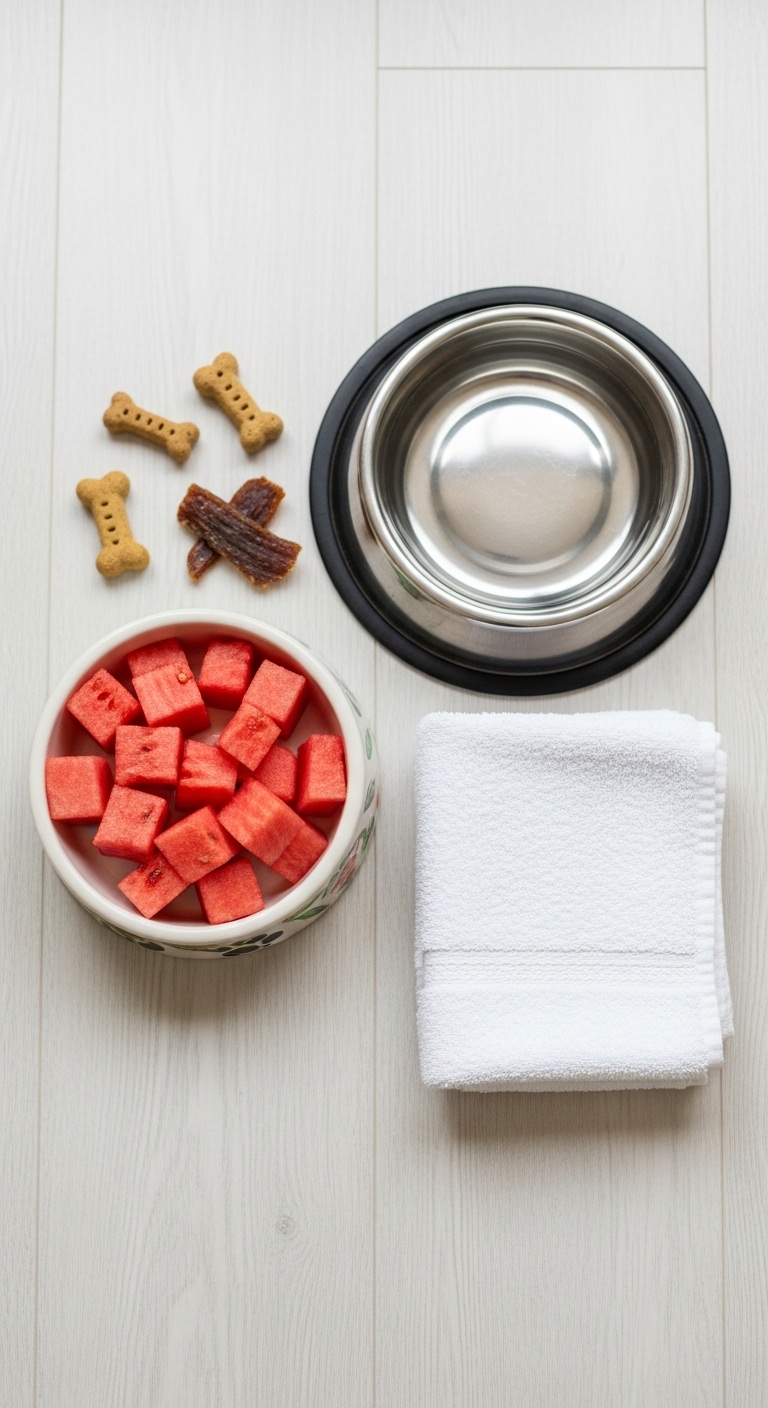
- Serving size: Serve watermelon in small, bite-sized pieces to avoid choking hazards
- Introduction: Introduce watermelon slowly to check for any allergic reactions or stomach upset
What to Look For
When choosing watermelon for your dog, look for ripe fruit that’s firm and heavy for its size. The flesh should be bright red or pink without any white streaks, which can indicate poor quality or overripeness. Avoid watermelons with soft spots or bruises, as these can harbor bacteria that might upset your dog’s stomach. If you’re buying pre-cut watermelon, check that it hasn’t been sitting out too long or stored in unsanitary conditions. Freshness matters because spoiled fruit can cause more harm than good.
I once saw a friend’s dog get sick after eating an entire watermelon rind. It was a scary lesson about how quickly a seemingly harmless treat can turn dangerous. That’s why it’s so important to remove all rinds and seeds before sharing watermelon with your pet.
Serving Watermelon Safely
One of the easiest ways to serve watermelon is by freezing small cubes for a refreshing summer snack. This also makes it easier to portion and reduces the risk of choking. You can also blend watermelon into a puree and mix it with your dog’s regular food for a hydrating boost. If your dog isn’t a fan of plain watermelon, try mixing it with other dog-safe fruits like blueberries or strawberries for added flavor.
Signs of Trouble
Watch for signs like vomiting, diarrhea, or lethargy after your dog eats watermelon. These could indicate an upset stomach or an allergic reaction. If you notice any of these symptoms, stop giving watermelon immediately and contact your vet. It’s always better to be cautious, especially with new foods.

Watermelon can be a refreshing and healthy treat for dogs when served safely. Always prioritize your pet’s well-being by following these guidelines.
Frequently Asked Questions
- → Can dogs eat watermelon seeds?
No, dogs should not eat watermelon seeds. They can cause intestinal blockages or digestive discomfort. Always remove seeds before serving watermelon to your pet.
- → Is watermelon rind safe for dogs?
No, watermelon rind is tough and difficult to digest. It can cause choking hazards or intestinal blockages. Always peel and remove the rind before offering watermelon to your dog.
- → How much watermelon can a dog eat?
Watermelon should be served in moderation as a treat, not a meal replacement. A good rule is to limit treats to 10% of your dog's daily caloric intake. For small dogs, a few small pieces are sufficient; larger dogs can have slightly more.
- → Can puppies eat watermelon?
Yes, puppies can eat watermelon in small amounts, but introduce it gradually. Ensure the pieces are seedless and rind-free to avoid choking hazards. Monitor for any signs of digestive upset or allergies after feeding.
- → What are the benefits of watermelon for dogs?
Watermelon is hydrating, low in calories, and rich in vitamins A, C, and B6. It also contains fiber and antioxidants, which support your dog's immune system and overall health. Always serve it as a treat in moderation.
- → Can diabetic dogs eat watermelon?
Diabetic dogs can eat watermelon in very small amounts due to its natural sugar content. Consult your vet before introducing watermelon or any new food to a diabetic pet to ensure it fits into their dietary plan.