Sweet potatoes are a common ingredient in human meals, but many pet owners wonder if they’re safe for dogs. As a pet owner who’s tested this with my own pup, I’ve seen firsthand how this root vegetable can be a healthy addition to their diet when prepared correctly. It’s packed with fiber, vitamins, and minerals that support digestion and overall health, making it a great occasional treat for most dogs.
I once gave my dog a large piece of raw sweet potato by mistake, and it took days for his stomach to settle. That experience taught me how important it is to prepare this food properly for our pets.
Key Things to Understand
- Safety: Sweet potatoes are safe for dogs in moderation but should never be fed raw
- Preparation: Cooked sweet potatoes are easier to digest and more nutritious for dogs
- Moderation: Too much can cause stomach upset or diarrhea due to the high fiber content
- Avoid canned: Canned sweet potatoes often contain added sugars or preservatives that aren’t good for dogs
- Skin risks: Sweet potato skins can be tough to digest and may cause blockages in small dogs
What to Look For
Pay attention to how your dog reacts after eating sweet potatoes for the first time. Some dogs may experience gas or loose stools, especially if they’re not used to high-fiber foods. Watch for signs of discomfort like excessive licking of the lips or a hunched posture, which could indicate digestive upset. If you notice these symptoms, it’s best to avoid feeding sweet potatoes in the future or consult your vet. Also consider your dog’s size when portioning sweet potatoes. A small dog might only need a teaspoon of mashed sweet potato, while a large breed could handle a tablespoon or two. The key is to introduce it slowly and in tiny amounts to see how your dog tolerates it.
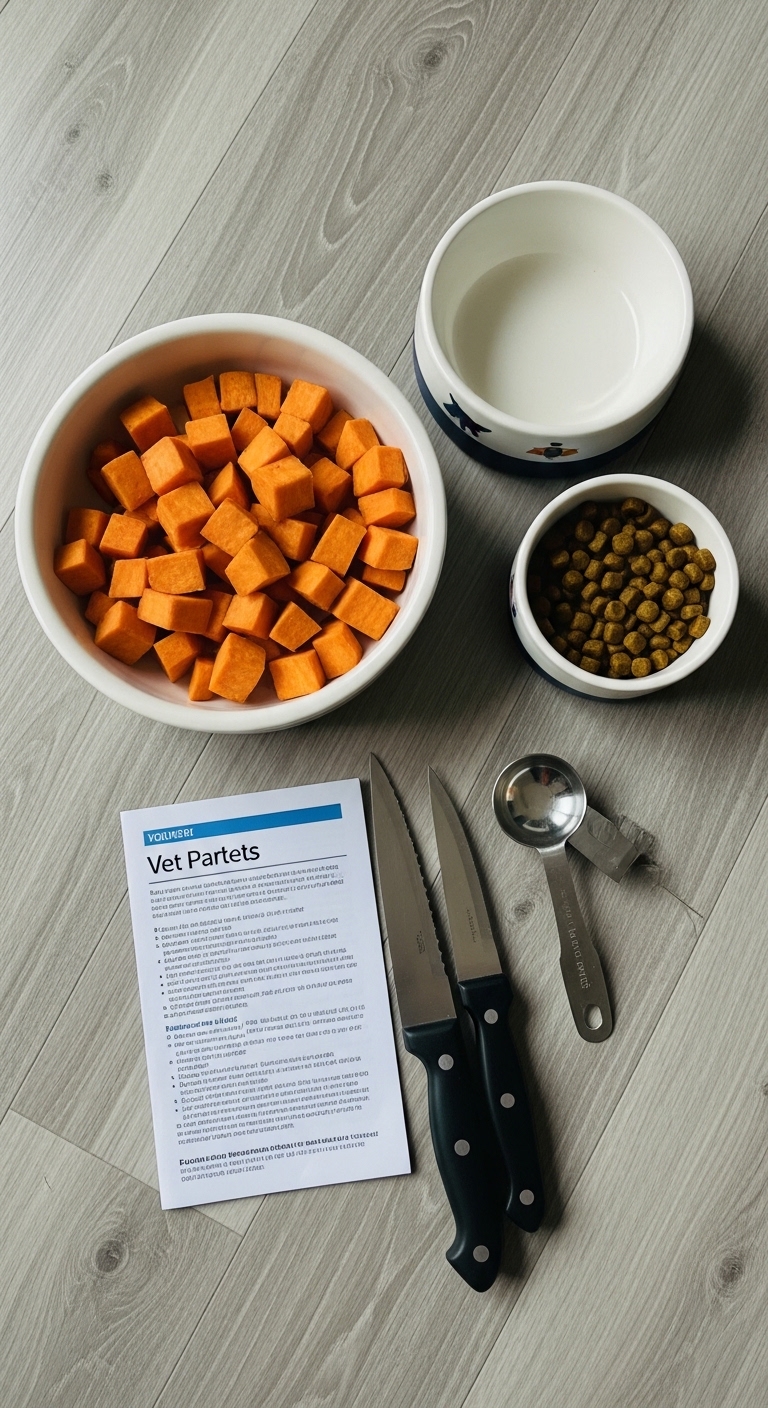
I’ve seen dogs get into trouble when their owners assumed all human foods were safe in any form. One friend’s dog ended up at the emergency vet after eating a whole raw sweet potato from the garden. That’s why it’s so important to prepare this food properly for our pets.
How to Serve Sweet Potatoes to Your Dog
The best way to serve sweet potatoes is cooked and plain. Boiling or baking without any seasoning is ideal. You can mash it and mix it into their regular food or serve small cubes as a treat. Avoid frying or adding oils, as these can cause stomach upset. Some pet owners even freeze small portions of mashed sweet potato in ice cube trays for a cool summer treat.
Signs Your Dog Shouldn’t Eat Sweet Potatoes
If your dog has diabetes, sweet potatoes might not be suitable due to their natural sugar content. Watch for increased thirst or lethargy after eating, which could indicate blood sugar spikes. Dogs with kidney issues should also avoid large amounts, as the minerals in sweet potatoes can be hard on their system. When in doubt, check with your vet before introducing new foods.
Sweet Potatoes vs Other Dog Treats
Compared to commercial dog treats that are often loaded with preservatives and fillers, sweet potatoes offer natural nutrition. They’re lower in calories than many store-bought treats while providing more fiber and vitamins. However, they shouldn’t replace a balanced diet. Think of them as a supplement rather than a staple in your dog’s meals.
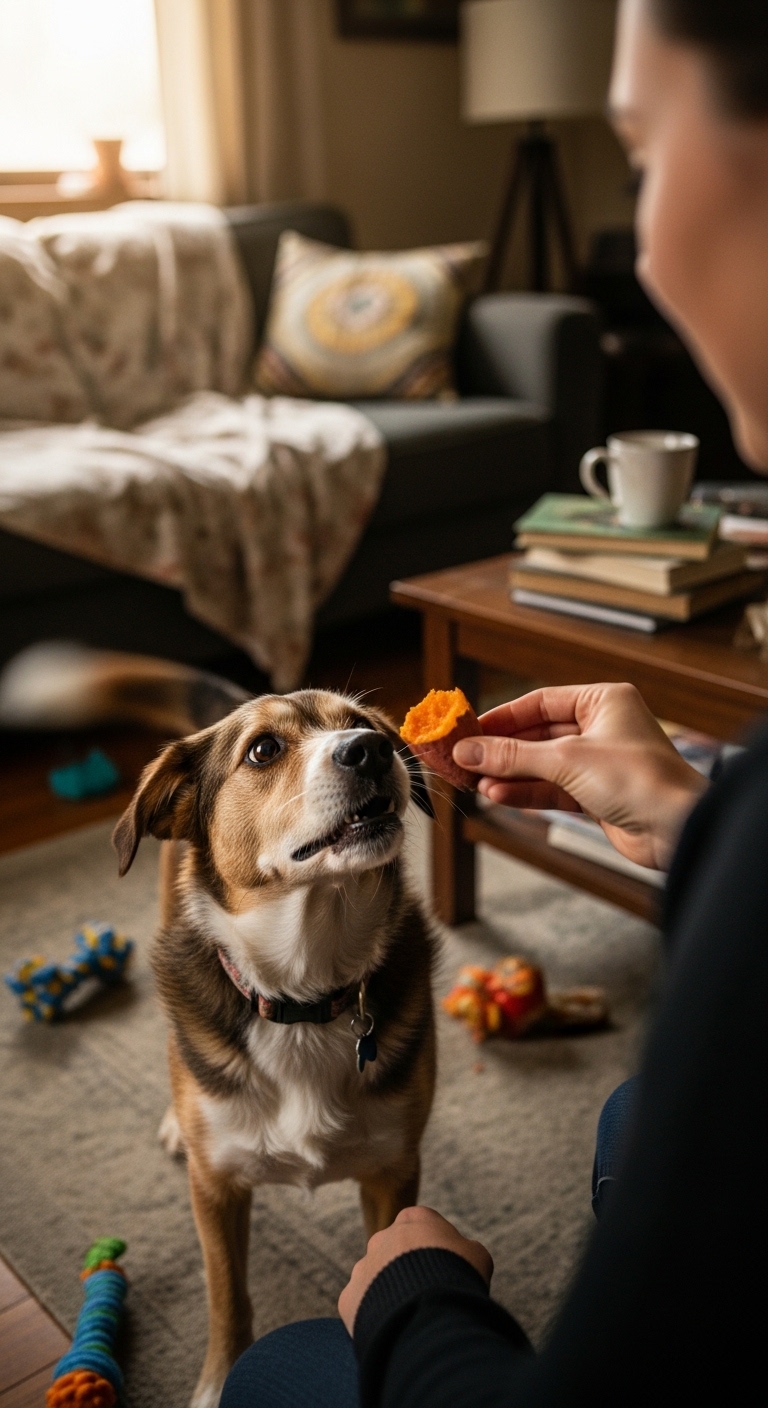
Sweet potatoes can be a nutritious and tasty addition to your dog’s diet when served properly. Always prioritize safety and moderation.
Frequently Asked Questions
- → Are sweet potatoes safe for all dogs?
Sweet potatoes are generally safe for most dogs, but individual tolerance varies. Dogs with diabetes or weight issues should avoid them due to natural sugars. Always introduce new foods slowly and in small amounts to check for adverse reactions.
- → How should I prepare sweet potatoes for my dog?
Cook sweet potatoes thoroughly by boiling, steaming, or baking without any seasoning, butter, or oils. Remove the skin before serving, as it can be tough to digest. Avoid raw sweet potatoes, as they are difficult for dogs to break down.
- → Can sweet potatoes help with my dog's digestion?
Yes, sweet potatoes are high in dietary fiber, which can aid digestion and promote healthy bowel movements. They may help dogs with occasional constipation or irregular stools. However, too much fiber can cause loose stools, so moderation is essential.
- → What are the signs of sweet potato intolerance in dogs?
Watch for symptoms like vomiting, diarrhea, excessive gas, or stomach discomfort after feeding sweet potatoes. If these occur, discontinue feeding and consult your veterinarian. Some dogs may also develop itchy skin or ear infections as a reaction.
- → How much sweet potato can I give my dog?
The amount depends on your dog's size. Small dogs can have about a teaspoon of cooked sweet potato, while larger breeds can have up to a tablespoon or two. Treat sweet potatoes as an occasional snack, not a daily meal replacement. Always consult your vet for personalized advice.
- → Can puppies eat sweet potatoes?
Puppies can eat sweet potatoes in small amounts, but their digestive systems are sensitive. Introduce them gradually and in tiny portions to avoid upsetting their stomach. Ensure the sweet potatoes are cooked and served plain without any additives.