Grapes might seem like a harmless, sweet treat, but they’re one of those foods that can turn a normal day with your dog into a trip to the emergency vet. Most pet owners don’t realize how dangerous they are until it’s too late, which is why this topic matters so much. A single grape or raisin can cause kidney failure in dogs, even in small amounts. It’s not worth the risk when there are so many safer alternatives out there.
I’ll never forget the time a friend’s dog got into a bowl of grapes at a party. By the time they realized what happened, it was already too late. The vet said the dog would have survived if they’d acted within hours. That moment stuck with me and made me realize how little most people know about this danger.
Key Things to Understand
- Grapes and raisins are toxic to dogs even in small amounts: This includes all varieties, seedless or not, fresh or dried. The exact toxic dose isn’t known, but even one grape can cause severe reactions in some dogs.
- The symptoms of grape poisoning usually appear within 24 hours but can take up to 48 hours to show: Early signs include vomiting, diarrhea, lethargy, and loss of appetite.
- Kidney failure is the most serious risk: It can happen quickly and, without treatment, can be fatal.
- Some dogs may be more sensitive than others: There’s no way to predict which ones will react badly, so it’s best to avoid grapes entirely.
- Dried grapes (raisins) are even more concentrated and dangerous: They contain less water, making the toxins stronger per piece.
What to Look For
Watch for unusual behavior after your dog has been near grapes or raisins. If they suddenly seem tired, refuse food, or start vomiting, those could be early warning signs of poisoning. Pay attention to how much they’re drinking too: excessive thirst can be another clue. Sometimes the symptoms are subtle at first, so trust your gut if something feels off. If your dog gets into grapes, don’t wait for symptoms to appear. Call your vet or an emergency animal hospital right away, even if they seem fine. Time is critical in these cases, and acting quickly can make all the difference.
Why Some People Still Feed Grapes to Dogs
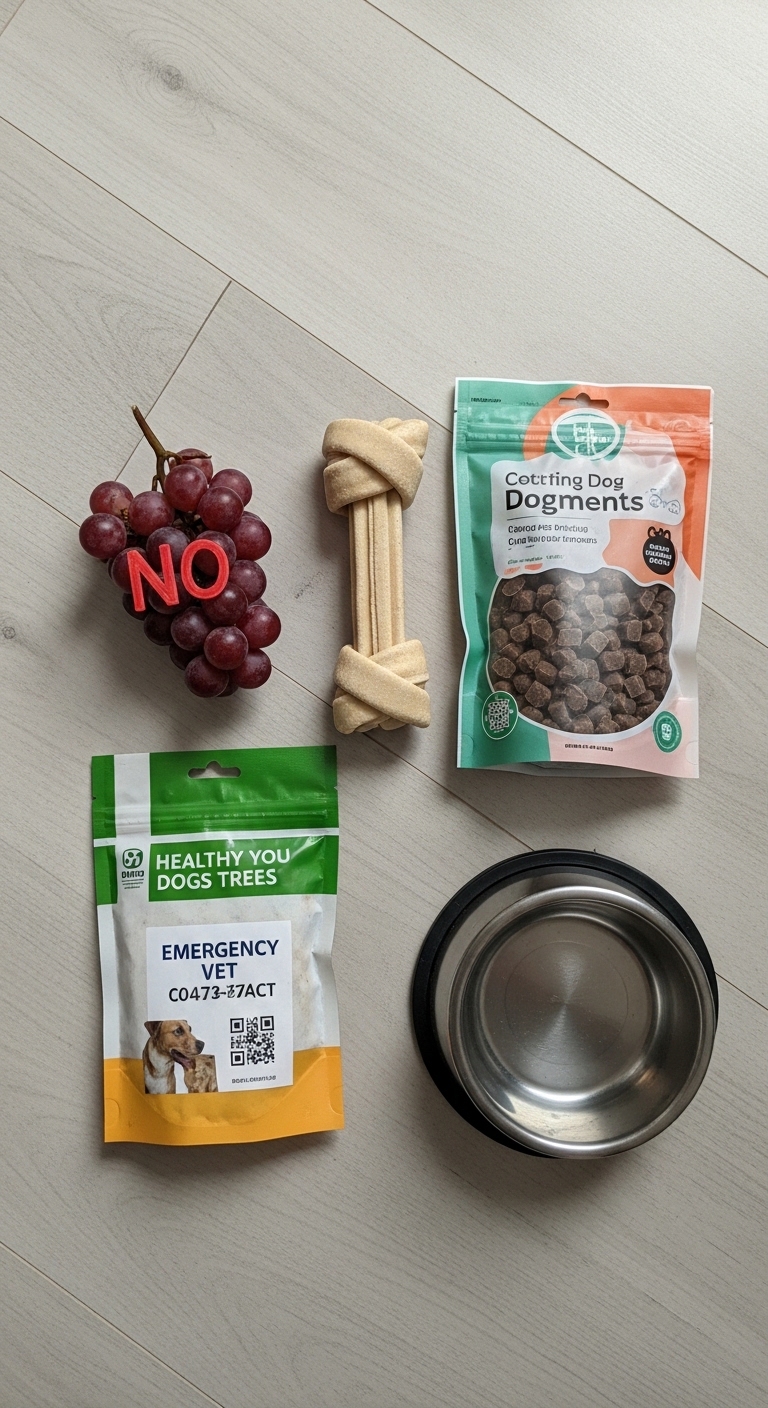
You might hear stories about dogs eating grapes without any problems, but those cases are rare exceptions. Just because one dog survives doesn’t mean yours will. The risk isn’t worth it when there are so many safer treats available. Some owners think the seeds are the problem, but even seedless grapes are dangerous. Others believe their dog is “fine” after eating a grape once, but toxicity can build up over time with repeated exposure.
How to Handle a Dog Who Loves Fruit
If your dog begs for fruit, focus on safe options like apple slices (without seeds), blueberries, or watermelon (seedless and rind-free). These give them that sweet crunch without the danger. You can even freeze them for a refreshing treat. Always introduce new foods slowly and in small amounts to see how your dog reacts. If they have a sensitive stomach, stick to the blandest options first.
What to Do If Your Dog Eats Grapes
First, remove any remaining grapes from their reach to prevent more ingestion. Then, check how much they ate and note the time. Call your vet or an emergency clinic immediately: they may ask you to induce vomiting if it’s been less than a couple of hours. Don’t try home remedies without professional advice, as some can make things worse. Keep a close eye on them for the next 48 hours, even if they seem fine at first.
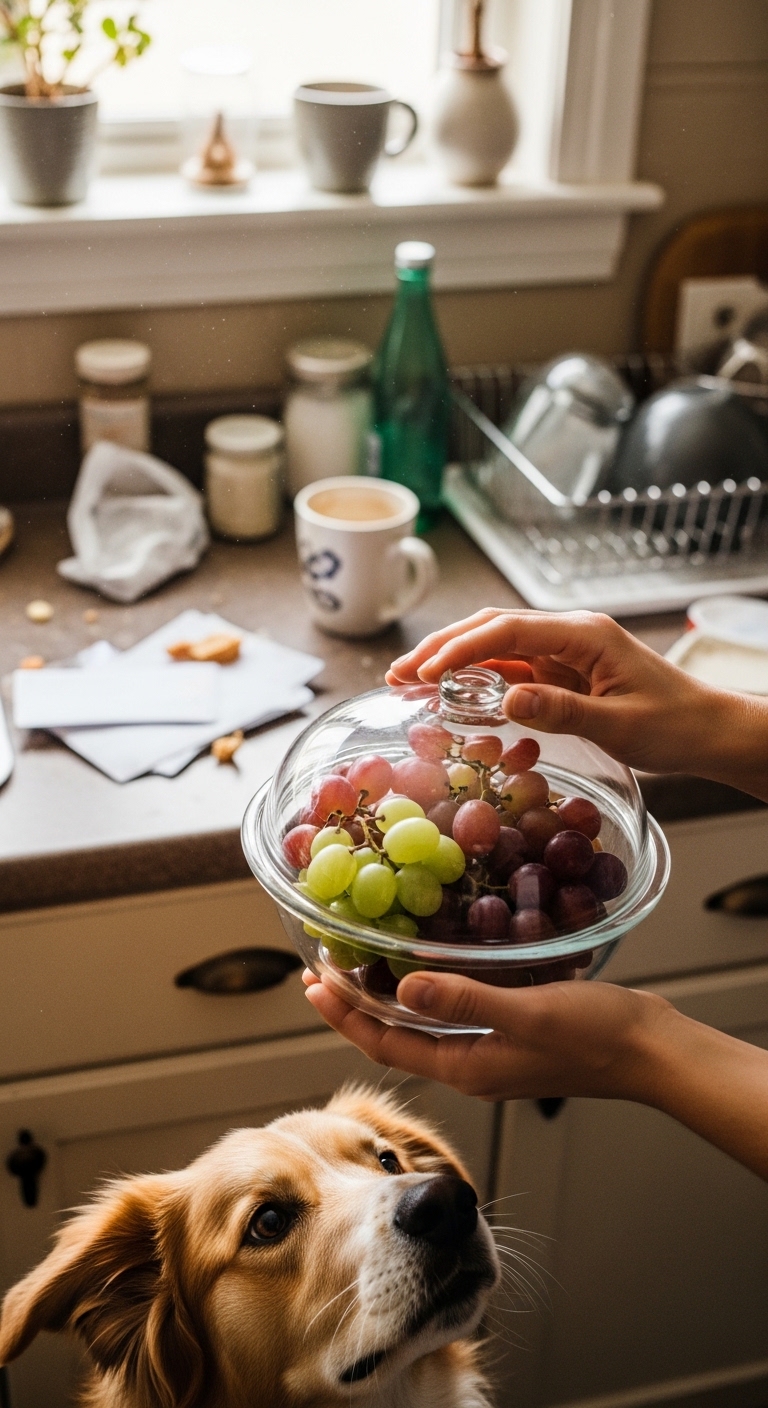
Grapes may seem harmless, but the risks to your dog are severe and unpredictable. Always choose safer alternatives to keep your pet happy and healthy.
Frequently Asked Questions
- → How many grapes are toxic to dogs?
The toxicity threshold varies by dog, but even a single grape can be dangerous. Some dogs may tolerate small amounts without symptoms, while others experience severe reactions from minimal exposure. It’s best to avoid all grapes entirely.
- → What should I do if my dog eats grapes?
Act immediately—contact your vet or a pet poison control center (like ASPCA Poison Control). Do not wait for symptoms to appear. Bring the packaging or remaining grapes to help assess the risk.
- → Are all grape varieties toxic to dogs?
Yes, all types of grapes—red, green, seedless, and organic—are considered toxic. Raisins, currants, and grape-containing products (like trail mix or baked goods) are also dangerous.
- → What are the signs of grape poisoning in dogs?
Early signs include vomiting, diarrhea, and lethargy within 6-12 hours. Later symptoms may include decreased urination, weakness, and dehydration. Kidney failure can develop within 24-48 hours.
- → Can my dog recover from grape poisoning?
Recovery depends on the amount ingested and how quickly treatment begins. With prompt veterinary care, many dogs recover fully, but severe cases may lead to permanent kidney damage or be fatal without intervention.
- → Are there safe fruits for dogs to eat instead?
Yes! Safe alternatives include apples (without seeds), blueberries, strawberries, and bananas. Always introduce new foods gradually and in moderation to avoid digestive upset.