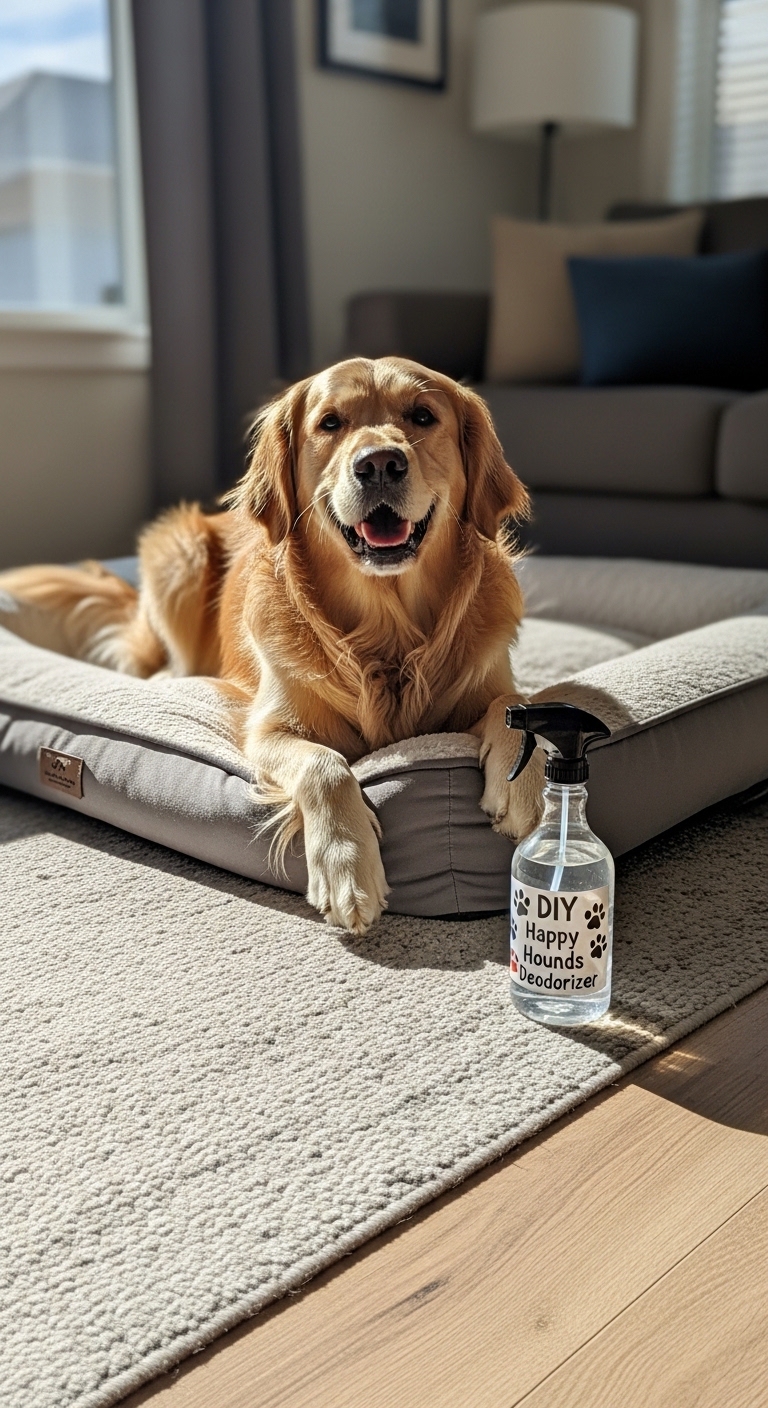
Every pet owner knows that fresh-smelling dogs make cuddles and playtime so much more enjoyable. Whether it’s after a muddy walk or a day of rolling in who-knows-what, a quick spritz of a dog deodorizer spray can save your couch, your clothes, and your nose. Instead of masking odors with heavy perfumes, a DIY spray lets you control exactly what goes on your dog’s coat while keeping them clean and comfortable.
I’ve used these sprays on my own senior dog who hates baths but still needs a little freshening up after outdoor adventures.
Key Things to Understand
- Natural ingredients: apple cider vinegar helps neutralize odors without harming your dog’s skin
- Essential oils: can add a pleasant scent but must be used carefully, as some are toxic to dogs
- Spray bottle: a fine mist spray bottle works best to avoid soaking your dog’s fur
- Patch test: always patch test the spray on a small area of skin before full application
- Storage: store the spray in a cool, dark place to keep ingredients fresh and effective
What to Look For
When choosing ingredients for your dog deodorizer spray, pay attention to how your dog reacts during the first few uses. Some dogs are sensitive to certain essential oils like tea tree or citrus, so watch for signs of itching or redness after spraying. The texture of the spray should be light and misty, not heavy or oily, to avoid leaving residue on your dog’s coat. If you notice your dog licking their fur more than usual after application, it might be a sign the scent is too strong or the ingredients aren’t agreeing with them.
I once made the mistake of using too much lavender oil in a spray, and my dog spent the next hour sneezing and pawing at her face. A little goes a long way, and it’s better to start with a weaker solution.
DIY Dog Deodorizer Spray Basics
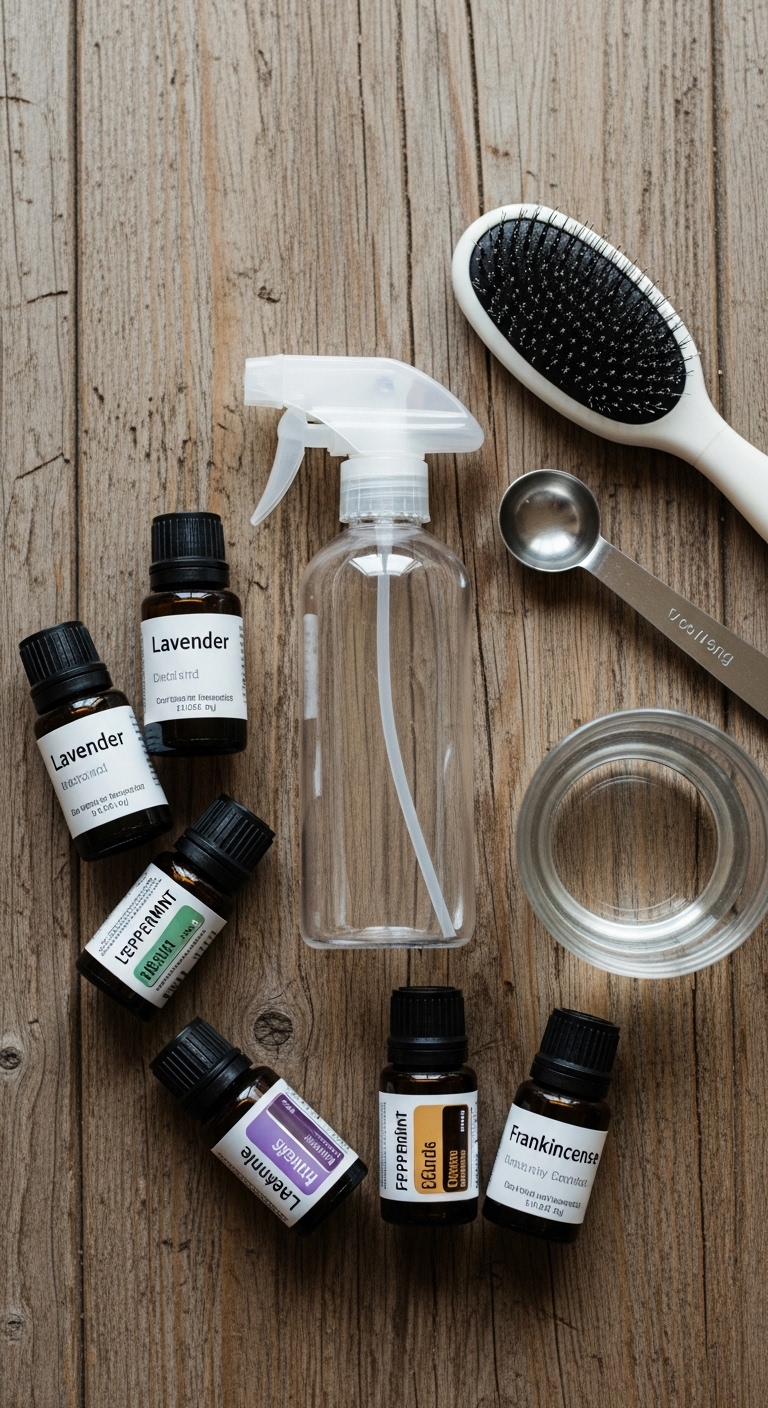
The simplest sprays combine water, a mild vinegar base, and a few drops of dog-safe essential oils. Start with distilled water to avoid any contaminants, and mix in a tablespoon of apple cider vinegar for every cup of water. This helps neutralize odors naturally. For scent, add just 1-2 drops of lavender or chamomile oil, which are generally safe for most dogs when used in tiny amounts. Shake the bottle well before each use to keep the ingredients mixed.
Why Vinegar Works
Apple cider vinegar isn’t just for salads: it’s a natural odor neutralizer because its acidity breaks down odor-causing bacteria. Unlike commercial sprays that mask smells with synthetic fragrances, vinegar actually eliminates them at the source. Just be sure to dilute it properly, as undiluted vinegar can irritate your dog’s skin. If your dog has sensitive skin, you can skip the vinegar and use plain water with a teaspoon of baking soda instead, though baking soda can leave a white residue if not rinsed off.
Essential Oils to Use (and Avoid)
Not all essential oils are safe for dogs, and some can be downright dangerous. Safe options include lavender, chamomile, and frankincense, which are gentle and calming. Avoid oils like tea tree, citrus, cinnamon, and pine, as these can cause skin irritation, respiratory issues, or even poisoning if ingested. Even with safe oils, less is always more. A single drop in an 8-ounce spray bottle is plenty to add a light, pleasant scent without overwhelming your dog’s senses.
How Often to Use It
A DIY deodorizer spray isn’t a replacement for regular baths, but it’s perfect for quick touch-ups between washes. Use it 2-3 times a week for dogs with normal activity levels, or daily if your dog loves to roll in things outside. Always let the spray dry completely before petting or cuddling your dog to avoid transferring moisture to your clothes or furniture. If your dog has a skin condition or allergies, check with your vet before adding any new products to their routine.
Storing Your Spray
Homemade sprays don’t contain preservatives, so they won’t last as long as store-bought versions. Make small batches, enough for about a week, and store them in a cool, dark place like a bathroom cabinet. If the spray starts to smell off or separates, it’s time to toss it and make a fresh batch. Never leave the bottle in direct sunlight or a hot car, as heat can degrade the ingredients and reduce effectiveness.
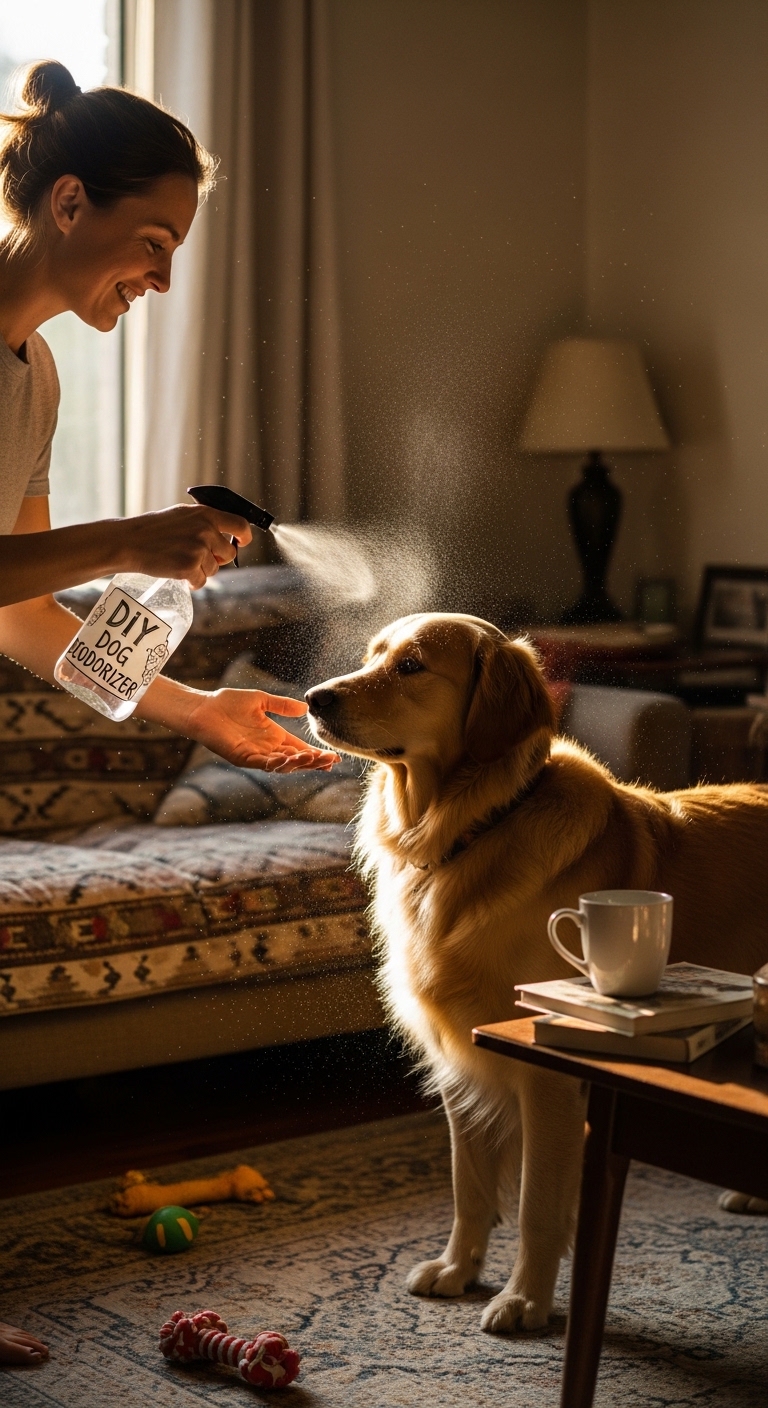
A DIY dog deodorizer spray is a simple, cost-effective way to keep your pup smelling fresh without the harsh chemicals found in many commercial products.
Frequently Asked Questions
- → What ingredients do I need for a DIY dog deodorizer spray?
You’ll need distilled water, apple cider vinegar, and pet-safe essential oils like lavender or chamomile. Avoid citrus oils, as they can be irritating to dogs.
- → How often can I use the spray on my dog?
Use the spray 2-3 times a week or as needed. Overuse may dry out your dog’s skin, so monitor for irritation.
- → Is this spray safe for all dogs?
Most dogs tolerate this spray well, but always patch-test first. Avoid using on puppies, senior dogs, or those with sensitive skin without consulting a vet.
- → Can I use this spray on my dog’s bedding?
Yes, lightly mist bedding to freshen it up. Ensure it dries completely before letting your dog use it to prevent dampness.
- → What if my dog licks the spray?
This spray is non-toxic, but excessive licking may cause mild stomach upset. Use sparingly and redirect your dog if they try to lick it off.
- → How long does the spray last?
Homemade sprays typically last 1-2 weeks when stored in a cool, dark place. Shake well before each use.