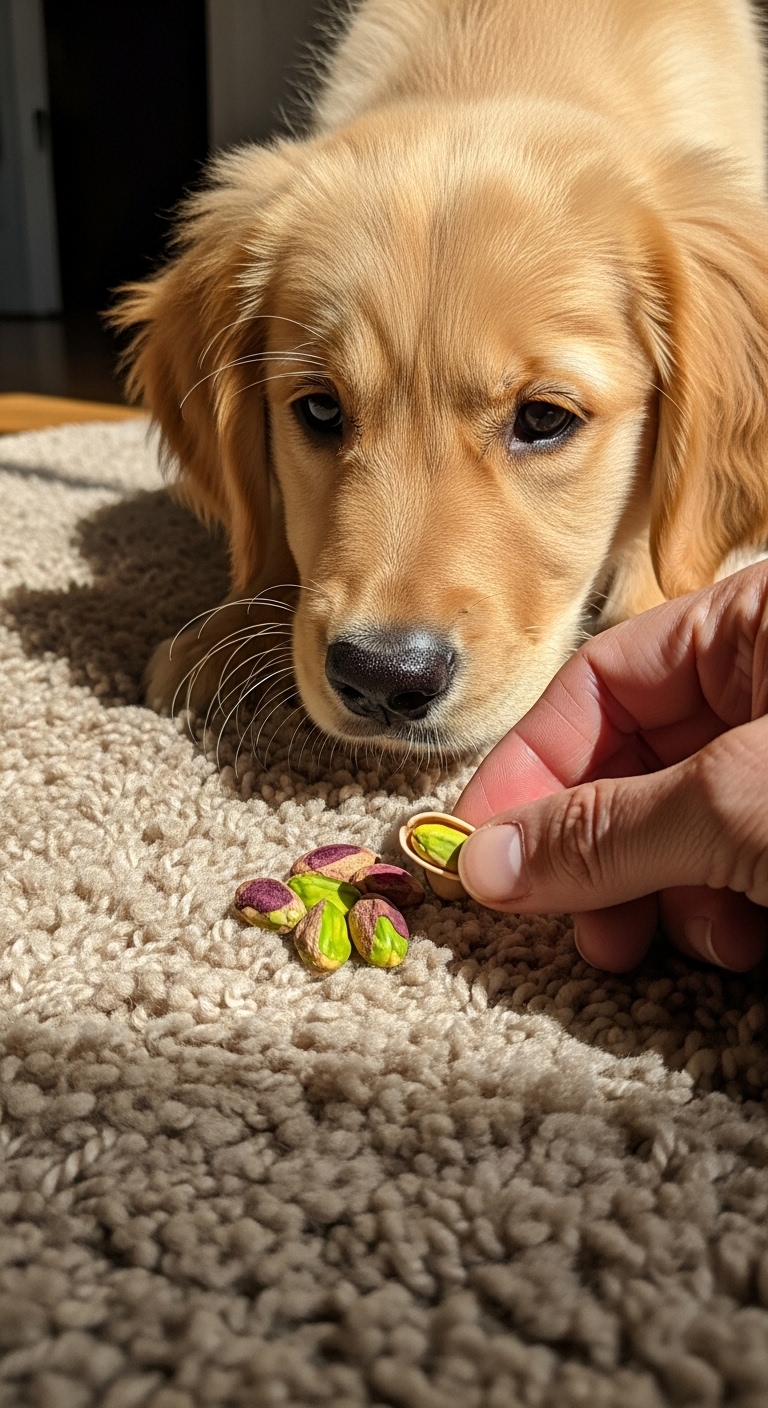
Can dogs have pistachios? It’s a question many pet owners ask when they’re snacking and their dog gives them those big, hopeful eyes. Pistachios might seem like a harmless treat, but the truth is more complicated than you’d think. Knowing what’s safe for your dog to eat can prevent unnecessary vet visits and keep your pup happy and healthy.
It’s easy to think that because pistachios are a human snack, they must be fine for dogs too. But the reality is that even small amounts can cause problems, and some dogs are more sensitive than others.
Key Things to Understand
- High fat content: Pistachios contain fats that can upset a dog’s stomach, leading to vomiting or diarrhea
- Shell hazards: The shells are a choking hazard and can cause blockages in the digestive tract, which may require surgery
- Salt risks: Pistachios often have salt on them, which can lead to excessive thirst or even sodium ion poisoning in dogs
- Mold contamination: Some pistachios may be contaminated with mold, which produces aflatoxins that are toxic to dogs
- Unsalted pistachios: Even unsalted pistachios aren’t a good choice because they’re high in fat and calories, which can contribute to obesity or pancreatitis
What to Look For
When you’re deciding whether to share pistachios with your dog, pay attention to how they react after eating even a small piece. Some dogs might show immediate signs of discomfort like drooling, gagging, or a sudden loss of appetite. Others could develop symptoms hours later, such as lethargy or a swollen belly. If your dog has a sensitive stomach or a history of digestive issues, it’s best to avoid pistachios altogether. Also, watch for any changes in their energy levels or bathroom habits after they’ve been around pistachios, even if they didn’t eat any. These could be early warning signs that something isn’t right.
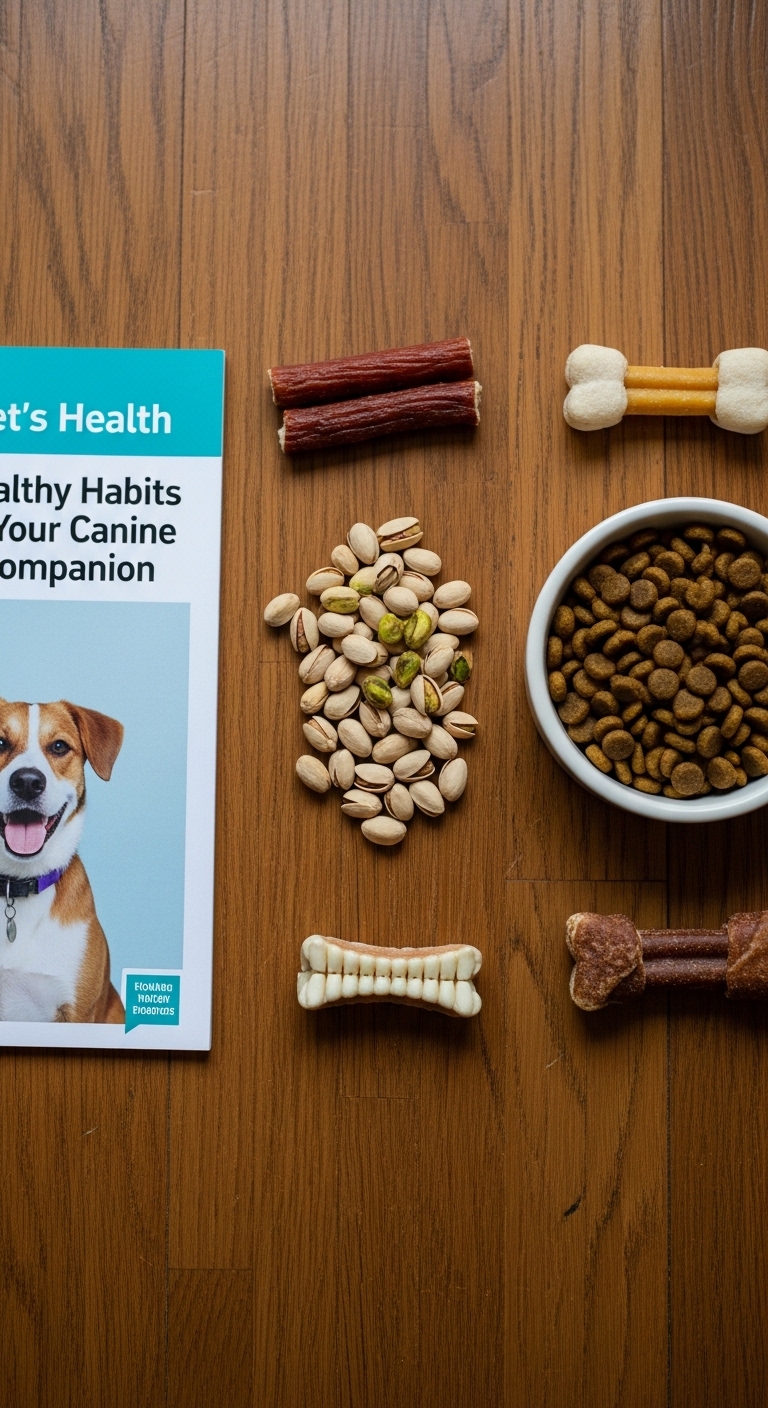
If your dog sneaks a pistachio off the floor, don’t panic. Most dogs will be fine, but keep an eye on them for the next 24 hours. Watch for signs like vomiting, diarrhea, or unusual tiredness. If you notice any of these, call your vet for advice. It’s always better to be cautious, especially with smaller breeds or dogs that have pre-existing health conditions.
Why pistachios are risky for dogs
While pistachios aren’t as deadly as some other human foods, they’re far from a safe snack. The high fat content can trigger pancreatitis, a painful and potentially life-threatening condition. Even plain, unsalted pistachios can cause issues because dogs aren’t designed to digest large amounts of fat. Over time, this can lead to weight gain and other metabolic problems. Plus, the shells are sharp and can tear the lining of the stomach or intestines, leading to internal bleeding or blockages.
Signs your dog ate something they shouldn’t have
If your dog has gotten into pistachios, look for signs like excessive thirst, vomiting, diarrhea, or a bloated abdomen. They might also seem restless, whine more than usual, or refuse to eat. In severe cases, you might notice pale gums, weakness, or collapse. These symptoms can take hours or even days to appear, so don’t assume everything is fine just because your dog seems okay at first. If you see any of these signs, contact your vet immediately.
Healthier alternatives to pistachios
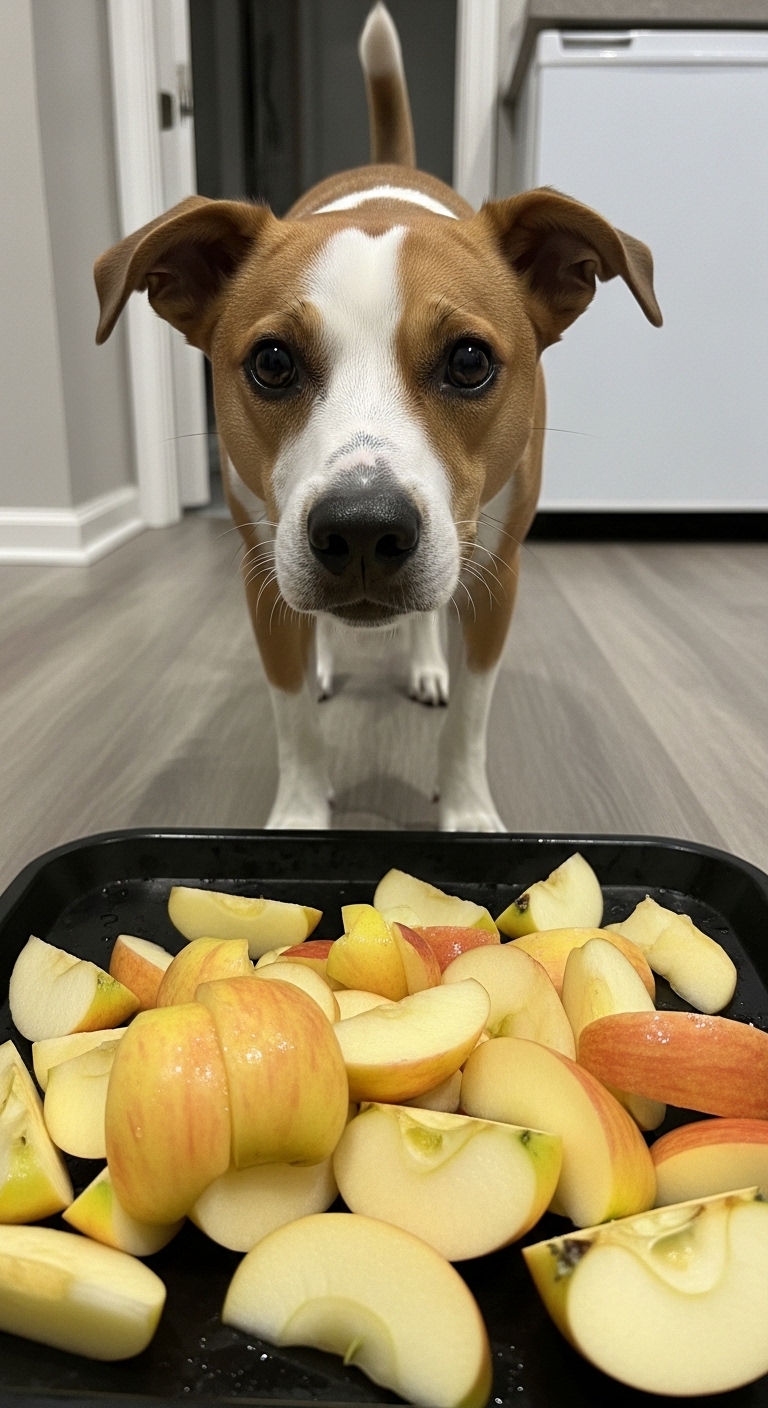
If you’re looking for a safe, crunchy snack to share with your dog, try plain, air-popped popcorn without butter or salt. Carrot sticks, apple slices (without seeds), or small pieces of cooked chicken are also great options. These treats are low in fat and calories, and they won’t pose the same risks as pistachios. Always introduce new foods slowly and in small amounts to avoid upsetting your dog’s stomach.
How to handle pistachio shells around dogs
Pistachio shells can be just as dangerous as the nuts themselves. If you’re eating pistachios, make sure to clean up any shells right away and dispose of them in a sealed trash can. Teach your dog the “leave it” command to prevent them from picking up scraps off the floor. If you suspect your dog has swallowed a shell, watch for signs of choking, gagging, or difficulty breathing. These are emergencies, so get to the vet as soon as possible.
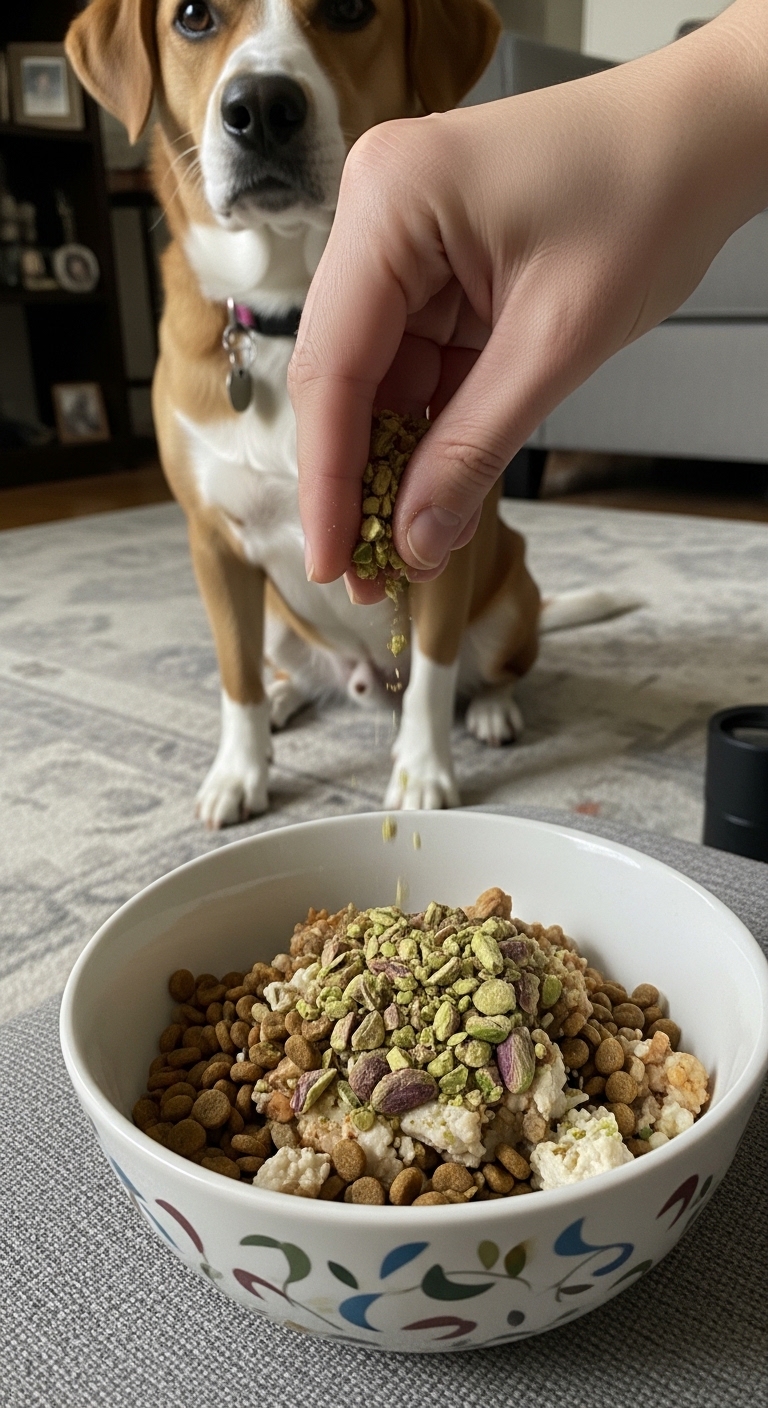
It’s tempting to share your favorite snacks with your dog, but pistachios are one treat you should skip. Even if your dog seems fine after eating one, the risks aren’t worth it.
Frequently Asked Questions
- → How many pistachios can a dog safely eat?
Dogs should not eat pistachios at all, as even a small amount can cause digestive issues or other health problems. The risks outweigh any potential benefits, so it's best to avoid them entirely.
- → What are the dangers of pistachios for dogs?
Pistachios can cause digestive upset due to their high fat content, leading to vomiting or diarrhea. Salted pistachios may result in sodium ion poisoning, while the shells can pose a choking hazard or cause intestinal blockages.
- → Can dogs eat pistachio shells?
No, dogs should never eat pistachio shells. They are hard and can cause choking or blockages in the digestive tract, which may require emergency veterinary care.
- → What should I do if my dog ate a pistachio?
Monitor your dog for symptoms like vomiting, diarrhea, lethargy, or loss of appetite. If any of these occur or if your dog consumed a large amount, contact your veterinarian immediately for advice.
- → Are there safer alternatives to pistachios for dogs?
Yes, safer options include plain, unsalted peanuts (in moderation), carrots, apple slices (without seeds), or dog-specific treats designed for safe snacking.
- → Why are pistachios bad for dogs even in small amounts?
Pistachios contain fats and salts that dogs' systems struggle to process, leading to potential digestive issues or poisoning. Additionally, the shells are a physical hazard that can cause serious harm.