Choosing the right shampoo for a cat with sensitive skin isn’t just about keeping them clean—it’s about preventing discomfort, irritation, and even long-term skin issues that can affect their mood and health. Many cats develop sensitivities from environmental allergens, flea bites, or even the wrong shampoo ingredients. A gentle, vet-recommended formula can make bath time less stressful for both you and your pet, while also protecting their delicate skin barrier.
I’ve seen too many cats avoid baths because their shampoo stings or leaves their skin dry for days. A good shampoo should leave their coat soft and their skin calm, not red or flaky.
Key Things to Understand
- Avoid shampoos with artificial fragrances, dyes, or sulfates: these often trigger allergic reactions in sensitive cats
- Look for hypoallergenic formulas: that are pH-balanced for cats, not humans
- Oatmeal and aloe vera: are common soothing ingredients that help calm irritated skin
- Never use human shampoo on cats: as it can strip their natural oils and worsen sensitivity
- Check for vet-recommended or dermatologist-tested labels: to ensure safety
- Always do a patch test: before full use to see how your cat reacts
What to Look For
When shopping for a cat shampoo, pay attention to the ingredient list first. Ingredients like parabens, phthalates, and synthetic perfumes are red flags for sensitive skin. Instead, opt for products with natural soothers like colloidal oatmeal or chamomile, which gently reduce itching and redness without harsh chemicals. Texture matters too—a shampoo that lathers too much can leave residue that dries out skin, so choose a mild, rinse-friendly formula. Also, consider your cat’s coat type; long-haired breeds may need extra moisturizing ingredients like coconut oil, while short-haired cats might do better with lighter formulas. If your cat has scabs, excessive scratching, or bald patches, these are signs you need a medicated or vet-approved shampoo rather than a standard one.
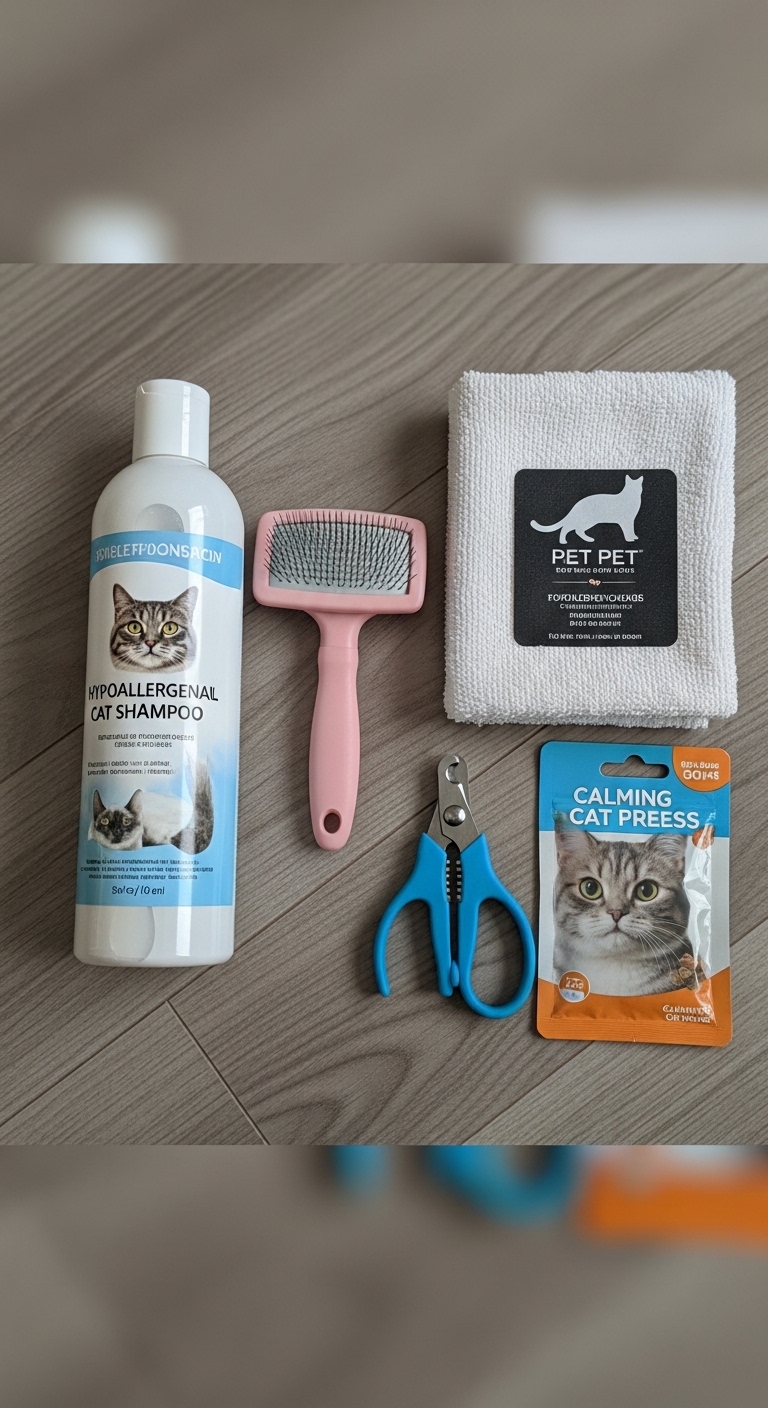
I once used a lavender-scented shampoo on my cat thinking it would relax her, only to find her scratching for hours afterward. That’s when I learned fragrances, even natural ones, can be problematic for sensitive skin. It’s better to stick with unscented options unless your vet confirms a specific scent is safe.
Daily Care Habits for Cats with Sensitive Skin
Bathing too often can dry out your cat’s skin, so limit baths to once every 4 to 6 weeks unless they get into something messy. Between baths, use a damp cloth to wipe down their coat, focusing on areas prone to dirt like the paws and belly. After any bath, towel-dry gently and keep your cat in a warm, draft-free room until they’re fully dry to prevent chilling, which can worsen irritation. If your cat tolerates it, a soft brush daily helps distribute natural oils and removes loose fur that can trap allergens against their skin.
Choosing the Right Product
Start with a shampoo labeled for sensitive skin and free from common irritants. If your cat has a known allergy, like to chicken or fish, check the ingredients for those proteins in the shampoo too. For cats with severe reactions, ask your vet for a prescription-strength option. Smaller trial sizes are great for testing reactions before committing to a full bottle. Also, consider the ease of use—some shampoos come with built-in conditioners, which can save time and reduce steps in your routine.
Safety and Comfort Tips
Always use lukewarm water, not hot, to avoid shocking your cat’s system or worsening skin irritation. Wear gloves if you have sensitive skin yourself, as some shampoos can cause reactions in humans too. Keep treats nearby to reward your cat during and after bath time, so they associate it with something positive. If your cat becomes extremely stressed, try breaking the bath into smaller sessions over a few days. Never force them into the water—patience is key to a stress-free experience.
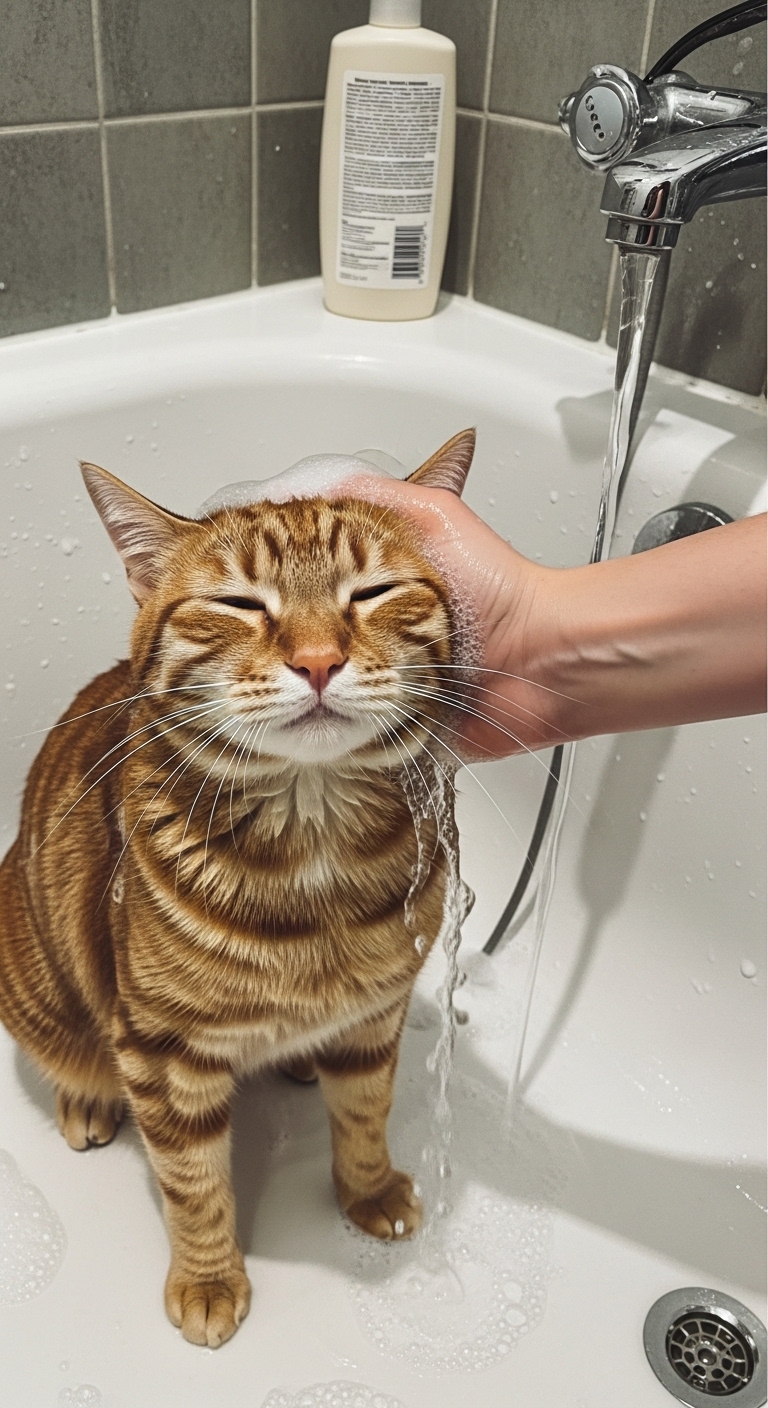
Finding the right shampoo for sensitive skin can transform bath time from a battle into a bonding experience. Always prioritize your cat’s comfort and safety over convenience.
Frequently Asked Questions
- → What ingredients should I avoid in cat shampoo for sensitive skin?
Avoid shampoos with sulfates (SLS/SLES), parabens, artificial fragrances, and dyes. These can strip natural oils and irritate sensitive skin.
- → How often should I bathe my cat with sensitive skin?
Bathe your cat only when necessary, typically every 4-6 weeks, to prevent drying out their skin. Over-bathing can worsen sensitivity.
- → Can I use human shampoo on my cat with sensitive skin?
No, human shampoo has a different pH balance and can cause irritation or allergic reactions. Always use a shampoo specifically formulated for cats.
- → What are the signs of sensitive skin in cats?
Common signs include excessive scratching, redness, flaky skin, hair loss, or scabs. If symptoms persist, consult a veterinarian.
- → How do I choose the best shampoo for my cat’s sensitive skin?
Look for hypoallergenic, fragrance-free, and dye-free formulas. Opt for shampoos with natural soothing ingredients like oatmeal or aloe vera.
- → Are there specific shampoos for kittens with sensitive skin?
Yes, choose a mild, tear-free formula designed for kittens. Avoid strong ingredients and always check the label for age recommendations.