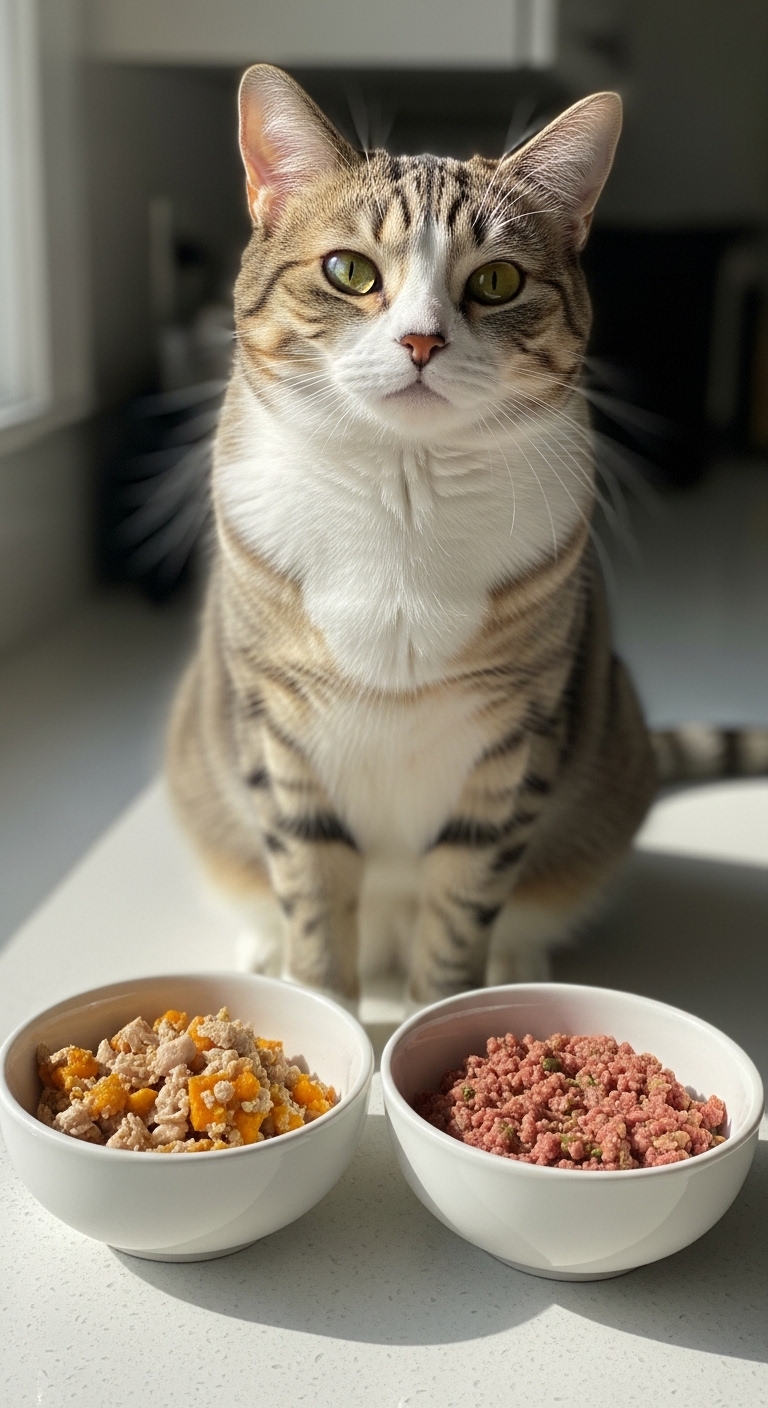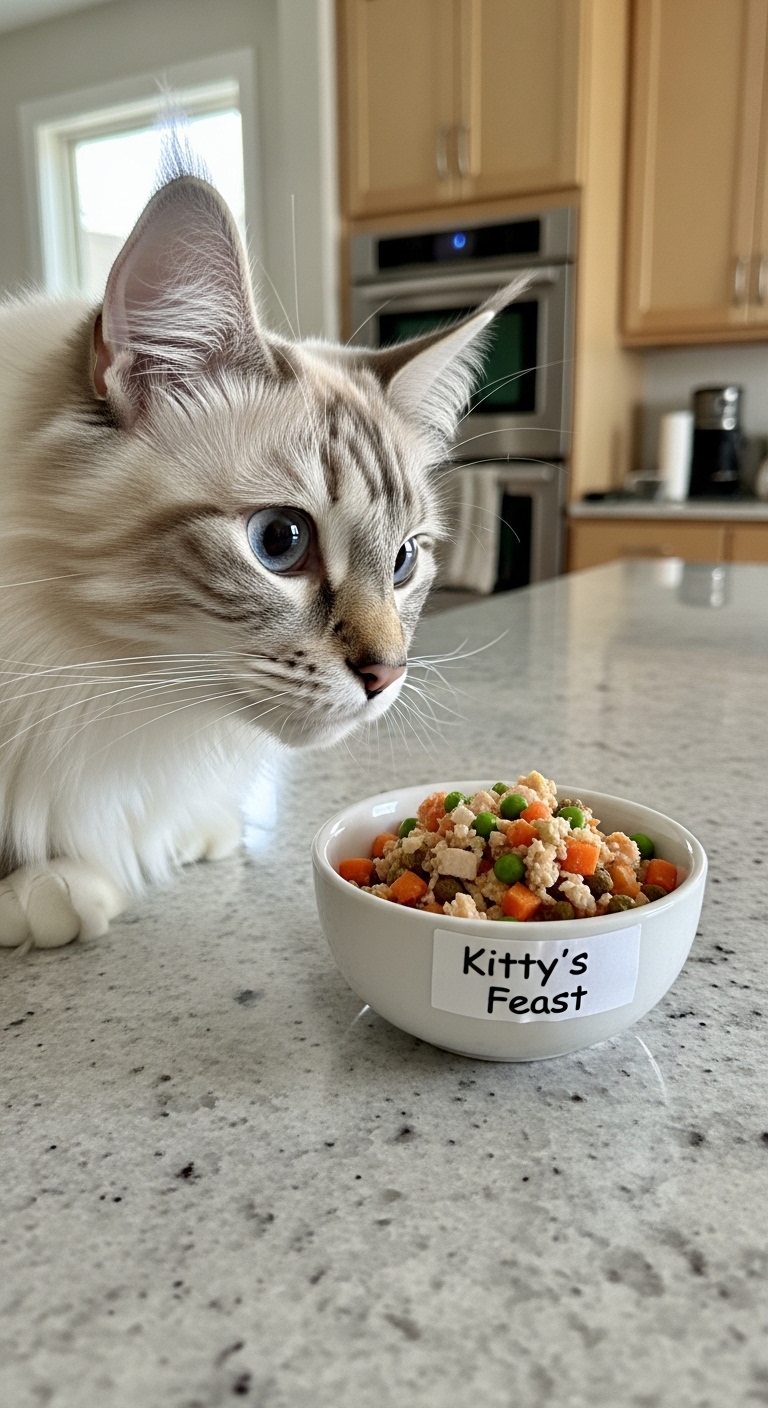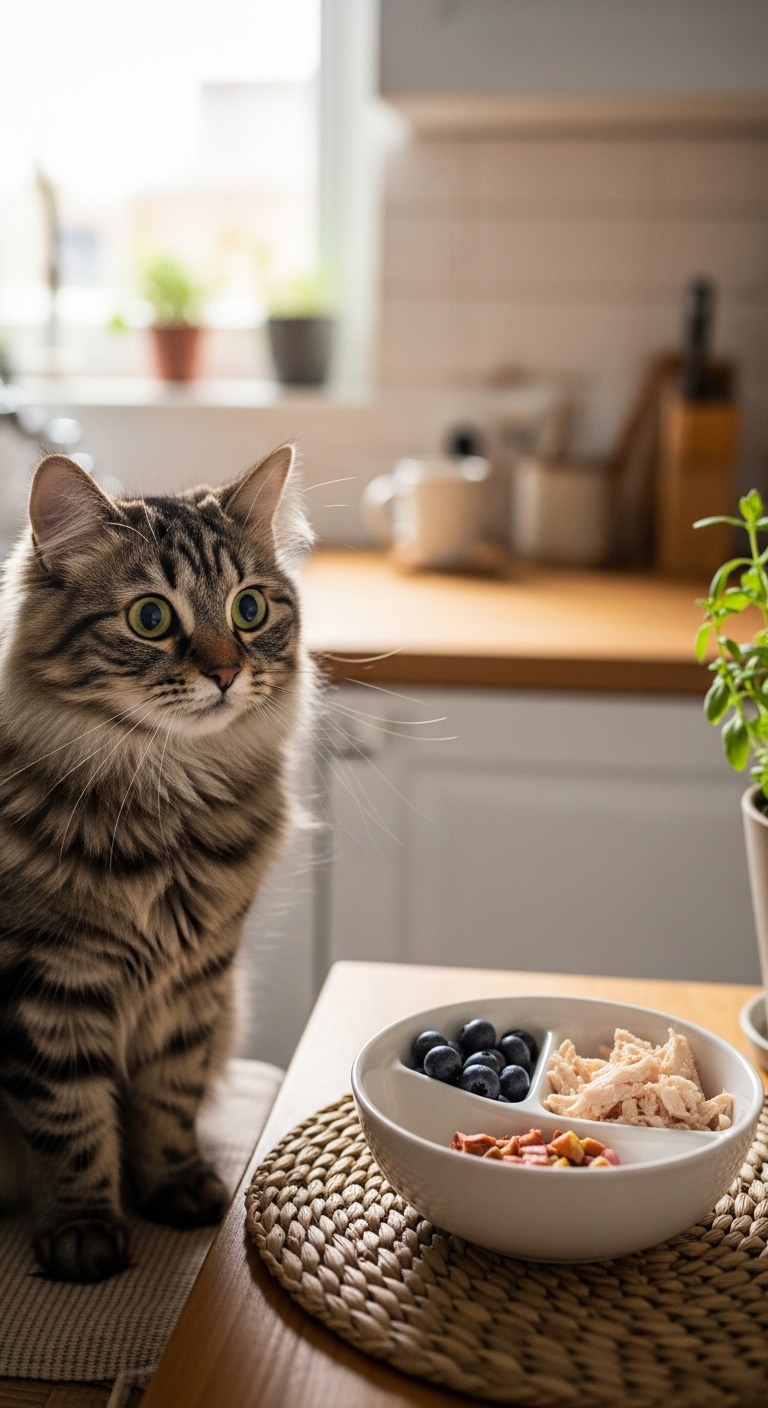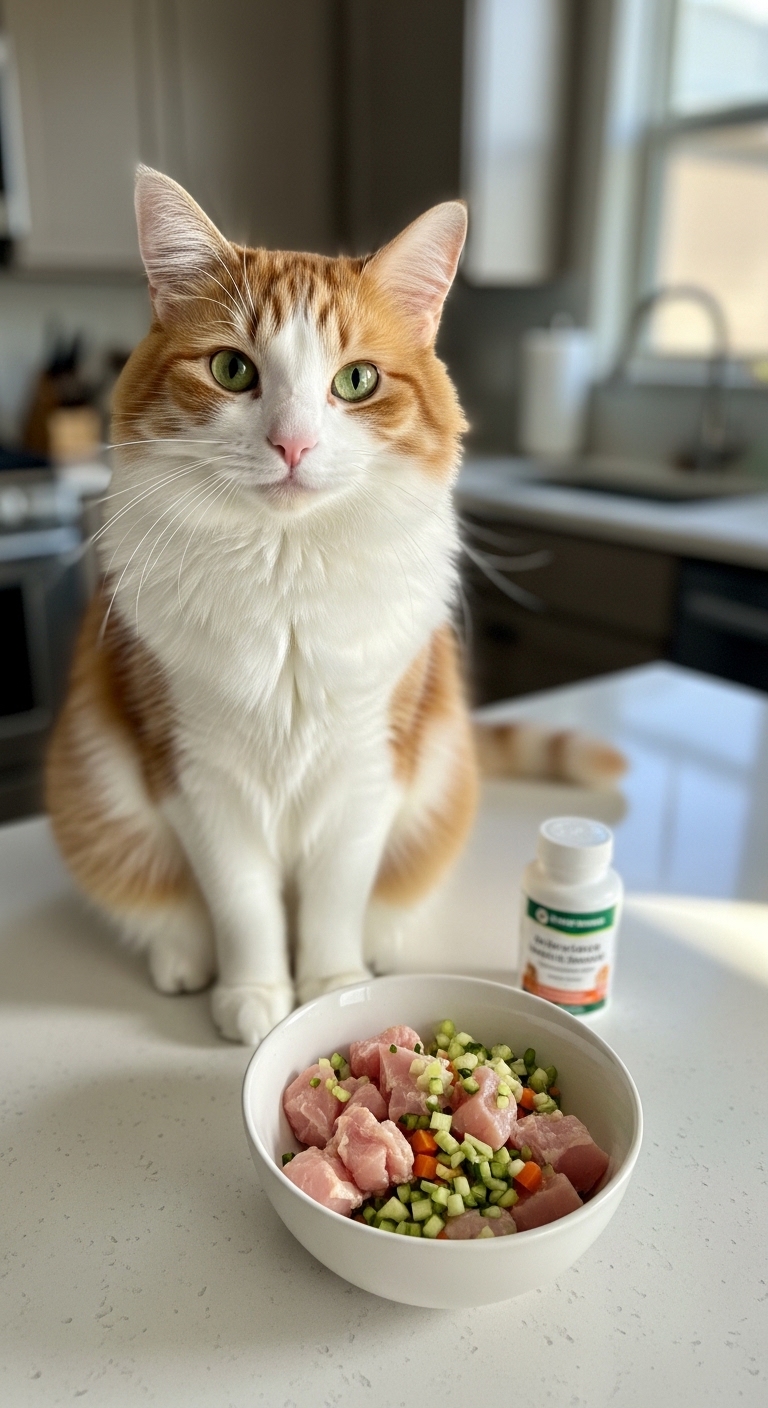
Cooked cat food can feel like a game-changer when you're tired of reading endless ingredient labels or worrying about recalls. It's not just about control over what goes into your cat's bowl: it's about noticing how their energy, coat, and even litter box habits shift when they eat fresher, simpler meals. Many owners notice their cats become more playful or their fur feels softer within weeks of switching, which makes the extra prep time feel worth it.
I still remember the first time my senior cat, Miso, licked his bowl clean after trying homemade chicken and pumpkin. His vet had mentioned his digestion wasn't great, and within a month of switching, his vet noticed improvements too.
Key Things to Understand
- Nutritional balance: Cooked cat food should always be balanced with essential nutrients like taurine, which cats can't produce on their own
- Cooking vs raw: Raw meat isn't the same as cooked meat: cats in the wild eat prey that's been partially digested, but cooking alters the nutritional profile
- Portion control: Portion sizes matter just as much as ingredients; overfeeding homemade food can lead to weight gain or deficiencies
- Food safety: Leftovers should never be left out for more than a few hours to prevent bacterial growth
- Transition period: Transitioning slowly is key: mix a little homemade food with their regular food over 7-10 days to avoid stomach upset
What to Look For
When evaluating cooked cat food recipes, pay attention to the protein source first. Cats are obligate carnivores, so the primary ingredient should always be a named meat like chicken, turkey, or beef: not vague terms like "meat meal" or "by-products." Look for recipes that include organ meats like liver or kidney, which provide essential vitamins that muscle meat alone can't offer. The fat content should be moderate; too much can lead to weight gain, while too little might leave your cat feeling unsatisfied. Also check for added supplements like calcium carbonate or fish oil, which help balance homemade meals without overcomplicating the recipe. If a recipe relies heavily on grains or vegetables, reconsider: cats have no dietary need for these and they can sometimes cause digestive issues.
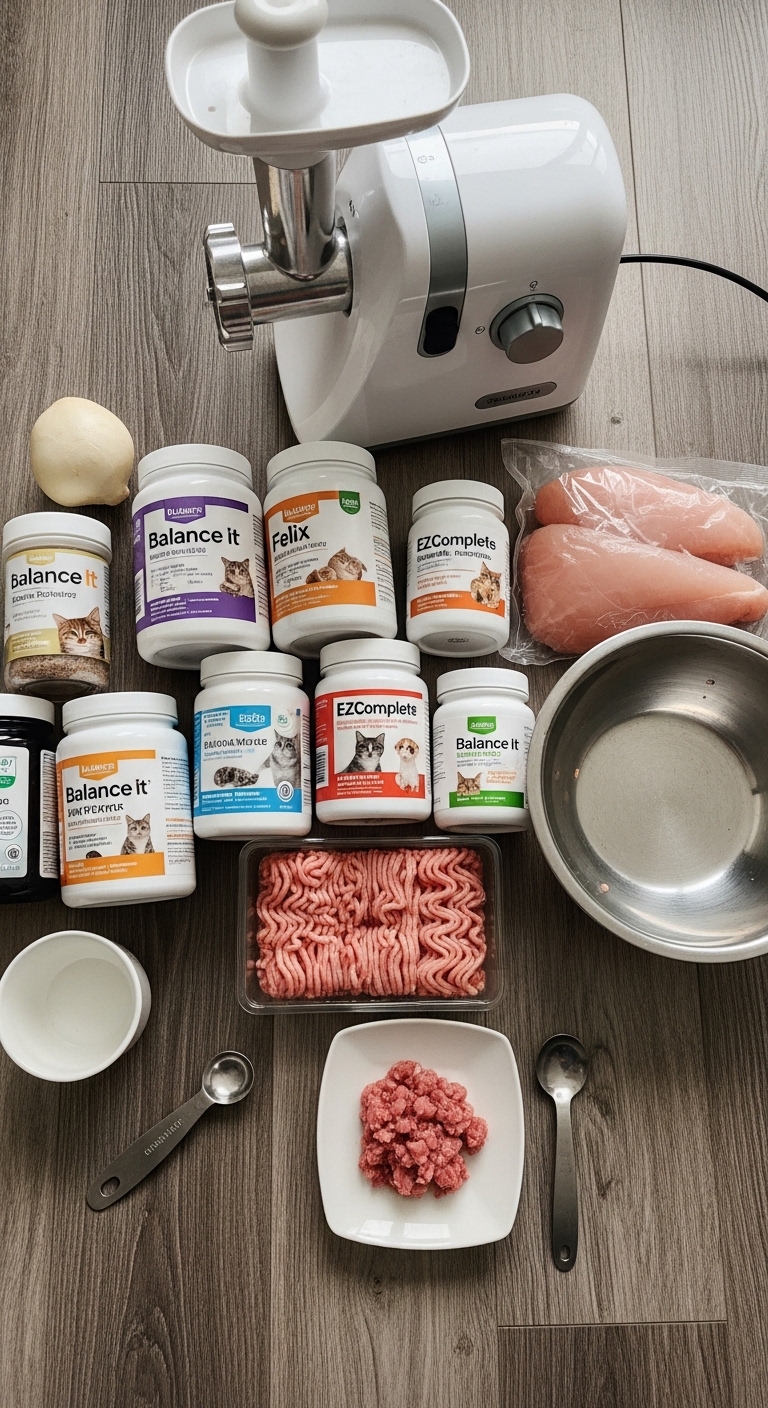
I once met a cat owner who swore by a simple ground turkey and pumpkin recipe until their cat suddenly refused it. Turns out the cat had developed a sensitivity to turkey, and switching to rabbit solved the problem. Always watch for subtle changes in appetite or energy levels when trying new foods.
Daily Care Habits
Start by preparing meals in small batches to keep flavors fresh and prevent spoilage. A good rule is to make enough for 3-4 days at a time, stored in the fridge. If your cat is used to dry kibble, they might take time to adjust to the moisture and texture of cooked food. Try warming the food slightly before serving to enhance the aroma, which can encourage picky eaters. Keep an eye on their water intake too: cats eating wet or cooked food often drink less, so fresh water should always be available.
Choosing the Right Product
If you're not ready to make food from scratch, look for commercial cooked cat foods with short ingredient lists and named protein sources. Avoid brands that use vague terms or excessive preservatives. Check the guaranteed analysis for protein and fat percentages that match your cat's needs: kittens and active adults need more protein than senior cats. Also consider the texture; some cats prefer pâté-style while others like shredded or chunky pieces. Reading reviews from other cat owners can give you insight into how the food is received by picky eaters.
Safety and Comfort
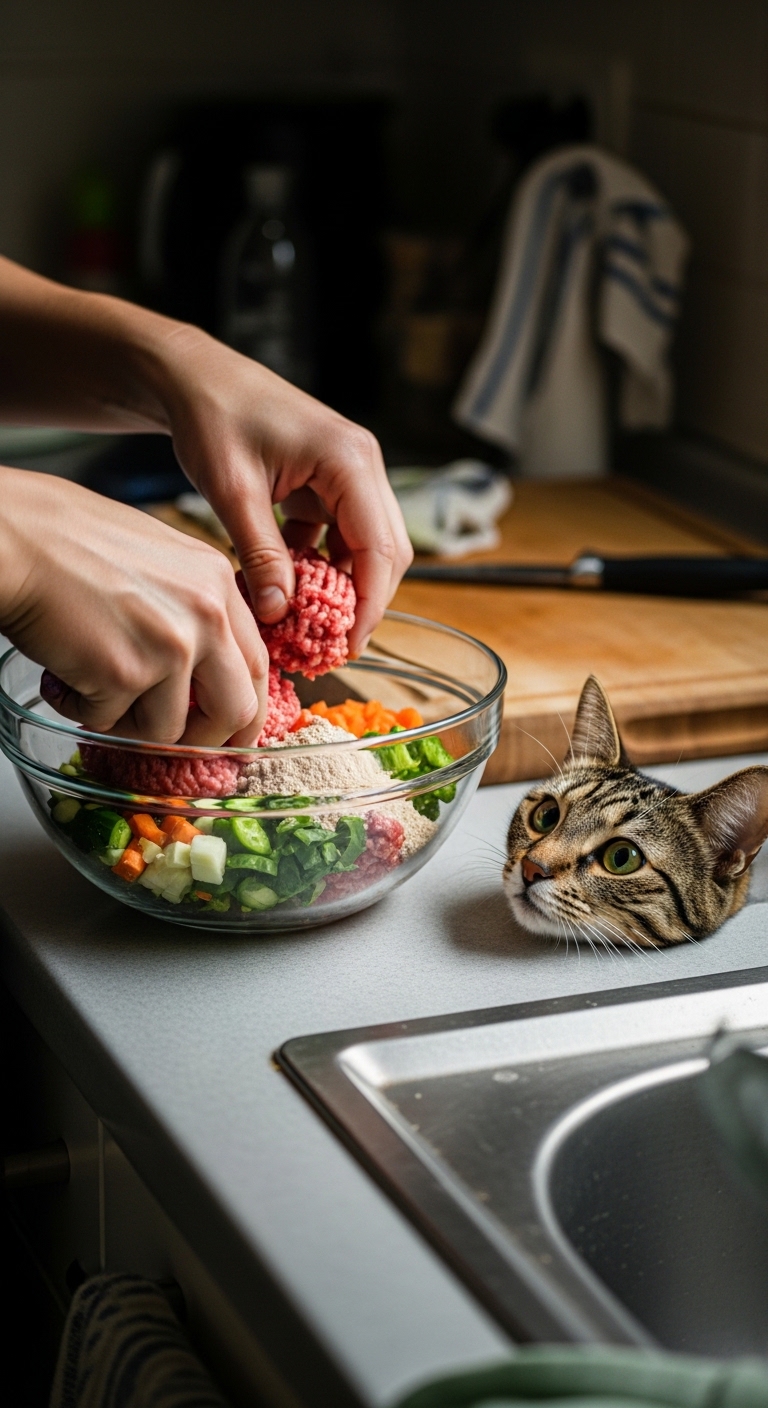
Always wash your hands, utensils, and surfaces thoroughly after handling raw meat to prevent cross-contamination. Use separate cutting boards and bowls for your cat's food to avoid spreading bacteria. If your cat has health conditions like kidney disease or diabetes, consult your vet before making dietary changes. Some cats may experience loose stools when switching to cooked food, so introduce it gradually. Monitor their litter box habits closely during the transition period.
Cooked cat food can transform your pet's health and happiness when done thoughtfully. Always prioritize balance, safety, and your cat's individual needs.
Frequently Asked Questions
- → Is homemade cooked cat food healthier than store-bought?
Homemade cooked cat food can be healthier as it allows you to control ingredients, avoid fillers, and use fresh, high-quality proteins. However, it must be nutritionally balanced to meet your cat’s needs.
- → What ingredients should I avoid in cooked cat food?
Avoid onions, garlic, grapes, raisins, chocolate, xylitol, and excessive salt or spices. Always research safe ingredients for cats before preparing meals.
- → How long does homemade cooked cat food last?
Store homemade cooked cat food in airtight containers in the fridge for up to 3 days or freeze for up to 3 months. Thaw in the fridge before serving.
- → Can I feed my cat only homemade cooked food?
While homemade cooked food can be part of your cat’s diet, it should be balanced with essential nutrients like taurine. Consult your vet to ensure your cat’s meals meet all dietary requirements.
- → What’s the best protein source for homemade cat food?
Lean meats like chicken, turkey, or rabbit are excellent protein sources. Organ meats like liver provide essential vitamins but should be used in moderation.
- → Do I need to add supplements to homemade cat food?
Yes, supplements like taurine, calcium, and omega-3 fatty acids are often necessary to meet your cat’s nutritional needs. Always consult your vet for guidance.