Dogs get dirty, and that’s just part of life with a furry friend. Whether it’s muddy paws after a walk or that stubborn skunk smell no one saw coming, giving your dog a proper wash keeps them comfortable and your home cleaner. A good wash routine also strengthens the bond between you and your pet, making handling them easier over time. Plus, regular baths help spot skin issues or parasites before they become serious problems.
I’ve noticed that dogs who get washed regularly at home tend to tolerate baths better as adults. The key is making it a positive experience from the start, even if your pup starts off squirming.
Key Things to Understand
- A gentle, dog-specific shampoo is essential: to avoid irritating their skin or stripping natural oils
- Lukewarm water works best: too hot can stress your dog, and too cold won’t rinse properly
- Non-slip mats in the tub prevent accidents: especially for older dogs or those with joint issues
- Drying thoroughly afterward prevents hot spots or skin infections: especially in breeds with dense coats
- A calm voice and slow movements help nervous dogs relax: during the process
What to Look For
Watch how your dog reacts to water before the full wash. Some dogs panic at the sound of running water but tolerate a soaked towel better. Notice if they shake excessively after getting wet, which could mean they’re cold or uncomfortable. Check their paws, ears, and tail for hidden dirt or debris that might need extra attention. If your dog has skin folds, like bulldogs or shar-peis, these areas trap moisture and need thorough drying to prevent infections.
I once skipped drying my golden retriever’s ears after a bath, and within a day, she developed a mild yeast infection. It was an easy fix with vet-recommended drops, but it taught me how small oversights can lead to bigger issues. Always take the time to dry those hard-to-reach spots.
Daily Care Habits
Make bath time part of a regular routine, even if your dog doesn’t seem dirty. A quick wipe-down with a damp cloth between washes keeps their coat fresher and reduces the buildup of allergens or pollen. For dogs that love rolling in questionable things, keep pet wipes handy for spot cleaning. After walks, especially in muddy or dusty areas, a quick paw rinse prevents dirt from being tracked indoors.
Choosing the Right Product
Look for shampoos labeled for your dog’s specific needs, whether it’s for sensitive skin, flea control, or coat shine. Avoid products with artificial fragrances or harsh chemicals, which can cause itching or allergic reactions. If your dog has allergies, hypoallergenic shampoos are worth the investment. For puppies, use a tear-free formula to avoid eye irritation. Always do a patch test on a small area of skin before the full wash to check for reactions.
Safety and Comfort
Never leave your dog unattended in the tub, even for a moment. A sudden slip or panic can lead to injuries. Keep the water level shallow enough that your dog can stand comfortably without feeling overwhelmed. If your dog is anxious, try breaking the bath into smaller steps: just getting them wet first, then shampooing, then rinsing. Reward them with treats and praise throughout to build positive associations.
Common Mistakes to Avoid
Skipping the ear check is a big one. Moisture trapped in ears can lead to infections, so gently wipe the outer ear with a cotton ball after the bath. Using too much shampoo can leave residue that irritates the skin, so follow the product’s guidelines for dilution. Rushing the drying process, especially in cold weather, can leave your dog chilled and uncomfortable. Take your time to ensure they’re completely dry before letting them outside.
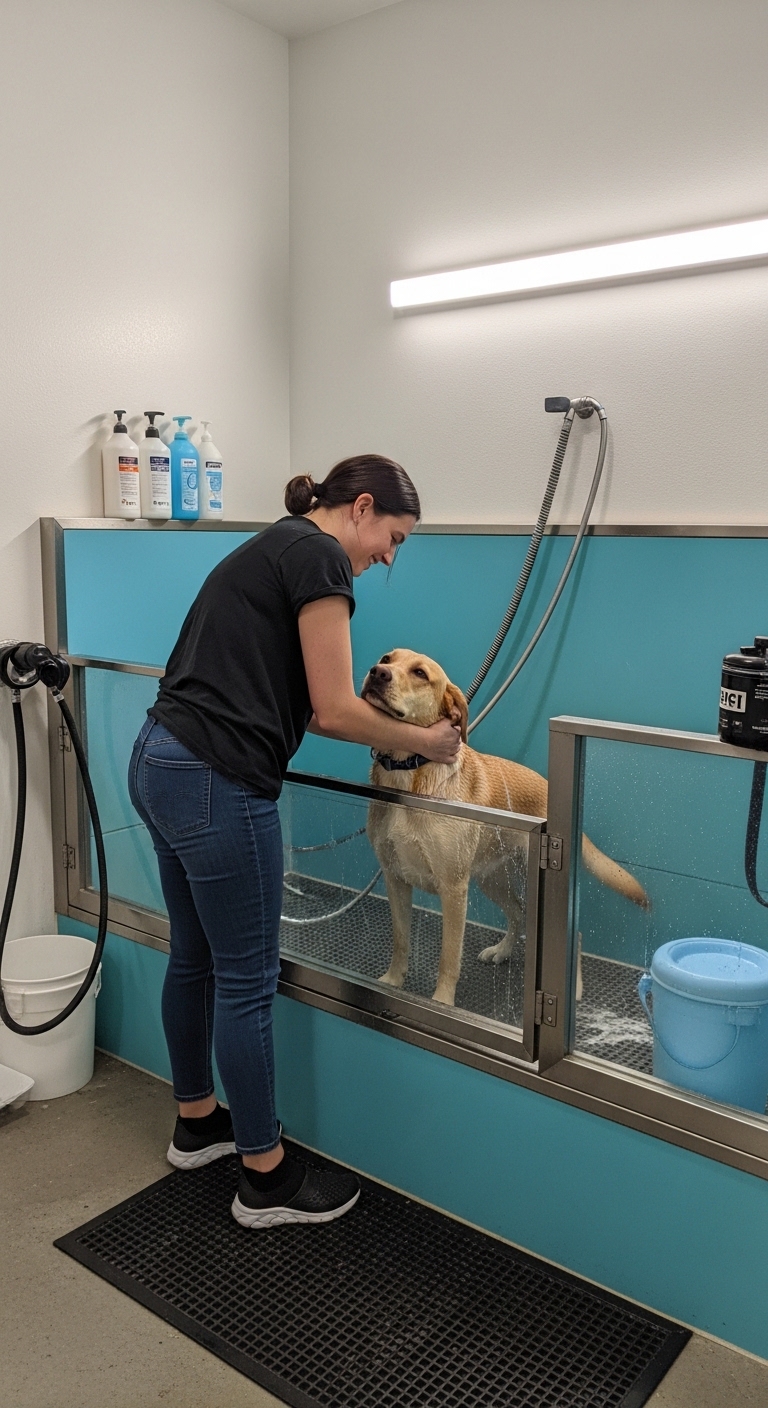
Regular baths keep your dog healthy and happy, while strengthening your bond. Small adjustments make the process smoother for both of you.
Frequently Asked Questions
- → What supplies do I need for a DIY dog wash?
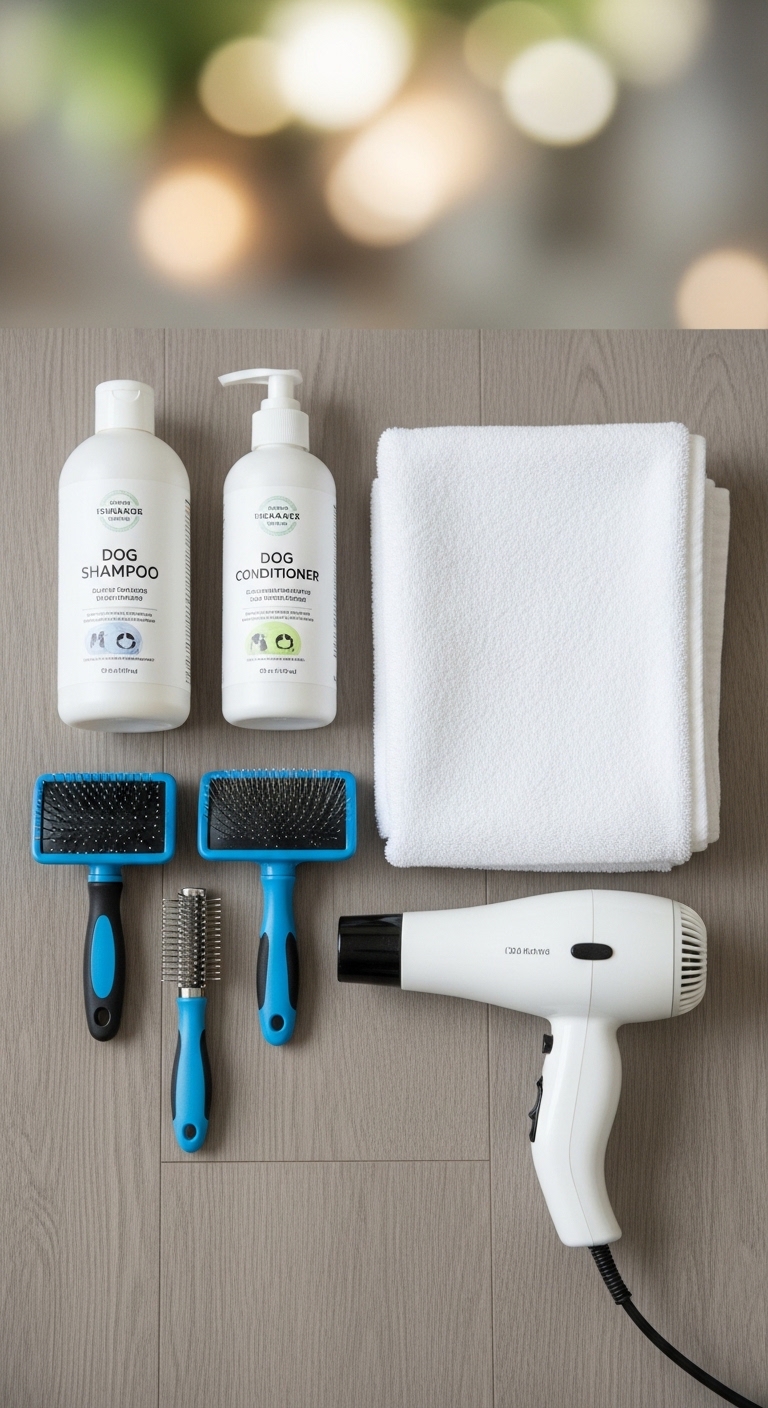
Essential supplies include pet-safe shampoo, towels, a brush, a non-slip mat, a handheld showerhead or pitcher for rinsing, and treats for positive reinforcement. Optional items like a blow dryer (low heat) or a designated wash tub can enhance comfort and efficiency.
- → How often should I wash my dog at home?
The frequency depends on your dog’s breed, coat type, and activity level. Generally, dogs with oily coats or outdoor lifestyles may need washing every 4-6 weeks, while short-haired breeds can go 6-8 weeks. Overwashing can strip natural oils, so monitor your pet’s skin condition.
- → Can I use human shampoo for my dog?
No, human shampoo often contains harsh chemicals or fragrances that can irritate a dog’s sensitive skin. Always use a shampoo specifically formulated for dogs, as it maintains the proper pH balance and avoids allergic reactions or dryness.
- → How do I keep my dog calm during a DIY wash?
Start with short, positive sessions to acclimate your dog to the process. Use treats and praise to create a rewarding experience, and keep the water temperature comfortable. If your dog is anxious, break the process into smaller steps over multiple days.
- → What’s the best way to dry my dog after washing?
Gently towel-dry your dog first to remove excess water, then use a blow dryer on a low, cool setting if your dog tolerates it. Avoid high heat, which can burn their skin. For dogs with thick coats, a second towel or a drying coat can help speed up the process.
- → Can I use a DIY dog wash for puppies?
Yes, but use extra caution with water temperature and products. Puppies have sensitive skin, so opt for a mild, tear-free shampoo and avoid submerging their head. Keep sessions brief and reward them to build positive associations with bathing.