As dogs age, joint pain and arthritis become common concerns. An orthopedic dog bed offers superior support with memory foam or high-density filling to cushion pressure points, promoting better sleep and reducing stiffness. Look for beds with removable, washable covers and non-slip bases for safety. Size matters—ensure the bed accommodates your dog’s full length for maximum comfort. Brands like Casper, Big Barker, and K&H Pet Products are top-rated for durability and support. Investing in a quality orthopedic bed can significantly enhance your senior dog’s quality of life by alleviating joint stress and improving rest.
✅ The 5 Best Orthopedic Dog Beds Review of 2024 | PetLabs
Watching an older dog struggle to get comfortable after a long walk or a nap is one of those quiet heartbreaks of pet ownership. Their joints ache, their movements slow, and the beds they once loved no longer give them the support they need. The right orthopedic dog bed isn’t just about comfort—it’s about preserving mobility, easing pain, and helping them age with dignity. For senior dogs, a good bed can mean the difference between restless nights and deep, healing sleep.
A well-chosen orthopedic bed can reduce joint pressure and improve circulation for arthritic dogs, helping to alleviate the stiffness and discomfort that often plague older pets. It also prevents pressure sores and calluses in dogs that spend more time lying down, which is common as they age. The right materials and design can even regulate temperature—a critical factor for senior dogs with thinner coats or poor circulation. Without proper support, these dogs may struggle to find relief, leading to chronic pain and reduced quality of life.
A ruler, a pill bottle, a red ball, and a plaid blanket are on a table. | petcarepicked.com
Memory foam density is far more important than thickness when selecting an orthopedic bed. A 4-inch-thick bed with low-density foam will collapse under your dog’s weight over time, while a 3-inch high-density bed will retain its shape for years. This distinction is crucial because collapsed foam fails to provide the joint support senior dogs need. Always opt for medical-grade or orthopedic-grade foam, which is specifically engineered to distribute weight evenly and resist compression.
Bolstered edges on a dog bed aren’t just a design feature—they provide essential head and neck support, particularly for dogs with spinal issues or those who like to lean while resting. For incontinent dogs or heavy droolers, a waterproof liner is non-negotiable, as it protects the foam from moisture damage that can lead to mold or odor. Additionally, a non-slip bottom prevents the bed from sliding on hard floors, which can startle or frustrate an older dog trying to settle into a comfortable position.
The best orthopedic beds for senior dogs start with high-quality memory foam—not just any foam, but medical-grade or orthopedic-grade material designed to distribute weight evenly. When you press down on it, the foam should slowly return to its original shape without leaving a permanent indent. Cheaper foams may feel firm initially but often lose their support within weeks, leaving your dog sinking onto a hard, unsupportive surface beneath.
Pay close attention to how your dog sleeps when choosing a bed. Side sleepers need a bed with enough depth to cushion their hips and shoulders, while dogs that curl up may prefer a nest-style bed with raised edges. If your dog tends to overheat, look for beds with cooling gel layers or breathable fabrics like cotton or bamboo. Conversely, dogs that get chilly easily will benefit from plush, insulated covers or even heated options—just ensure any heating element is safe and chew-proof.
Not all orthopedic beds are created equal—some use cheap polyfill or egg-crate foam and market it as 'orthopedic,' which can be misleading. Dogs with severe arthritis may require a bed with extra-thick foam or even a raised design to minimize the effort of getting up. Always check the foam density (aim for at least 4 lbs per cubic foot) and read reviews from other senior dog owners to avoid wasting money on beds that look supportive but fail within months.
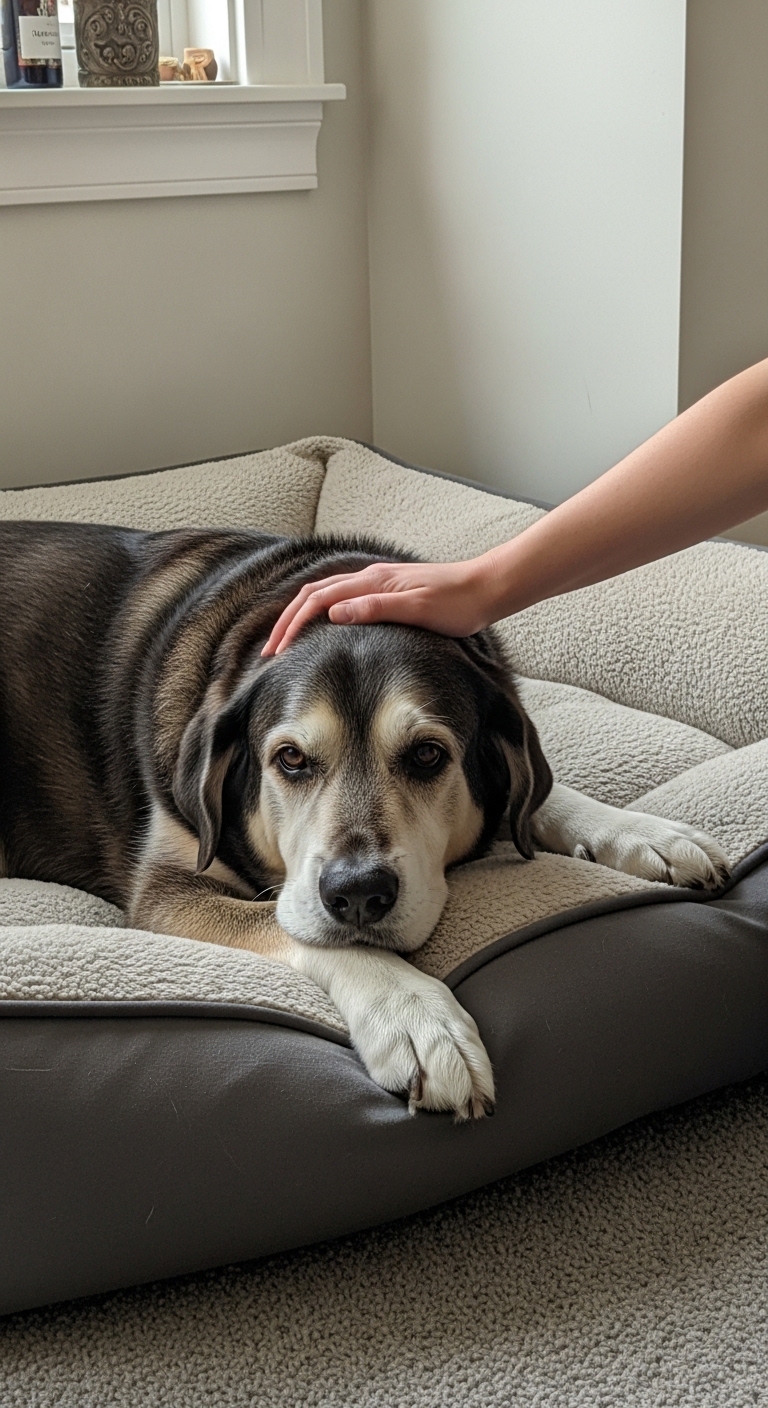
A dog laying on a bed with a person petting it. | petcarepicked.com
Measure your dog from nose to tail while they’re lying down, then add 6 to 12 inches for the ideal bed length. Width is equally important—your dog should be able to stretch out fully without their paws hanging off. For dogs with mobility issues, a low-profile bed (3 to 5 inches high) is easiest to step into, while deeper beds (6 inches or more) are better for dogs that need extra cushioning. Shape also matters: rectangular beds suit sprawlers, while round or oval beds are ideal for dogs that curl up.
Even the best orthopedic beds wear out over time. Check for permanent indentations in the foam—if the bed doesn’t spring back after your dog stands up, it’s no longer supportive. Lumps or uneven surfaces can also indicate the foam is breaking down. Another red flag is if your dog starts avoiding the bed or seems stiff after lying on it, which suggests it’s no longer providing the necessary support. Most high-quality beds last 2 to 5 years, but heavier dogs may compress the foam faster, requiring more frequent replacements.
Senior dogs can be stubborn about change, especially when it comes to their sleeping spots. To help them adjust to a new bed, place it in their usual resting area and add a familiar blanket or toy to make it inviting. If they’re hesitant, try feeding them treats or meals on the bed to create positive associations. For dogs with vision or cognitive issues, gently guide them to the bed or place it along their usual path. Patience is key—it may take days or even weeks for them to fully accept the new bed, but the improvement in their comfort will be worth the effort.
Older dogs are more sensitive to temperature changes, so seasonal considerations are important. In winter, an orthopedic bed with a heated insert or a self-warming layer can ease joint stiffness, but avoid electric beds if your dog has poor circulation or can’t move away from the heat. In summer, cooling gel beds or elevated designs with breathable mesh can prevent overheating. For dogs with allergies, hypoallergenic covers and foam treated with antimicrobial agents can reduce sneezing and skin irritation, which are more common in senior pets with weakened immune systems.
Pro tip: If your dog is between sizes, always size up—extra space is better than insufficient support. Place the bed in a quiet, low-traffic area where your dog won’t be disturbed while resting. For dogs with severe mobility issues, consider a bed with a waterproof, wipeable cover for easier cleaning. Rotating the bed every few months can also help the foam wear evenly and extend its lifespan. These small adjustments can make a significant difference in your senior dog’s comfort and well-being.
Frequently Asked Questions
→ Why do senior dogs need orthopedic beds?
Senior dogs often develop arthritis or joint issues, making standard beds uncomfortable. Orthopedic beds provide extra cushioning to relieve pressure points, support aging joints, and improve sleep quality.
→ What materials make the best orthopedic dog beds?
Memory foam, high-density polyfoam, or gel-infused foam are ideal for pressure relief. Look for beds with breathable, removable covers for easy cleaning and hygiene.
→ How do I choose the right size orthopedic bed?
Measure your dog from nose to tail when fully stretched. The bed should be at least 4-6 inches longer to allow for comfortable curling or stretching without hanging off the edges.
→ Are orthopedic beds worth the investment?
Yes, especially for senior dogs with mobility issues. A quality orthopedic bed can reduce joint pain, improve sleep, and prevent pressure sores, leading to better overall health and happiness.
→ Can orthopedic beds help with arthritis in dogs?
Absolutely. Orthopedic beds distribute weight evenly, reducing stress on joints and easing arthritis discomfort. Many vets recommend them for dogs with joint conditions.
→ How often should I replace an orthopedic dog bed?
Replace the bed when it loses its shape, sags, or no longer provides support. Typically, this happens every 2-3 years, depending on usage and quality.
Stay Updated
Get the latest articles delivered straight to your inbox. No spam, just great inspiration!