How to cut dog nails isn’t just about keeping your pup’s paws tidy: it’s a crucial part of their health and comfort. Overgrown nails can cause pain, affect their gait, and even lead to infections or joint problems over time. Many pet owners avoid this task because it feels intimidating, but with the right approach, it becomes a simple routine that strengthens your bond with your dog. Learning to do it yourself saves money on grooming visits and lets you check for issues like cracks or infections while you work.
I still remember the first time I clipped my dog’s nails: my hands were shaking, and he could sense it. But once I got the rhythm down, he relaxed too, and now he actually leans into the process like it’s a treat session.
Key Things to Understand
- Knowing where the quick is and how to avoid it: keeps trims safe and pain-free
- Using the right tools: like a guillotine-style or scissor-type clipper, makes the job easier
- Getting your dog comfortable with handling their paws beforehand: reduces stress
- Having styptic powder on hand: is essential in case you nick the quick
- Trimming nails every 3 to 4 weeks: usually keeps them at a healthy length
What to Look For
Pay attention to how your dog stands and walks. If their nails click loudly on hard floors or their toes splay outward when standing, it’s a sign they’re too long. A healthy nail should end just before the quick, which is the pink part inside the nail that contains blood vessels. If you’re unsure, look at the nail from underneath: if it curves downward, it’s time for a trim. Also watch for signs of overgrown nails like limping after walks or reluctance to put weight on a paw.
I once skipped trimming my dog’s nails for two months because he hated it. By the time I finally did it, his nails were so long they had started to curve under his toes. It took weeks of short sessions to get him comfortable again, and I had to file them down instead of clipping. Now I keep a small jar of treats next to the clippers as a reminder that the process should feel positive for both of us.
Daily care habits
Make paw checks part of your routine, especially after walks or playtime. Look for debris stuck between toes or redness on the paw pads. If your dog licks their paws excessively after a trim, it could mean you’ve filed too much or left a sharp edge. Keep a small file handy to smooth any rough spots after clipping. For dogs with hairy paws, trimming the fur between the pads can prevent matting and make nail trims easier.
Choosing the right product
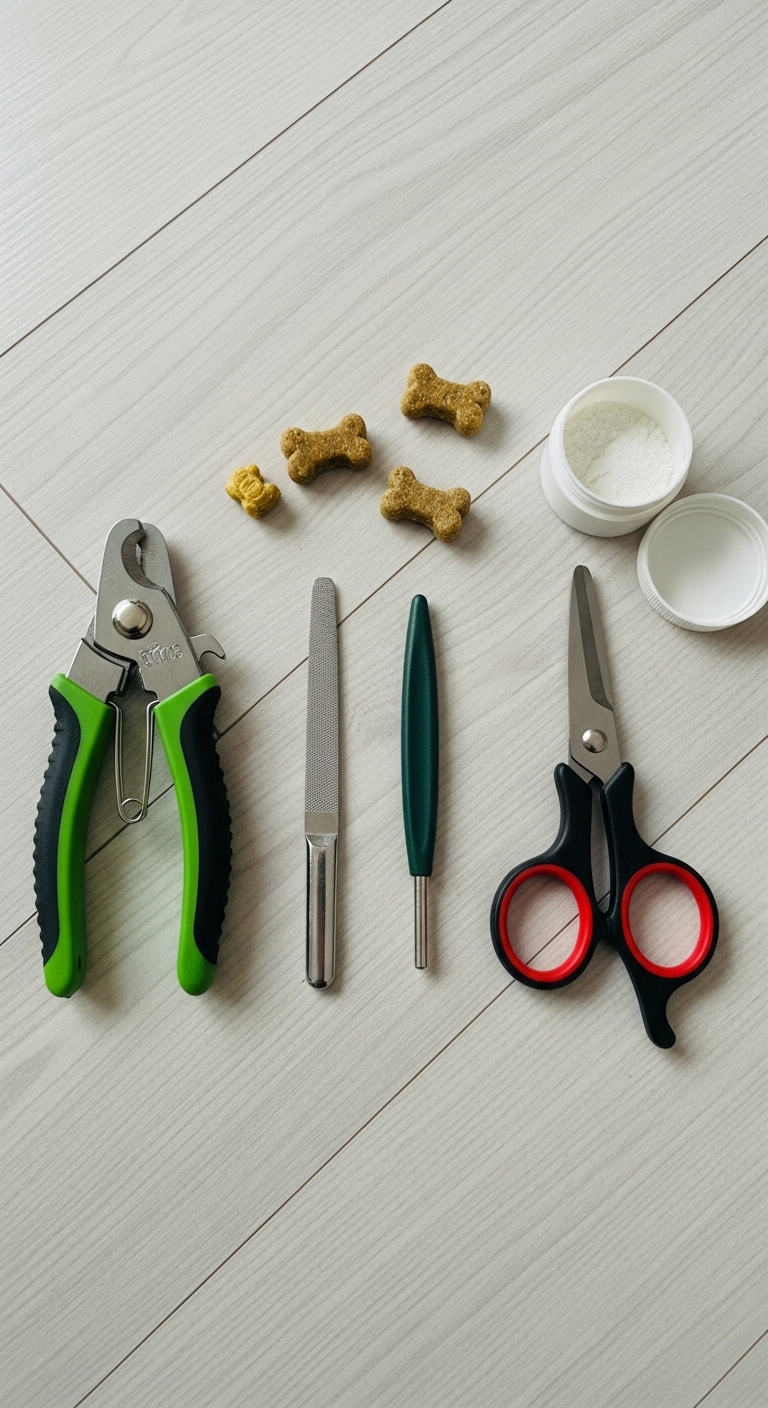
Not all nail clippers are created equal. Guillotine-style clippers work well for small to medium dogs, while scissor-style clippers give you more control for larger breeds. If your dog has thick nails, consider a grinder instead of clippers: it files the nail down gradually and reduces the risk of cutting the quick. Always choose stainless steel clippers for durability and a sharp cutting edge. Test different styles to see what feels most comfortable in your hand and least intimidating to your dog.
Safety and comfort
Work in a well-lit area where you can see the nail clearly. If your dog is nervous, try sitting on the floor with them between your legs so they feel secure. Use a non-slip mat under their paws to prevent sliding. If your dog is particularly anxious, wrap them in a towel like a burrito to limit movement. Keep sessions short: just a few nails at a time, and end on a positive note with praise or a favorite toy. Never force the process; if your dog is truly stressed, consider professional grooming instead.
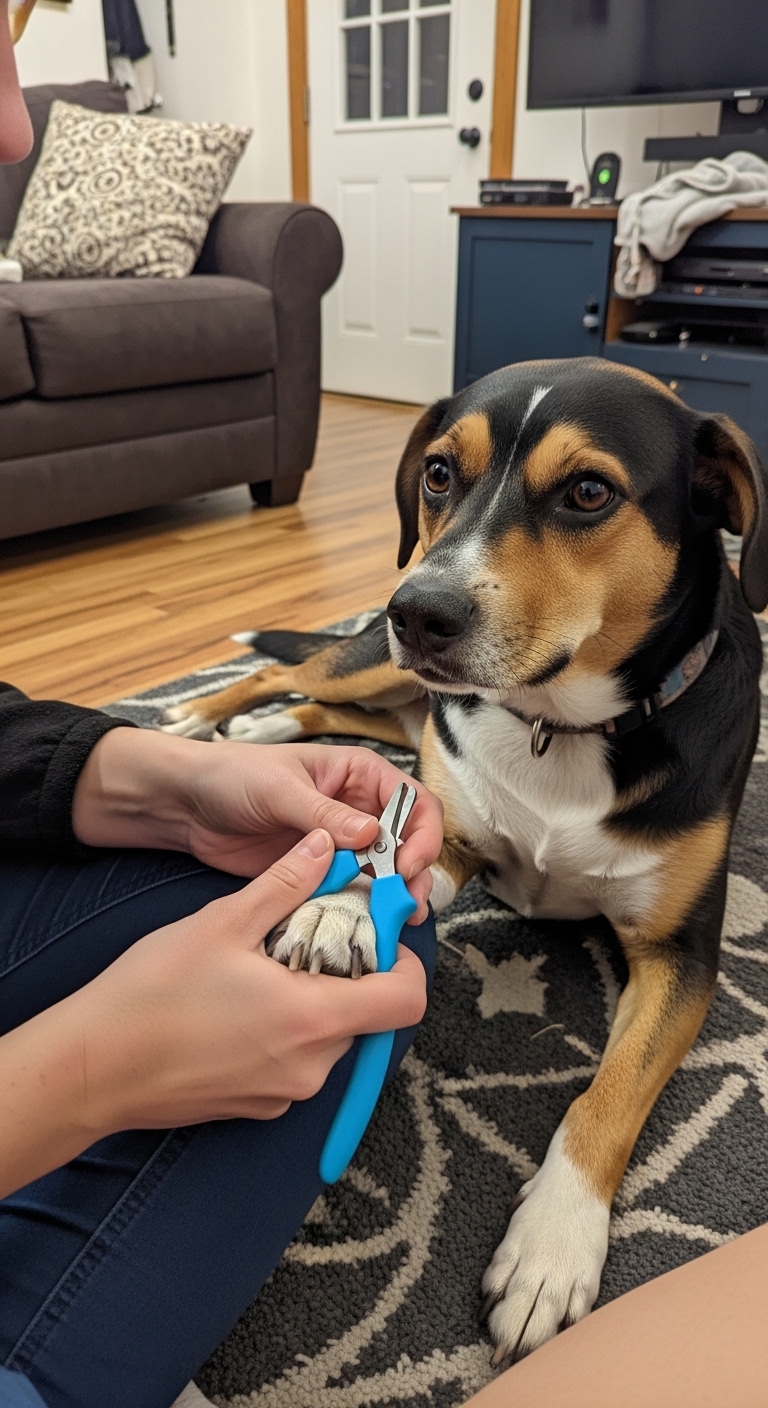
Regular nail care is a small effort that makes a big difference in your dog’s comfort and long-term health.
Frequently Asked Questions
- → What tools do I need to cut my dog's nails?
You’ll need a good pair of dog nail clippers (guillotine-style or scissor-type), styptic powder to stop bleeding if you cut too short, and treats to reward your dog. Avoid human nail clippers as they can crush the nail.
- → How can I tell where the quick is in my dog’s nails?
In light-colored nails, the quick appears as a pinkish area inside the nail. For dark nails, trim small amounts at a time—each layer will reveal a lighter, chalky center. Stop trimming if you see a dark circle in the center of the nail.
- → What if I accidentally cut the quick and it bleeds?
Stay calm and apply styptic powder or a clean cloth with gentle pressure to the nail. Avoid scolding your dog, as this can make future nail trims more difficult. Keep treats handy to reassure them.
- → How often should I trim my dog’s nails?
Most dogs need a trim every 3-4 weeks, but this varies based on activity level and nail growth. If you hear clicking on floors, it’s time for a trim. Active dogs on pavement may wear nails down naturally.
- → My dog hates having their nails trimmed. What can I do?
Start by handling their paws gently during calm moments, rewarding with treats. Use a calm, confident approach and consider breaking the process into short sessions. For extremely anxious dogs, consult a professional groomer or vet for help.
- → Can I use a Dremel instead of clippers?
Yes, a dog-safe nail grinder (like a Dremel) can be a good alternative, especially for dogs with thick nails. It files the nail gradually and reduces the risk of cutting the quick. Introduce the tool slowly and reward your dog for positive associations.