Cilantro is generally safe for dogs in small amounts and can offer some health benefits. Rich in antioxidants and vitamins, it may support digestion and freshen breath. However, some dogs may experience mild stomach upset or allergic reactions. Always introduce new foods gradually and monitor your pet for any adverse effects. Avoid large quantities or seasoned cilantro, as added ingredients like salt or garlic can be harmful. Consult your vet before adding cilantro to your dog’s diet, especially if they have pre-existing health conditions.
Cilantro is a common herb in many kitchens, and pet owners often wonder if it’s safe to share with their dogs. Knowing whether your dog can eat cilantro helps you make informed decisions about their diet and avoid unnecessary risks.
Why This Topic Helps: It clarifies safety concerns about feeding cilantro to dogs, helps prevent accidental poisoning from unsafe herbs, and guides pet owners in offering healthy and dog-safe alternatives.
In my experience, many dog owners assume herbs are harmless, but even small amounts of the wrong plant can cause issues. A quick check can save a lot of worry.
Key Things to Understand: Cilantro is non-toxic to dogs in small amounts and is generally considered safe. Some dogs may have mild stomach upset if they eat too much cilantro at once.
The stems and leaves are safe, but large quantities can still cause digestive discomfort. Always introduce new foods in tiny portions to monitor your dog’s reaction.
What to Look For: Watch your dog for signs of digestive upset like vomiting or diarrhea after eating cilantro. If your dog shows no reaction to a small piece, it’s likely fine in moderation.
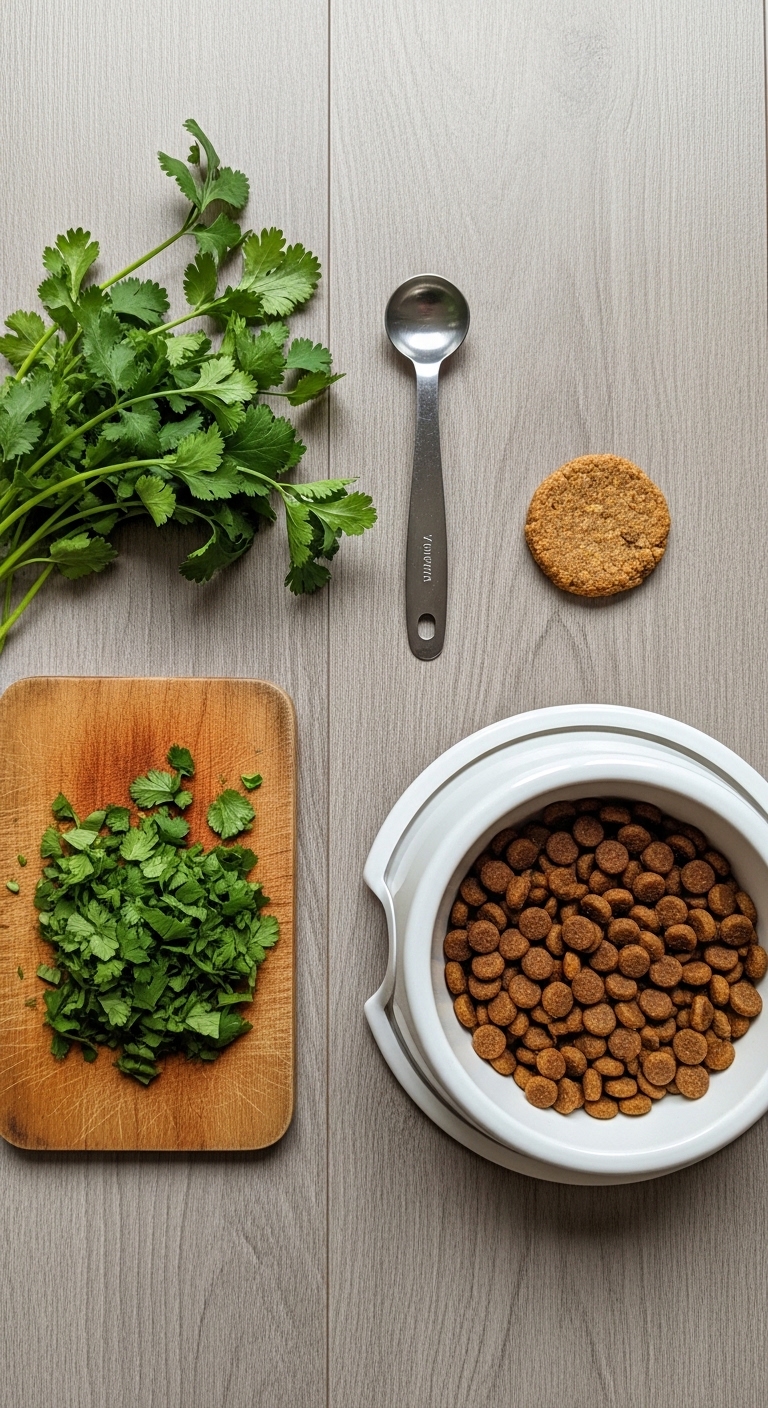
A bowl of dog food sits next to a cutting board with cilantro on it. | petcarepicked.com
Check for any unusual behavior, such as excessive drooling or lethargy, which could indicate an adverse reaction. Also, ensure the cilantro is fresh and free from pesticides or seasonings that could be harmful.
You Must Know: Cilantro is safe for dogs in small quantities. Avoid giving cilantro mixed with other seasonings or oils. Monitor your dog for any signs of discomfort after trying it.
Some dogs simply don’t like the taste of cilantro, so don’t force it. If your dog enjoys it, it can be a low-calorie treat, but it shouldn’t replace balanced dog food. Always prioritize their regular diet over human foods.
Daily care habits: If you cook with cilantro often, keep it out of your dog’s reach when prepping meals. Even safe foods can cause issues if eaten in large amounts. Store herbs securely to prevent accidental ingestion.
Choosing the right product: When buying cilantro for your dog, opt for organic or pesticide-free options. Wash it thoroughly to remove any residues that could be harmful. Avoid pre-packaged herbs with preservatives.
Safety and comfort: Cilantro can be a refreshing snack for dogs, especially in hot weather. Some pet owners freeze cilantro in ice cubes for a hydrating treat. Just remember to keep portions small and infrequent.
Common mistakes to avoid: One of the biggest mistakes is assuming all herbs are safe for dogs. While cilantro is fine, others like garlic or chives are toxic. Always double-check before sharing human foods with your pet.
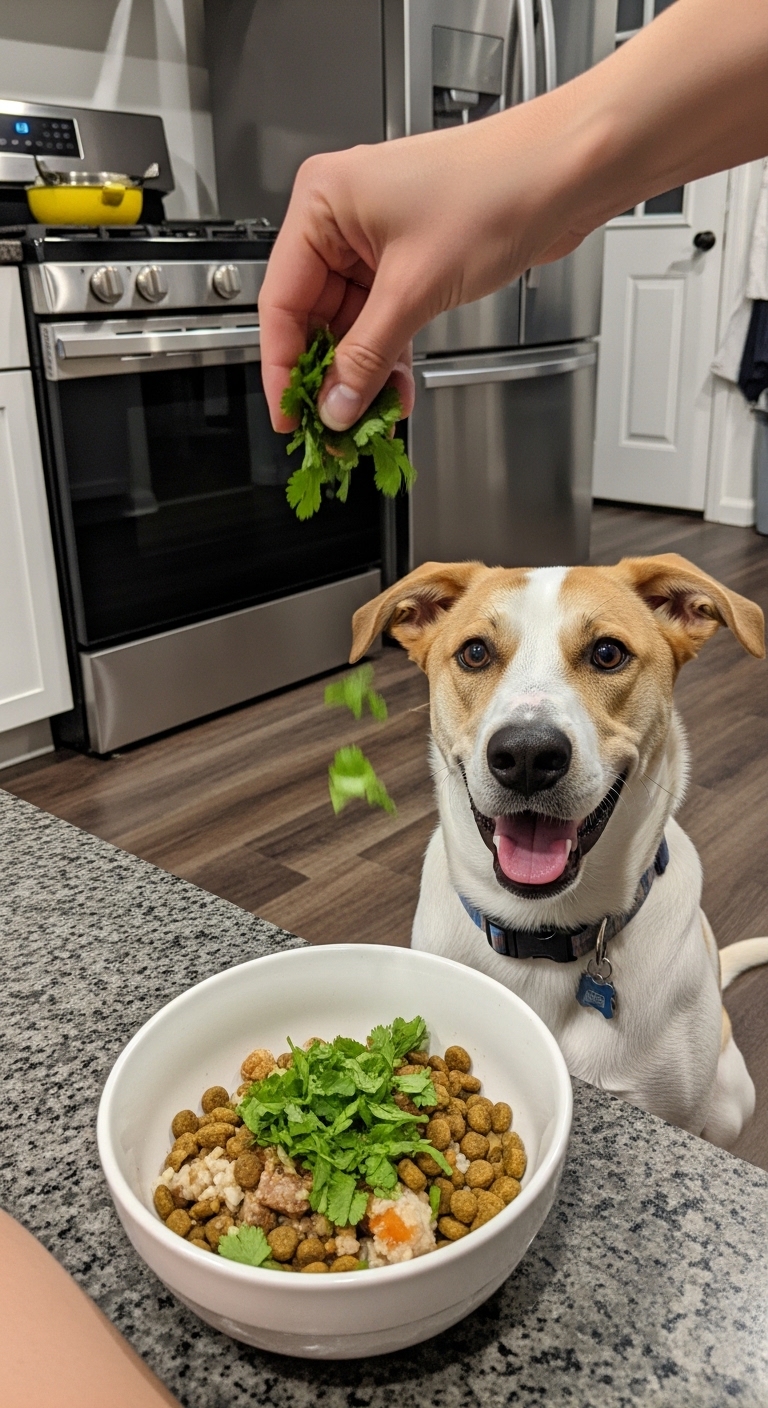
A dog is eating cilantro from a bowl. | petcarepicked.com
Pro Tips: Start with a tiny piece of cilantro to test your dog’s reaction. Avoid giving cilantro daily to prevent digestive upset. If your dog has a sensitive stomach, skip cilantro altogether.
Frequently Asked Questions
→ Is cilantro toxic to dogs?
No, cilantro is not toxic to dogs. It is considered safe in small amounts, but moderation is key to avoid digestive issues.
→ Can cilantro help freshen my dog’s breath?
Yes, cilantro has natural deodorizing properties that may help freshen your dog’s breath when given in small quantities.
→ How much cilantro can I give my dog?
Start with a tiny amount, such as a few finely chopped leaves, and observe your dog for any reactions. Too much can cause stomach upset.
→ What are the benefits of cilantro for dogs?
Cilantro contains antioxidants, vitamins A, C, and K, and may support digestion and reduce inflammation. Always serve plain and unseasoned.
→ Can dogs with sensitive stomachs eat cilantro?
Dogs with sensitive stomachs should try cilantro cautiously. Introduce it slowly and watch for signs of discomfort like vomiting or diarrhea.
→ Are there risks to feeding cilantro to dogs?
The main risks include mild stomach upset or allergic reactions. Avoid seasoned cilantro, as ingredients like salt, garlic, or onions are toxic to dogs.
→ How should I prepare cilantro for my dog?
Wash cilantro thoroughly to remove pesticides. Chop finely and serve raw or lightly steamed without any added seasonings or oils.
Stay Updated
Get the latest articles delivered straight to your inbox. No spam, just great inspiration!

 Pin
Pin